Bumblebees Are Disappearing. What You Can Do About It?

Bee

Share This Page

LinkedIn
Email

What’s with All the Buzz to Save the Bumblebees?

Bees play a critical role in the environment. As pollinators, they support the growth and life of the base of every food chain; plants. Bees are the main insect pollinators, and honey bees alone are predicted to pollinate 80% of flowering plants in North America. The decline of certain bee populations is extremely bad news for the environment and everything that relies on it.

American bumblebee populations have been on a rapid decline in recent years. Despite the fact that their population has dropped almost 90% in the last 20 years, they are not yet federally considered an endangered species. Because they have not acquired this status and protection under the Endangered Species Act, they are not protected under federal or state law. According to a report from Live Science, the species has already disappeared from eight states including Wyoming, Oregon, North Dakota, Idaho, Vermont, New Hampshire, Rhode Island, and Maine. The International Union for Conservation of Nature found that 28% of North American bumblebees face the risk of some level of extinction.
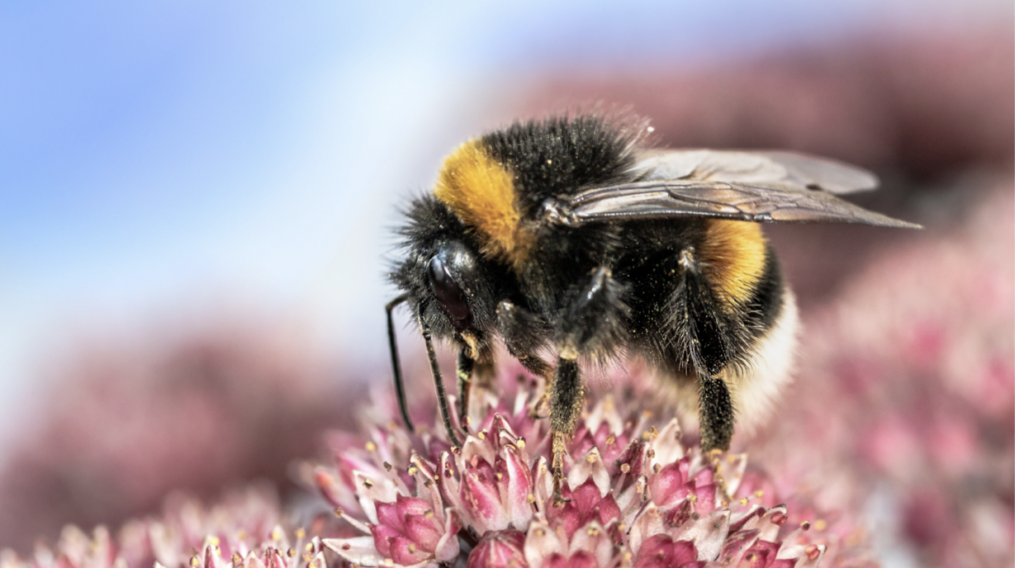
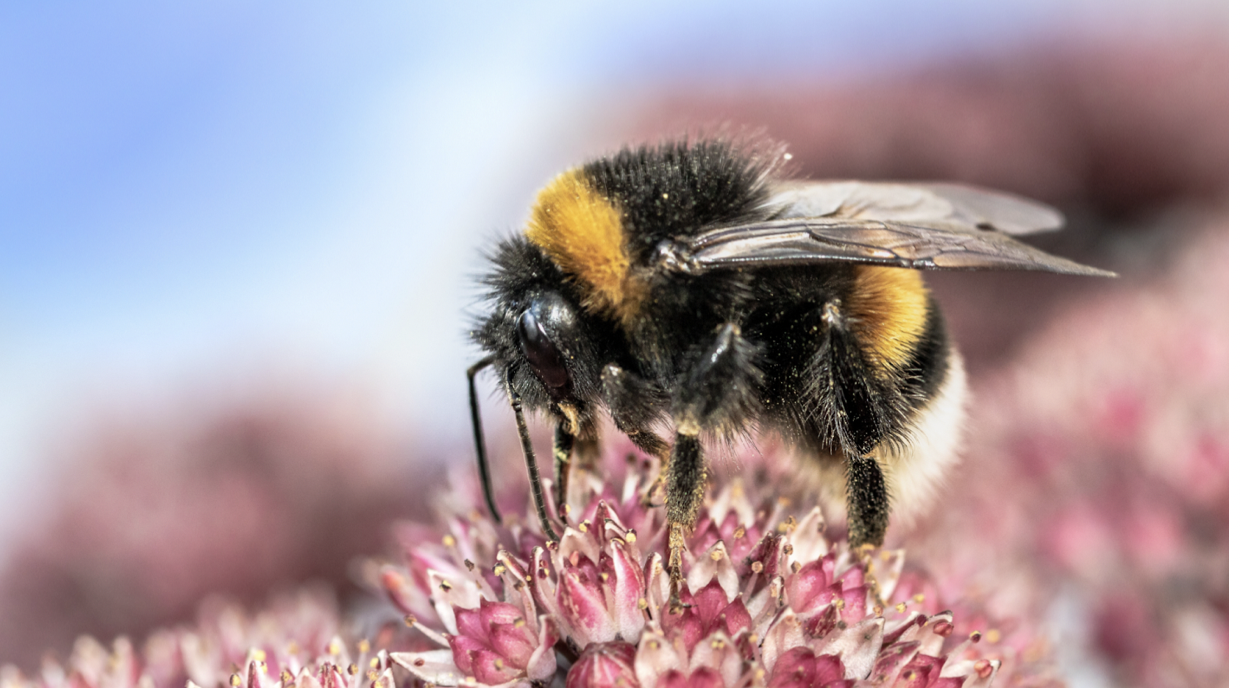
Bumblebees are critical pollinators. Image of a bee polinating a flower.

Contrary to popular belief, the American honey bee is not endangered. Actually, their populations are higher than they’ve ever been. The bees are not indigenous to North America, and were actually brought by Europeans in the 1600’s. Since then they have become massively distributed livestock because of their lucrative ability to create wax and honey. Their thriving population might even be part of the risk to bumblebees. Their ability to dominate pollen and nectar resources is believed to be playing a part in the decline of indigenous bee species. In addition, scientists have found that honey bees can be vectors for diseases that are dangerous to native bees.

Other dangers posed to bee populations are habitat loss, pesticides and of course, climate change. Certain chemical pesticides can interfere with their forms of communication, sleep patterns, and make them more receptive to certain parasites. The changing and increasingly more unpredictable weather patterns associated with climate change can interfere with bees’ natural cycles. Unexpected frosts or extreme heat waves can be dangerous to the sensitive insects.

Protecting native bees is an extremely important cause. Bees are keystone species in the environment and must be protected for the sake of the whole ecosystem. The global food system relies on pollinators to produce the crops we need, and without them we would have no food.

So What Can I Do to Help?

  • Provide your native bees a home. Green-scape your lawn by landscaping with plenty of native plants and flowers
  • Avoid using chemical pesticides that can be harmful to the (and let’s face it, probably you)
  • Support local beekeepers and beekeeping organizations that are practicing safe and sustainable honeybee keeping
  • Inform your beekeeping neighbors of your new knowledge and encourage them to do research of native bee populations in your area, and make sure their honey bees aren’t providing too much competition for native bees

Did You Know Safe Worldwide Has a Beekeeping Program?

Sources

Magazine, S. (2021, October 6). The American bumblebee has nearly vanished from eight states. Smithsonian.com. Retrieved July 6, 2022, from https://www.smithsonianmag.com/smart-news/american-bumblebee-has-vanished-from-eight-us-states-180978817/

The truth about honey bees. National Wildlife Federation. (2021, June 1). Retrieved July 6, 2022, from https://www.nwf.org/Home/Magazines/National-Wildlife/2021/June-July/Gardening/Honey-Bees

Turner, B. (2021, September 30). American Bumblebee could be officially declared endangered. LiveScience. Retrieved July 6, 2022, from https://www.livescience.com/american-bumblebee-endangered

Gold Transparency 2023 Candid badge.

GuideStar is the world’s largest source of information on nonprofit organizations.


They gather and provide access to the most comprehensive, up-to-date, and accurate nonprofit information which is available to potential funders and donors.

Less than five percent of non-profits registered with GuideStar are recognized with a Gold Seal. A Gold Seal status is the leading symbol of non-profit transparency and accountability.

Start a Community Garden

A community garden is a wonderful way to bring people together while growing fresh, healthy food. Kids can ask their school, local library, or community center if there’s space to start a garden, then invite neighbors and classmates to help plant, water, and harvest vegetables or flowers. Some gardens even donate their extra produce to food banks or share it with neighbors who need it. It’s a hands-on way to learn about nature, teamwork, and taking care of your community’s shared spaces.

SAFE Worldwide Kid's Zone

Raise Funds for Local Wildlife Center

Wildlife centers take care of injured or orphaned animals, and they always need extra support to keep helping. Kids can host a bake sale, lemonade stand, or online fundraiser, or organize a “walk-a-thon” with friends and family to raise money for a wildlife rescue near them. You could also collect donated supplies the center needs, like towels, blankets, or pet food. Even a small donation can help feed, shelter, or heal an animal in need.

SAFE Worldwide Kid's Zone

Recycling Project

Recycling projects let kids turn everyday trash into something useful — or at least keep it out of landfills! You could start a recycling bin program at your school, organize a can and bottle drive to raise money for charity, or get creative and turn old materials into art, planters, or bird feeders. You might even research your town’s recycling rules and make a poster or flyer to help neighbors recycle correctly. Small habits, like rinsing containers or separating paper from plastic, add up to a big impact when a whole community joins in.

SAFE Worldwide Kid's Zone

Booth at Local Farmers Markets

Setting up a booth at your local farmers market is a great way to get your whole neighborhood excited about helping the planet. You could raise money for a cause you care about — like a wildlife shelter, a tree-planting group, or a beach cleanup fund — by selling homemade crafts, lemonade, or baked goods. You could also use your booth to teach people about recycling, showing them fun facts or simple tips for sorting their trash the right way. It’s a great way to practice public speaking, teamwork, and making a real difference in your community.

SAFE Worldwide Kid's Zone

Beach Clean-Ups

Every year on the third Saturday of September, people around the world celebrate International Coastal Cleanup Day, and you can sign up with local groups in your community to join thousands of other volunteers picking up trash along the shore. But you don’t have to wait for that one day — cleanups can happen any time! Grab some gloves, trash bags, and a few friends, and organize your own cleanup day at a nearby river, stream, lake, or beach. It’s a fun way to hang out with friends while protecting fish, turtles, and birds from plastic and litter. Nationalcleanupday.

SAFE Worldwide Kid's Zone

Tree Planting Events

Planting trees is one of the easiest ways kids can help fight climate change and give animals a home. You can join organizations like SAFE Worldwide, One Tree Planted, or the Arbor Day Foundation, which often have kid-friendly volunteer days and even let you sponsor a tree from home. Or, team up with your family, neighbors, or scout troop to start your own mini tree-planting project in a local park, schoolyard, or empty lot (just ask permission first!). Every tree you plant helps clean the air, cool the planet, and grow into a home for birds and squirrels for years to come.

SAFE Worldwide Kid's Zone