Quick Facts
-
Official Species Name: Camelus ferus (Wild Bactrian camel)
-
Estimated Population: Fewer than 1,000 individuals
-
Conservation Status: Critically Endangered
-
Range: Mongolia & China (Gobi Desert)
-
Reasons for Population Decline: Habitat loss, poaching, competition with livestock, climate change
Unique Features
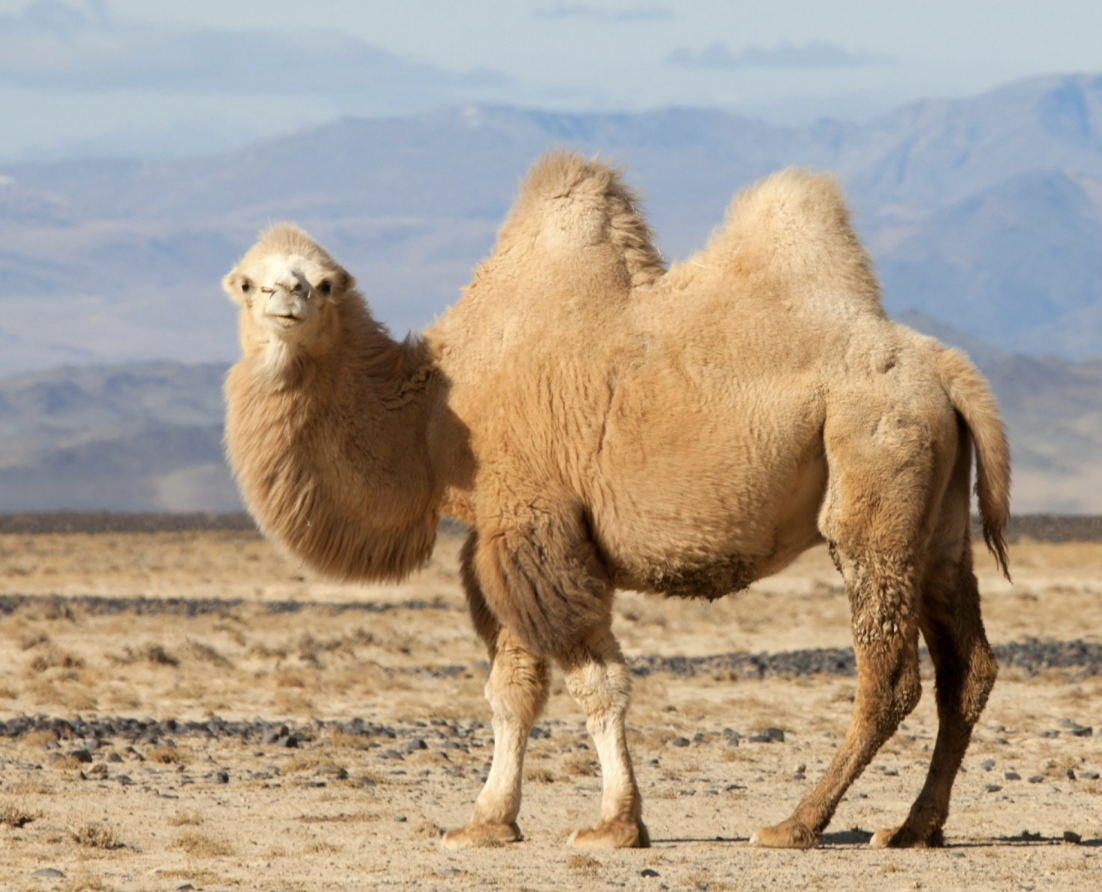
The wild Bactrian camel is one of the rarest large mammals on Earth and is genetically distinct from the domesticated Bactrian camel. Its two humps store fat, which can be converted into energy when food is scarce — an essential adaptation in the desert where vegetation is sparse.
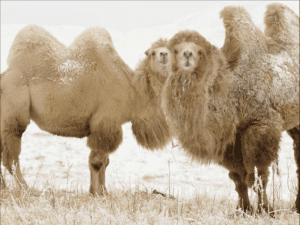
They are incredibly resilient animals. Wild Bactrian camels can tolerate extreme temperature fluctuations ranging from freezing winters below -30°C to scorching summer heat above 40°C. Their thick winter coats insulate them against bitter cold, and they shed that coat in summer. They also have the remarkable ability to drink brackish or salty water that would be harmful to most other mammals — a critical survival tool in the Gobi Desert.
Their wide, padded feet prevent them from sinking into sand, and their long eyelashes and closable nostrils protect them from sandstorms.
How They Survive in Their Habitat
The Gobi Desert is one of the harshest environments in the world — dry, windswept, and unpredictable. Wild Bactrian camels survive by traveling long distances between scattered food and water sources. They feed on desert shrubs, dry grasses, and salty plants that few other animals can digest.
During droughts, they rely on fat stored in their humps to sustain them. Their kidneys are highly efficient, conserving water and producing very concentrated urine to prevent dehydration.
They are nomadic and constantly on the move, adapting to changing desert conditions. Their endurance and ability to survive in remote, barren landscapes have allowed them to persist where many species cannot.
Family Life
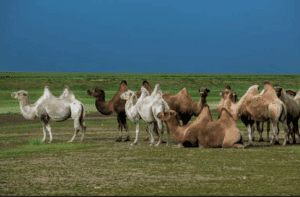
Wild Bactrian camels typically live in small herds composed of females and their young, led by a dominant male. Younger males may form bachelor groups until they are strong enough to compete for mates.
Females give birth to a single calf after a gestation period of about 13 months. Calves are vulnerable in their early months and rely heavily on their mothers for nourishment and protection. The bond between mother and calf is strong, especially in such a harsh environment where survival is never guaranteed.
Why They Are Threatened
Despite their resilience, wild Bactrian camels face serious threats. Illegal hunting for meat has reduced populations dramatically. Expansion of mining operations and infrastructure development has destroyed and fragmented their already limited habitat.
Competition with domestic livestock reduces access to food and water. Even more concerning, breeding between wild and domestic camels threatens the genetic integrity of the species.
Climate change is intensifying desert droughts, making survival even more difficult for an already fragile population.
10 Fun Facts
- They can drink extremely salty water.
- Their humps store fat, not water.
- They can survive temperatures from -30°C to 40°C.
- They can close their nostrils during sandstorms.
- They have thick eyelashes to protect against sand.
- They are excellent long-distance walkers.
- Wild and domestic Bactrian camels are different species.
- They can survive weeks with little food.
- Their feet are specially adapted for walking on sand.
- They are one of the rarest large mammals on Earth.