Quick Facts
-
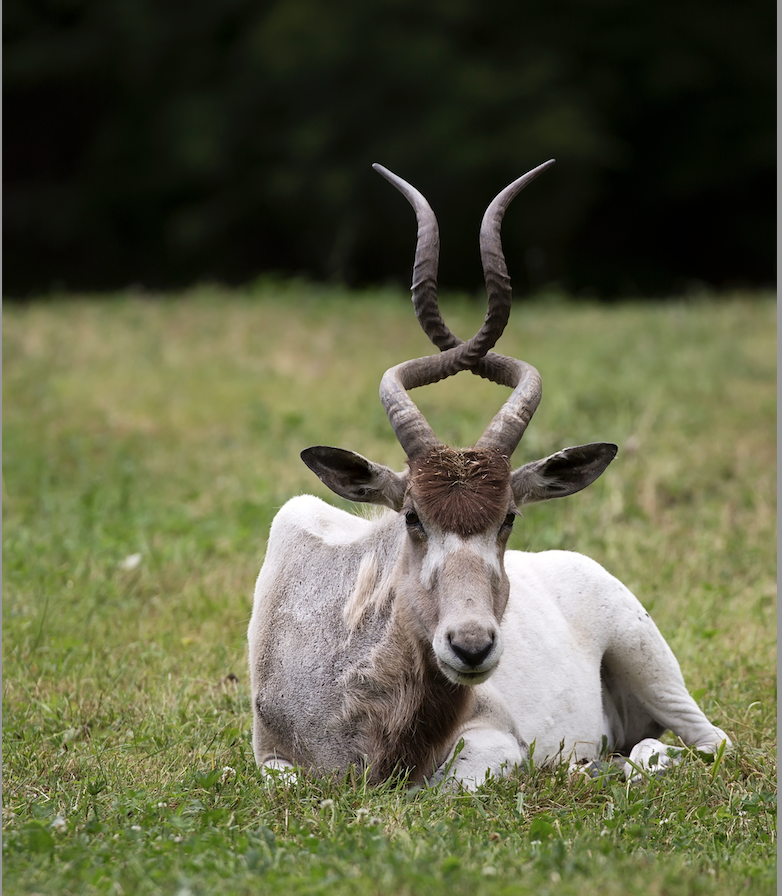
Official Species Name: Addax nasomaculatus
-
Estimated Population: 50–100 individuals in the wild
-
Conservation Status: Critically Endangered
-
Range: Northern Africa (Chad, Niger, Sahara Desert)
-
Reasons for Population Decline: Habitat loss, poaching, hunting, roadkill, oil development
Unique Features
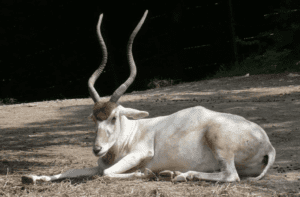
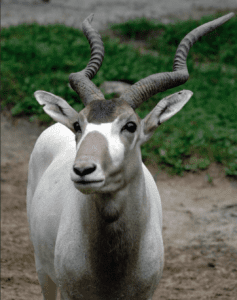
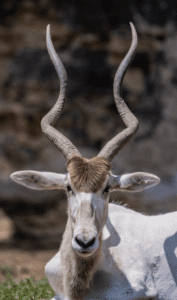
The addax antelope is one of the most desert-adapted large mammals on Earth. Its long, spiraled horns—present in both males and females—can reach up to 33 inches (85 cm) in length and are used for defense and dominance displays.
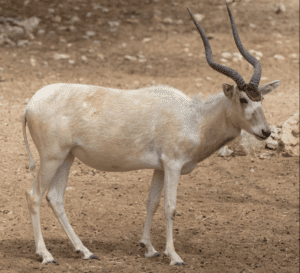
Their broad, flat hooves act like natural snowshoes, preventing them from sinking into soft desert sand. This adaptation allows them to travel across dunes with greater ease than many predators.
Their coat color changes seasonally—from grayish-brown in winter to almost white in summer. This color shift helps regulate body temperature by reflecting intense sunlight during the hottest months.
Perhaps most remarkably, addax have specialized stomach linings that store water in small pouches, allowing them to survive almost entirely without drinking free-standing water.
How They Survive in Their Habitat
Addax live in some of the harshest environments on Earth—the arid regions of the Sahara Desert. To avoid extreme daytime heat, they are primarily nocturnal, especially during summer months.
During the day, they dig shallow depressions in the sand, often in shaded areas near rocks or sparse vegetation. These sand beds provide cooling relief and protection from desert winds and sandstorms.
They are highly skilled at tracking rainfall. When rare storms bring moisture to the desert, addax move toward newly sprouting vegetation. Their seasonal movements often follow the shifting edge of the tropical rain system.
Their diet consists mainly of hardy desert grasses such as Aristida, Panicum, and Stipagrostis. When grasses are scarce, they browse on acacia leaves and shrubs. They carefully select nutrient-rich shoots and seeds, which provide essential protein. Most of their hydration comes from moisture within these plants rather than direct water sources.
Family Life
Addax are social animals that live in herds ranging from 5 to 20 individuals. These groups typically include both males and females and are led by the oldest dominant male.
Within the herd, females establish their own dominance hierarchy, with older females generally holding higher rank. Males are territorial and will guard females from rival males, especially during breeding season.
Calves are usually born after a gestation period of about 8–9 months. Mothers give birth to a single calf, often in a secluded area. The calf remains hidden for the first few days before gradually integrating into the herd.
Herd members stay within a home range but may travel beyond it in search of food following rainfall.
Why They Are Threatened
The addax is one of the most endangered mammals in the world. Once widespread across North Africa, the species has experienced dramatic population declines.
Poaching and illegal hunting for meat and horns have severely reduced their numbers. Oil exploration and extraction have fragmented their remaining habitat, while road construction has increased vehicle collisions. Trophy hunting programs outside their native range have also contributed to controversy and population pressure.
Because addax move relatively slowly and live in open desert landscapes, they are particularly vulnerable to hunters using vehicles and modern firearms. With fewer than 100 individuals remaining in the wild, each loss has a major impact on the species’ survival.
Ten Fun Facts
- Both male and female addax have equally long spiral horns.
- They are sometimes called the “white antelope” because of their pale summer coat.
- Addax rarely need to drink water directly.
- Their hooves spread wide to act like built-in sandshoes.
- They can detect distant rainfall and move toward new plant growth.
- Addax dig sand beds to stay cool during the day.
- They are primarily active at night to avoid desert heat.
- Calves are hidden shortly after birth for protection.
- They can survive in some of the driest environments on Earth.
- Fewer addax remain in the wild than many other famous endangered species.
What Can You Do to Help?
- Protecting the addax requires global cooperation and awareness. Here’s how people can make a difference:
- Support conservation organizations working in Chad and Niger to protect wild populations.
- Advocate for stronger anti-poaching laws and enforcement in desert regions.
- Encourage responsible oil development that protects critical habitat.
- Speak out against trophy hunting of critically endangered species.
- Support accredited breeding programs that focus on reintroduction into protected wild habitats.
- Educate others about lesser-known endangered species like the addax.
- Every action—whether raising awareness or supporting conservation groups—helps give this extraordinary desert antelope a chance to survive and recover in its natural home.