Quick Facts
-
Official Species Name: Vulpes lagopus
-
Estimated Population: Hundreds of thousands globally (some regional populations endangered)
-
Conservation Status: Least Concern globally; Endangered in some regions
-
Range: Arctic regions of North America, Europe, and Asia
-
Reasons for Population Decline: Climate change, habitat alteration, competition, hunting

Unique Features
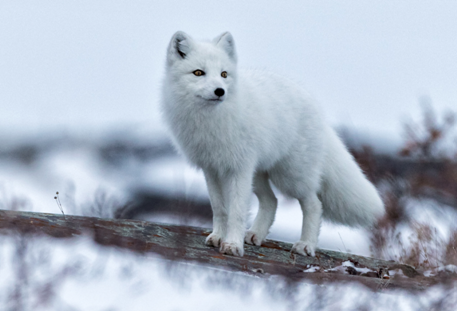
The Arctic fox is one of the most cold-adapted mammals on Earth. Its thick, multilayered fur provides insulation against temperatures that can drop below -50°C (-58°F). Even the soles of its feet are covered in fur, acting like built-in snow boots that protect against frostbite and provide traction on ice.
One of its most remarkable features is its seasonal camouflage. In winter, the Arctic fox’s coat turns brilliant white to blend seamlessly into snow and ice. In summer, it changes to brown or gray to match tundra rocks and vegetation. This color shift helps it remain hidden from both predators and prey year-round.
Its compact body shape, short ears, and short muzzle minimize heat loss — a perfect example of evolution shaping a species for extreme survival.

How They Survive in Their Habitat
Arctic foxes live in some of the harshest environments on the planet — the Arctic tundra. Food can be scarce, especially in winter, so they are opportunistic feeders. They hunt small mammals like lemmings, scavenge carcasses left by polar bears, and even cache (store) extra food under the snow for later.
Their acute hearing allows them to detect prey moving beneath the snow. They often leap high into the air and pounce headfirst into snowdrifts to catch hidden rodents.
They also dig extensive dens, sometimes with multiple entrances, which can be used for generations. These dens provide shelter from freezing winds and predators.

Family Life
Arctic foxes are generally monogamous during breeding season. Pairs raise their young together in underground dens. In spring, females give birth to litters that can range from 5 to as many as 12 pups — one of the largest litter sizes among wild canines.
Both parents help feed and protect the pups. In some cases, older siblings from previous litters may assist in caring for younger pups. By late summer, young foxes begin exploring independently, preparing for their first harsh Arctic winter.
Family cooperation significantly increases survival in such an unforgiving environment.

Why They Are Threatened
While the Arctic fox is not globally endangered, certain populations are in serious decline. Climate change poses the most significant long-term threat. As Arctic temperatures rise, sea ice melts and tundra ecosystems shift.
Red foxes — which are larger and more aggressive — are expanding northward due to warming temperatures. They compete with Arctic foxes for food and territory, sometimes killing them.
In some regions, hunting and trapping for fur have also reduced local populations. Habitat disturbance from oil and gas development further pressures fragile Arctic ecosystems.
Because Arctic environments are changing faster than almost anywhere else on Earth, the future of many Arctic fox populations remains uncertain.
Ten Fun Facts
- Arctic foxes can survive temperatures as low as -50°C.
- Their fur changes color with the seasons.
- They have fur-covered footpads for insulation.
- They can hear prey moving under thick snow.
- They sometimes follow polar bears to scavenge leftovers.
- Their dens can be hundreds of years old.
- They can travel long distances across sea ice.
- Litters can contain up to 12 pups.
- They store extra food in caches under the snow.
- They have one of the warmest fur coats of any mammal.
What Can You Do to Help?
Protecting Arctic foxes means protecting the Arctic.
-
Support strong climate action policies that reduce greenhouse gas emissions.
-
Advocate for responsible development in Arctic regions.
-
Support conservation programs monitoring vulnerable Arctic fox populations.
-
Choose sustainable energy solutions to reduce dependence on fossil fuels.
-
Raise awareness about the rapid changes occurring in Arctic ecosystems.
-
Support Indigenous-led conservation initiatives that protect Arctic wildlife.
The Arctic fox is a symbol of resilience — but even the most resilient species cannot adapt to unlimited environmental change. Protecting their habitat protects the entire Arctic ecosystem.