Scientific Information:
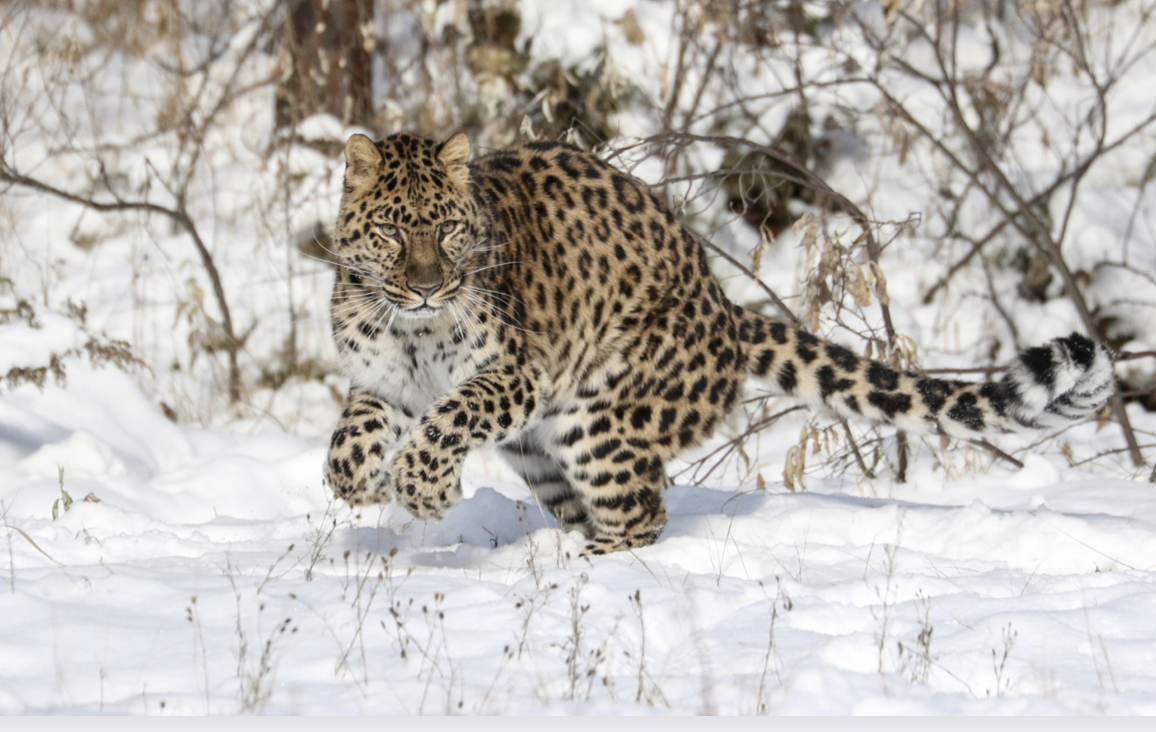
- Species Name: Panthera pardus orientalis
- Estimated Population: Approx 120 in the wild
- Conservation Status: Critically Endangered
- Range: Eastern Russia, Northern China, possibly Northern Korea
- Reasons for population decline: Habitat loss, deforestation, poaching
Unique Features
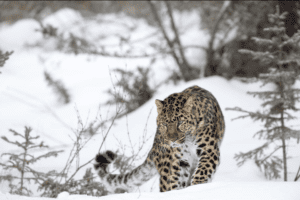
The Amur leopard is one of the rarest big cats in the world and the northernmost subspecies of leopard. It is uniquely adapted to survive in cold, snowy climates — something most leopards are not built for. Its thick, pale cream-colored coat grows longer and denser in winter, providing insulation against freezing temperatures. The wide spacing of its dark rosettes helps distinguish it from other leopard subspecies.
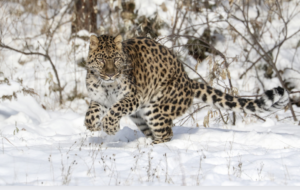
Its long legs allow it to move efficiently through deep snow, and its powerful muscles enable it to leap over 19 feet horizontally and up to 10 feet vertically. Like all leopards, it has exceptional night vision and stealth, making it a highly effective solitary hunter.
Each Amur leopard’s rosette pattern is unique, functioning like a fingerprint for identification.
How They Survive in Their Habitat
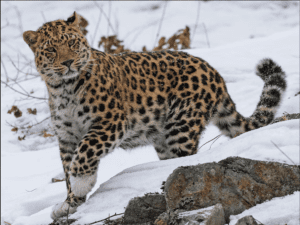
Amur leopards inhabit temperate forests and mountainous regions where winters are long and harsh. They rely on stealth and camouflage to stalk prey such as roe deer, sika deer, and hares. Their pale winter coat blends seamlessly into snowy landscapes.
They require large territories — sometimes spanning hundreds of square miles — because prey is relatively scarce in their environment. Leopards mark their territory using scent markings and scratch marks on trees to avoid direct conflict with other leopards.
To survive cold winters, they conserve energy between hunts and may cache leftover prey in trees or hidden locations to eat later. Their adaptability and patience are key to survival in such a challenging ecosystem.
Family Life
Amur leopards are solitary animals except during mating season or when a mother is raising cubs. After a gestation period of about three months, a female typically gives birth to 1–3 cubs in a secluded den.
Cubs are born blind and completely dependent on their mother. She protects them fiercely and teaches them how to hunt over the course of 18–24 months. Survival for cubs is difficult, especially in areas where prey is limited or human disturbance is high.
Because females reproduce only every few years, population recovery is slow — making the survival of each cub critically important.
Why They Are Threatened
Poaching has been the most significant threat to Amur leopards. They have been hunted for their beautiful spotted fur, and their prey species have also been heavily hunted, reducing available food.
Habitat loss from logging, road construction, and agricultural expansion has fragmented their forest home. Fragmentation isolates individuals, limiting genetic diversity and making breeding more difficult.
With such a small population, disease outbreaks, forest fires, or natural disasters could have devastating impacts. Climate change may also alter forest ecosystems, affecting prey availability.
Although conservation efforts in Russia and China have helped stabilize numbers in recent years, the species remains critically endangered.
Ten Fun Facts
- The Amur leopard is the rarest big cat in the world.
- It is the only leopard subspecies adapted to snowy climates.
- Its winter coat can grow up to 7 cm long.
- Each leopard’s rosette pattern is unique.
- They can leap over 19 feet in a single bound.
- They are powerful swimmers.
- They can drag prey heavier than themselves into trees.
- Cubs stay with their mother for up to two years.
- They can run up to 37 miles per hour in short bursts.
- Most of the remaining population lives in a protected forest region along the Russia–China border
What Can You Do to Help?
The survival of the Amur leopard depends on continued conservation commitment.
- Support anti-poaching patrols and wildlife law enforcement programs.
- Support organizations working in the Russian Far East and Northeast China to protect habitat corridors.
- Avoid products linked to illegal wildlife trade.
- Advocate for sustainable forestry practices that prevent habitat destruction.
- Support efforts to protect prey species to maintain a healthy ecosystem.
- Raise awareness about the global illegal wildlife trafficking crisis.
With fewer than 130 individuals left in the wild, every protected forest, every anti-poaching patrol, and every informed decision makes a difference for the future of the Amur leopard.