Quick Facts
- Official Species Name: Inia geoffrensis
- Estimated Population: Unknown; declining across much of its range
- Conservation Status: Endangered
- Range: Amazon & Orinoco River basins (South America)
- Reasons for Population Decline: Bycatch, illegal fishing practices, habitat degradation, pollution, dam construction
Unique Features
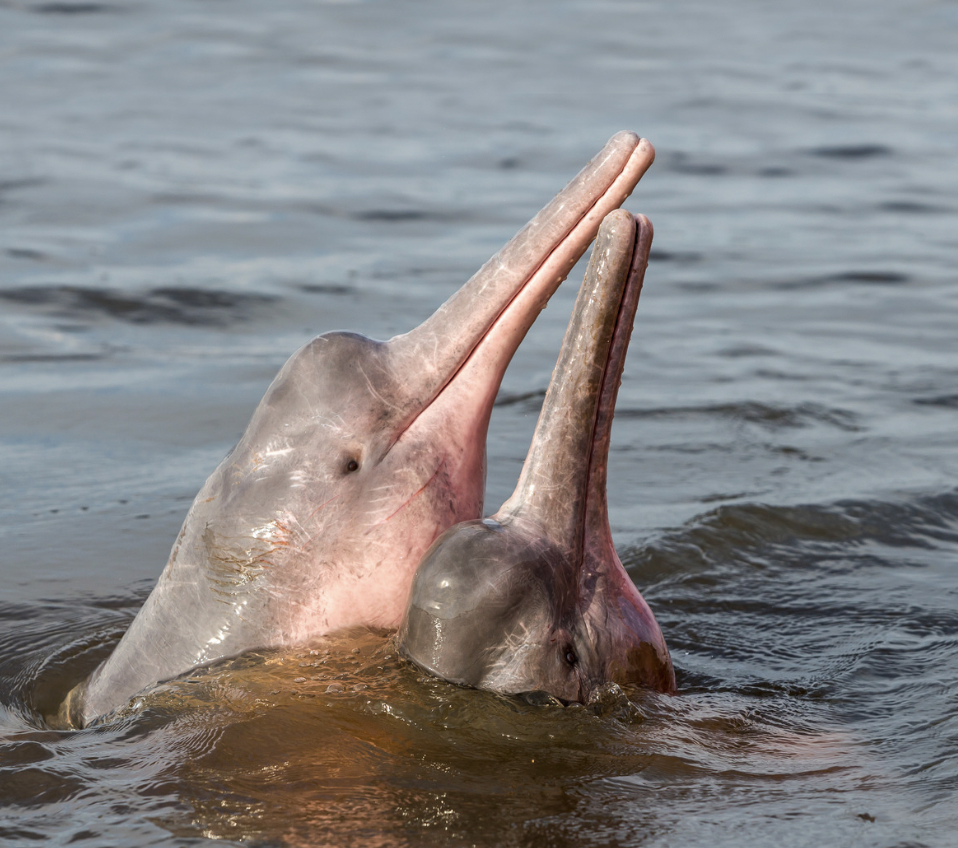
The Amazonian river dolphin — often called the boto — is one of the most distinctive freshwater dolphins in the world. Unlike ocean dolphins, it has a long, slender beak and a flexible neck. Its unfused neck vertebrae allow it to turn its head side to side, which is extremely useful when navigating through submerged trees in flooded forests.
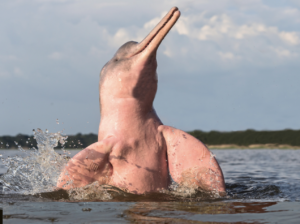
Adults are famous for their pink coloration. Calves are born gray, but as they age, many develop a pink hue that can intensify with excitement or physical activity. The pink color is influenced by blood flow near the skin and scarring from social interactions.
They also have the largest brain-to-body ratio of any dolphin species, suggesting complex social behavior and high intelligence.
How They Survive in Their Habitat
Amazonian river dolphins live in one of the most dynamic ecosystems on Earth. During the rainy season, rivers flood vast areas of forest, creating a maze of submerged trees and vegetation. The boto thrives in this environment.
Using echolocation, they emit sound waves that bounce off objects, helping them locate fish and navigate through murky water. Their flexible neck and maneuverable body allow them to swim between tree trunks in flooded forests where many predators cannot follow.
They feed on a wide variety of fish species, crustaceans, and even small turtles. Their adaptability to changing water levels is key to their survival.
Family Life
Amazonian river dolphins are generally more solitary than ocean dolphins, though they are often seen in small, loose groups. Social interactions increase during feeding and mating seasons.
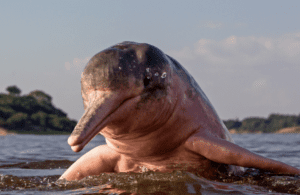
Females give birth to a single calf after a gestation period of about 11 months. Calves stay close to their mothers for over a year, learning hunting techniques and migration routes through the river system.
The bond between mother and calf is critical in the early months, especially in an environment with predators such as large caimans and jaguars.
Why They Are Threatened
The Amazonian river dolphin faces growing pressure from human activity. One of the most significant threats is entanglement in fishing nets (bycatch). In some areas, dolphins are deliberately killed and used as bait in certain fisheries.
Pollution from mining, especially mercury contamination from gold mining, accumulates in river systems and harms dolphin health. Dam construction disrupts river flow, isolates populations, and reduces fish availability.
Deforestation along riverbanks increases sedimentation and degrades water quality, further threatening their habitat. Because river dolphins rely on interconnected waterways, fragmentation can severely impact their survival.
Ten Fun Facts
- Amazon river dolphins are often called “botos.”
- They are one of the few freshwater dolphin species in the world.
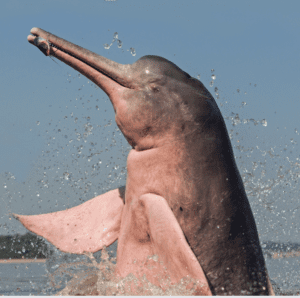
- Adults can turn bright pink.
- They have flexible necks, unlike most dolphins.
- They use echolocation to hunt in muddy water.
- They can swim through flooded forests during rainy season.
- They have small, unfused dorsal ridges instead of tall dorsal fins.
- Males are usually pinker than females.
- They eat more than 50 species of fish.
- In Amazonian folklore, botos are believed to transform into humans at night.
What Can You Do to Help?
Protecting the Amazonian river dolphin means protecting the rivers of the Amazon.
- Support conservation efforts focused on freshwater ecosystems.
- Advocate for sustainable fishing practices that reduce bycatch.
- Oppose illegal gold mining and mercury pollution.
- Support rainforest protection initiatives to reduce deforestation.
- Encourage responsible hydropower planning that minimizes river fragmentation.
- Raise awareness about the importance of freshwater biodiversity.
Healthy rivers support not only dolphins but also Indigenous communities, fisheries, and entire rainforest ecosystems. Protecting the boto helps protect the Amazon itself.
Watch this video on the Amazon River Dolphin, courtesy of BBC Earth