Quick Facts
-
Official Species Name: Gorilla gorilla gorilla
-
Estimated Population: Approximately 300,000 (declining)
-
Conservation Status: Critically Endangered
-
Range: Central and West Africa
-
Reasons for Population Decline: Habitat loss, poaching, bushmeat trade, disease (Ebola), logging
Unique Features
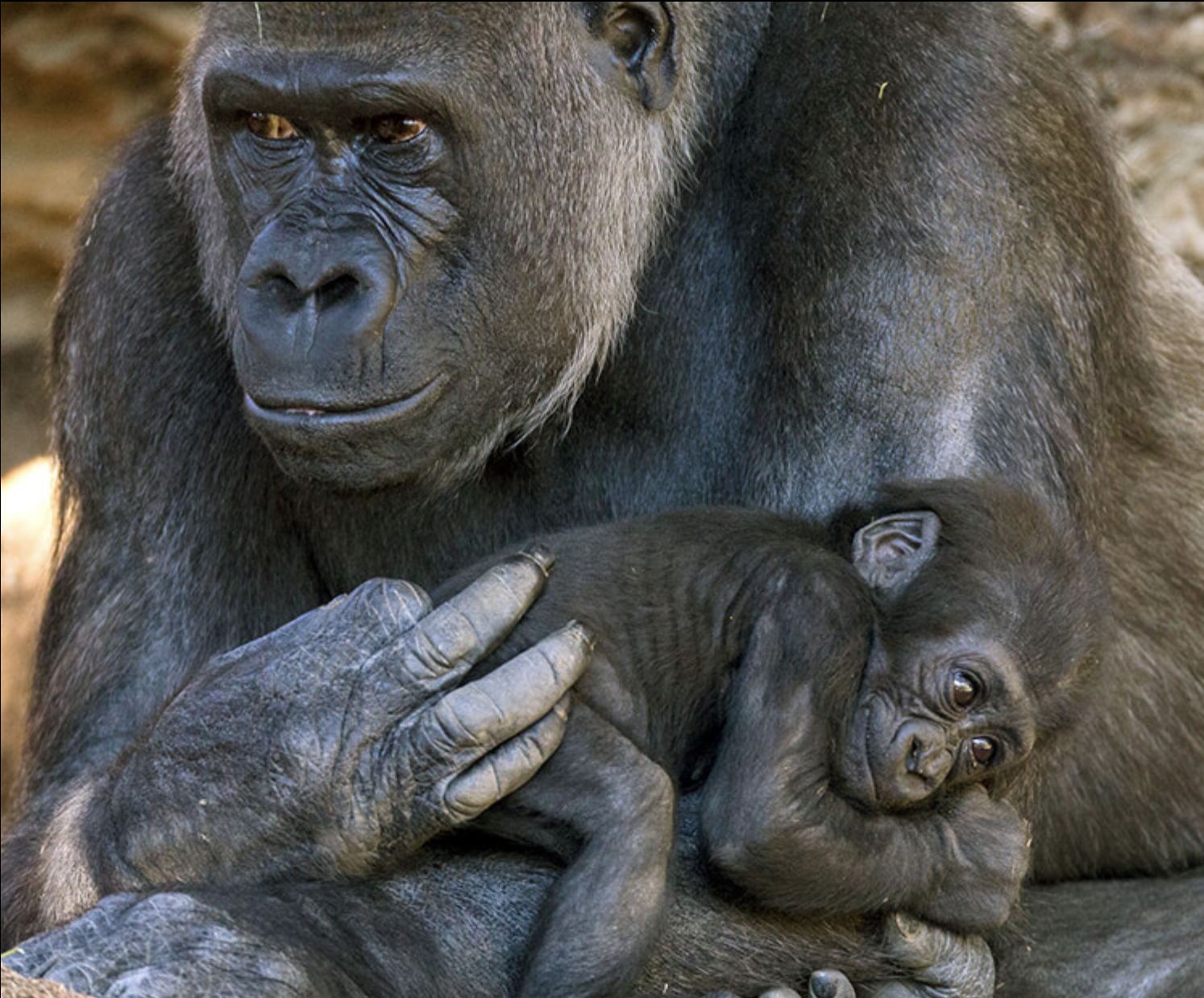
The Western lowland gorilla is the smallest and most numerous of the gorilla subspecies, though its numbers are still declining. They have shorter, finer hair and slightly smaller bodies compared to Eastern gorillas. Adult males develop the iconic silverback—a patch of silver-gray hair across their back that signals maturity and dominance.
They possess immense physical strength, with powerful arms used for knuckle-walking and climbing. Despite their strength, they are generally gentle and highly intelligent animals. They communicate using facial expressions, vocal sounds, body posture, and chest-beating displays.
Western lowland gorillas have large heads with pronounced brow ridges and wide nostrils that help distinguish individuals, as each gorilla has a unique “nose print.”
How They Survive in Their Habitat
Western lowland gorillas inhabit dense tropical rainforests, swamp forests, and lowland forests across Central Africa. They are primarily herbivorous, feeding on fruits, leaves, shoots, bark, and occasionally insects such as termites.
Fruit makes up a large portion of their diet when available, and they may travel long distances in search of fruiting trees. When fruit is scarce, they rely more heavily on leaves and fibrous plant material.
They play a vital ecological role as seed dispersers. By consuming fruit and traveling through the forest, they spread seeds in their droppings, helping maintain forest diversity and regeneration. Each night, they build fresh nests made from leaves and branches for resting.
Family Life
Western lowland gorillas live in family groups led by a dominant silverback male. A group typically consists of several females and their offspring.
The silverback is responsible for protecting the group, deciding where to travel, and resolving conflicts. If threatened, he may beat his chest, roar, or charge to defend his family.
Females give birth to a single infant after about 8.5 months of gestation. Infants are completely dependent on their mothers and cling to them for warmth and safety. Young gorillas are playful and curious, often engaging in wrestling and climbing games.
Strong social bonds and grooming help maintain harmony within the group.
Why They Are Threatened
Western lowland gorillas face severe threats across their range. Habitat destruction from logging, mining, and agricultural expansion has significantly reduced and fragmented their forest homes.
Poaching for bushmeat remains one of the most serious threats, as gorillas are hunted for food and sometimes killed unintentionally in snares set for other animals.
Disease outbreaks, particularly Ebola, have devastated populations in some regions, killing thousands of individuals in short periods. Their slow reproductive rate—typically one infant every four to six years—makes recovery difficult.
Even though they are the most numerous gorilla subspecies, they continue to decline rapidly.
Ten Fun Facts
-
Each gorilla has a unique nose print, like a human fingerprint.
-
Silverbacks can weigh up to 400 pounds (180 kg).
-
They build a new nest every night for sleeping.
-
Western lowland gorillas are important seed dispersers in rainforest ecosystems.
-
They share about 98% of their DNA with humans.
-
A silverback’s chest beat can be heard over long distances.
-
Young gorillas love to tumble, wrestle, and climb trees.
-
They can consume up to 40 pounds (18 kg) of vegetation per day.
-
Gorillas communicate using more than 20 vocal sounds.
-
Despite their strength, they are generally peaceful and avoid conflict when possible.
What Can People Do to Help?
-
Support conservation organizations protecting Central African rainforests.
-
Advocate against illegal logging and mining in gorilla habitats.
-
Oppose bushmeat hunting and illegal wildlife trade.
-
Support responsible sourcing of products linked to deforestation.
-
Donate to wildlife health monitoring programs to prevent disease outbreaks.
-
Promote sustainable land-use policies in gorilla range countries.
-
Raise awareness about the importance of rainforest conservation.