Quick Facts
- Official Species Name: Balaenoptera physalus
- Estimated Population: Approximately 100,000 globally
- Conservation Status: Vulnerable
- Range: Oceans worldwide
- Reasons for Population Decline: Commercial whaling, ship strikes, entanglement, climate change, ocean noise
Unique Features
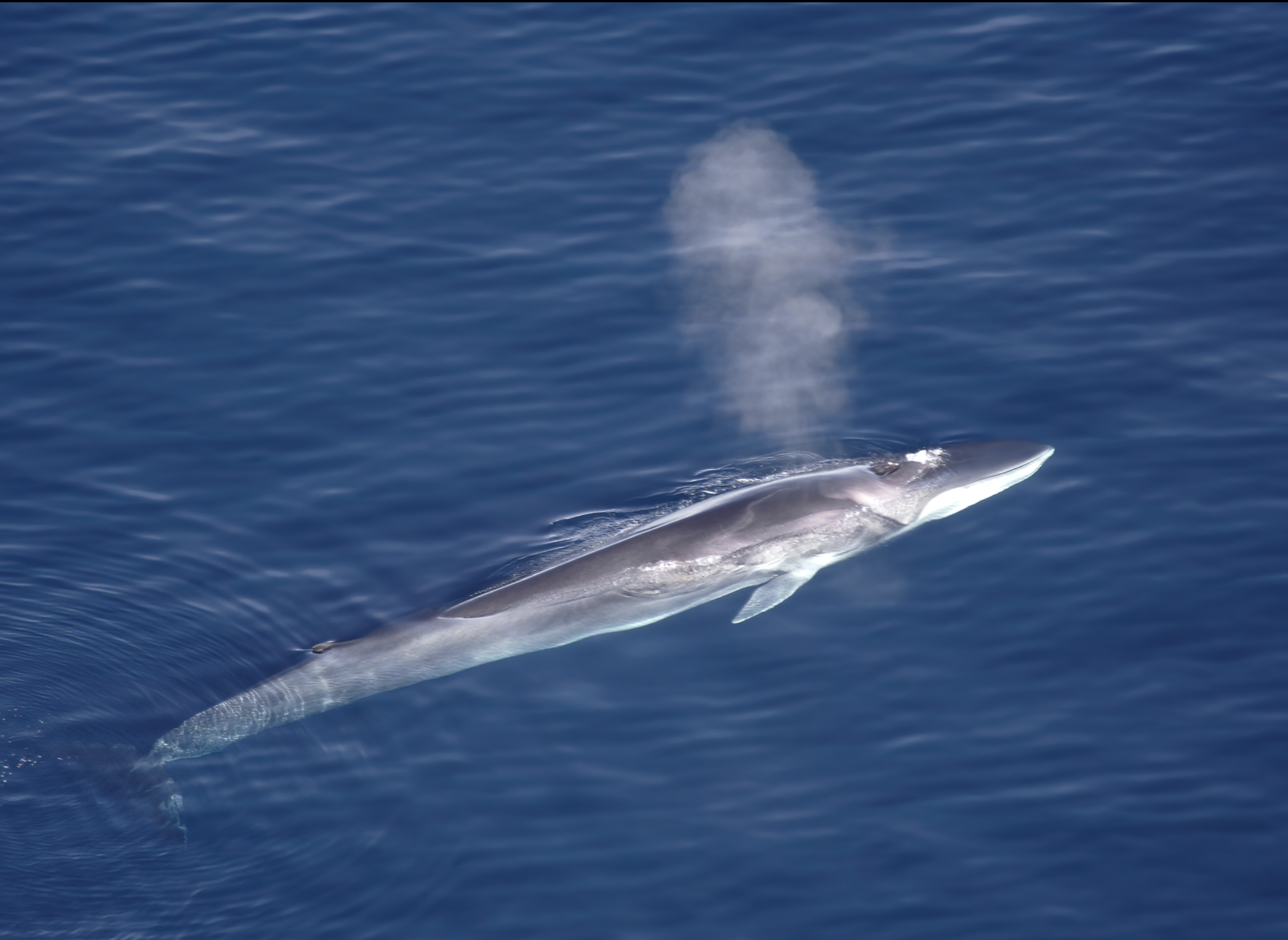
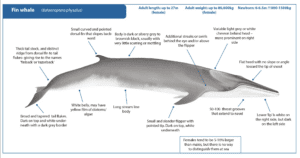
The fin whale is the second-largest animal on Earth, surpassed only by the blue whale. Adults can reach lengths of up to 85 feet (26 meters) and weigh as much as 80 tons. Their sleek, streamlined bodies have earned them the nickname “the greyhound of the sea” due to their speed and graceful movement.
One of their most unusual features is asymmetrical coloring on their lower jaw—white on the right side and dark on the left. Scientists believe this may help them herd and confuse prey while feeding.
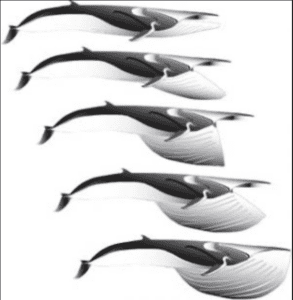
Fin whales have long, slender bodies with a small dorsal fin positioned far back near the tail. Like other baleen whales, they possess baleen plates instead of teeth, which they use to filter tiny prey from seawater.
How They Survive in Their Habitat
Fin whales inhabit both deep offshore waters and coastal areas. They migrate seasonally, spending summers feeding in cold, nutrient-rich waters and winters in warmer waters for breeding and calving.
They are lunge feeders, accelerating toward dense schools of krill, small fish, or squid and engulfing large volumes of water. After closing their mouths, they force the water out through their baleen plates, trapping prey inside.
Their thick layer of blubber insulates them against cold ocean temperatures and provides energy reserves during long migrations. Fin whales are capable swimmers and can reach speeds of up to 25 miles per hour (40 km/h), allowing them to travel great distances efficiently.
Family Life
Fin whales are generally solitary or found in small groups, although larger feeding aggregations may form where food is abundant.
After a gestation period of about 11–12 months, females give birth to a single calf. Newborn calves measure around 20–22 feet (6–7 meters) long and weigh approximately 4,000–6,000 pounds.
Calves nurse on rich milk and grow rapidly during their first year of life. The bond between mother and calf is strong, with mothers guiding their young during migrations and teaching them essential survival behaviors.
Why They Are Threatened
Fin whales were heavily hunted during the 20th century in commercial whaling operations. Hundreds of thousands were killed for oil and meat, drastically reducing their global population.
Although international protections have helped populations slowly recover, they still face significant threats. Ship strikes are a major concern, particularly in busy shipping lanes. Entanglement in fishing gear can cause injury or death.
Climate change may impact their food supply by altering ocean temperatures and krill populations. Increasing ocean noise from ships and industrial activities can also disrupt communication, which is vital for navigation and breeding.
Ten Fun Facts
- Fin whales are the second-largest animals on Earth.
- They can reach speeds of up to 25 mph (40 km/h).
- Their lower jaw is asymmetrically colored—white on one side.
- They can consume thousands of pounds of food each day.
- Their calls are low-frequency sounds that can travel long distances underwater.
- They have 260–480 baleen plates for filtering food.
- A single breath can produce a blow up to 20 feet high.
- They migrate thousands of miles each year.
- Their scientific name physalus means “blowing” in Greek.
- They can live for 70–90 years.
What Can You Do to Help?
- Support marine conservation organizations protecting whale habitats.
- Advocate for safer shipping lanes to reduce ship strikes.
- Reduce plastic use and prevent ocean pollution.
- Choose sustainable seafood to reduce harmful fishing practices.
- Support climate action initiatives to protect marine ecosystems.
- Encourage enforcement of international whaling bans.
- Raise awareness about the importance of ocean conservation.