Quick Facts
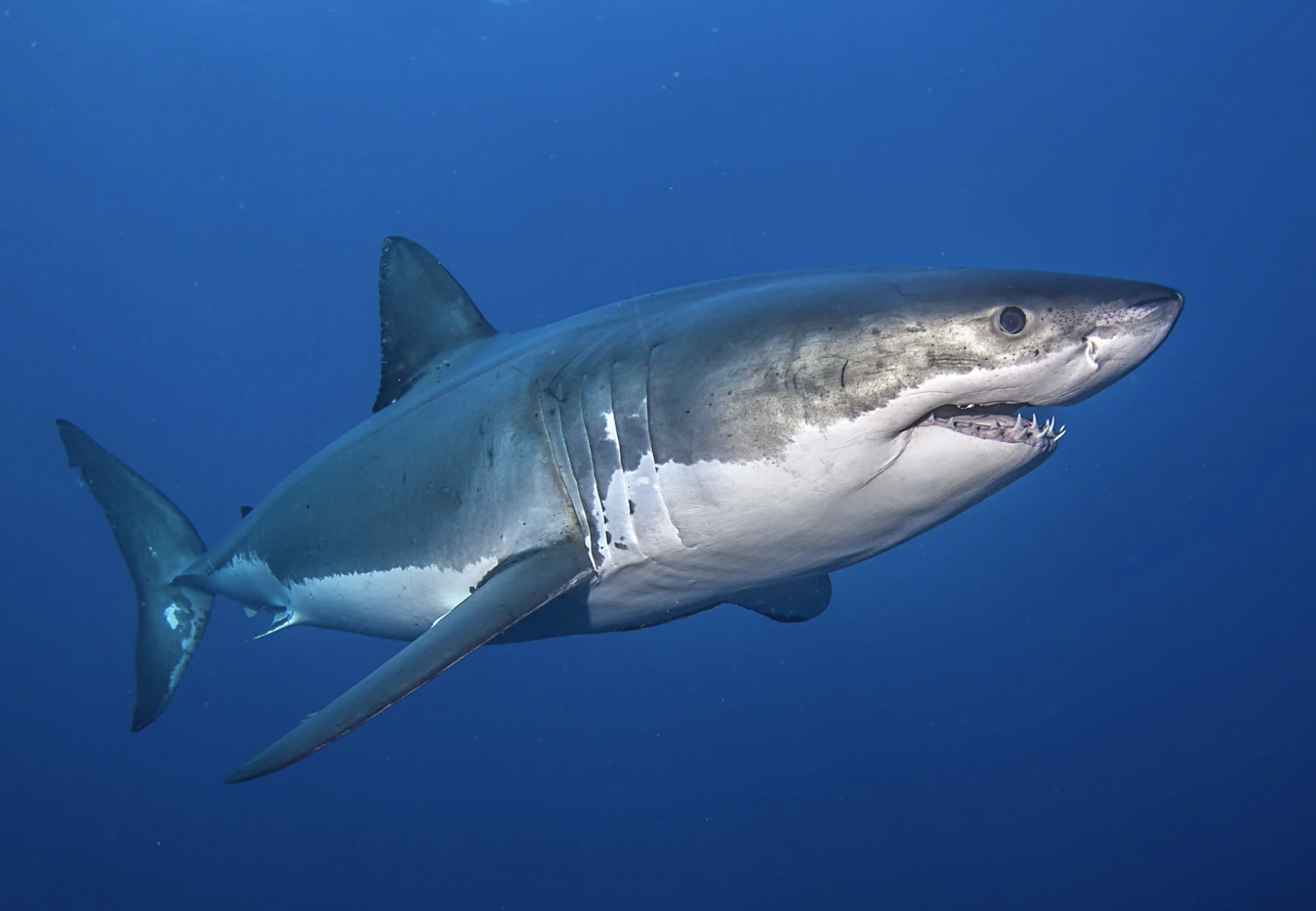
- Official Species Name: Carcharodon carcharias
- Estimated Population: Unknown (believed to be declining in some regions)
- Conservation Status: Vulnerable
- Range: Coastal and offshore waters worldwide
- Reasons for Population Decline: Overfishing, bycatch, fin trade, habitat degradation
Unique Features
The great white shark is one of the largest predatory fish in the ocean. Adults can grow over 20 feet (6 meters) long and weigh more than 4,000 pounds (1,800 kg).
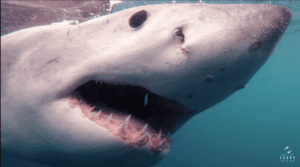
They are famous for their powerful jaws lined with rows of serrated teeth. A great white can have around 300 teeth at any given time, and when one tooth falls out, another quickly replaces it.
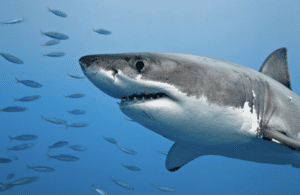
Their coloration provides excellent camouflage. Their dark gray backs blend with the ocean depths when viewed from above, while their white undersides match the bright surface waters when seen from below. This is called countershading.
Great whites also have an extraordinary sense of smell and can detect tiny amounts of blood in the water from far away.
How They Survive in Their Habitat
Great white sharks are highly adapted ocean hunters. They inhabit coastal waters but also travel long distances across entire ocean basins. Some individuals migrate thousands of miles each year.
They feed on fish, seals, sea lions, and sometimes other sharks. Younger sharks typically eat fish and rays, while adults target marine mammals for higher-energy meals.
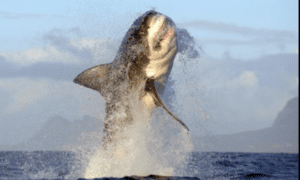
Their powerful tails allow them to swim at impressive speeds, and they sometimes launch themselves out of the water in spectacular breaches when hunting seals.
Unlike most fish, great whites are partially warm-blooded. They can regulate their body temperature slightly above surrounding water, allowing them to hunt in cooler seas.
Family Life
Great white sharks are generally solitary animals. They do not form family groups or long-term social bonds like mammals.
Females give birth to live young after a long gestation period that may last over a year. Pups are born fully developed and must immediately fend for themselves.
There is no parental care. Young sharks rely on instinct and must avoid larger predators—including other sharks—while learning to hunt.
Why They Are Threatened
Although they are powerful predators, great white sharks face serious threats from human activities.
Commercial fishing operations sometimes catch them accidentally as bycatch. They are also targeted illegally for their fins, teeth, and jaws.
Overfishing of prey species can reduce their food supply. Coastal pollution and habitat changes also affect shark populations.
Because great whites grow slowly, mature late, and produce relatively few offspring, their populations recover very slowly from declines.
Ten Fun Facts
- Great whites can detect a drop of blood in vast amounts of water.
- They can breach completely out of the water while hunting.
- Their teeth are constantly replaced throughout their lives.
- They may live 60–70 years or more.
- They can travel thousands of miles during migration.
- They are partially warm-blooded.
- A great white’s bite force is one of the strongest of any living animal.
- They play a key role in maintaining healthy ocean ecosystems.
- Their skeletons are made of cartilage, not bone.
- Despite their reputation, shark attacks on humans are extremely rare.
What Can People Do to Help?
- Support sustainable fishing practices that reduce bycatch.
- Avoid purchasing shark fin products or souvenirs made from shark parts.
- Support marine protected areas.
- Reduce plastic use to help protect ocean ecosystems.
- Support organizations dedicated to shark conservation and research.
- Learn about sharks to help reduce fear-based misunderstandings.
- Advocate for stronger international protections for shark species.