Golden snub-nosed monkey

Quick Facts

  • Official Species Name: Rhinopithecus roxellana
  • Estimated Population: Approximately 20,000–25,000
  • Conservation Status: Endangered
  • Range: Central and Southwest China (Qinling, Minshan, and Shennongjia Mountains)
  • Reasons for Population Decline: Habitat loss, logging, fragmentation, historical hunting
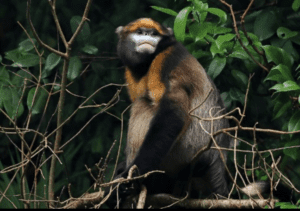
Unique Features

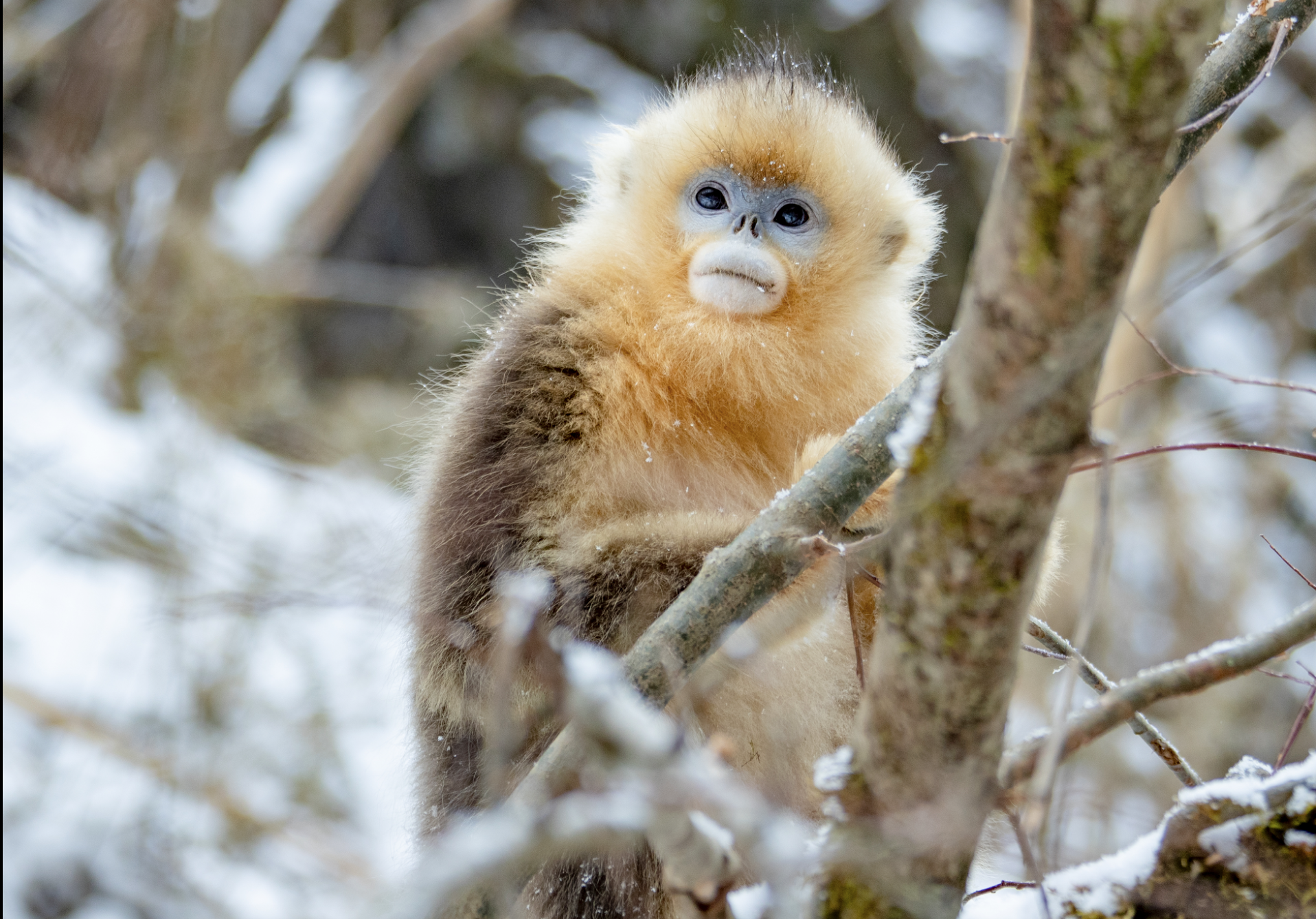
Golden monkeys are famous for their striking appearance. They have long, silky golden-orange fur, pale blue faces, and an upturned “snub” nose. Their thick fur keeps them warm in cold mountain climates, even in snowy winters.

Their noses are small and flat, which helps reduce the risk of frostbite in freezing temperatures. The bright golden coat contrasts beautifully against snowy forests, making them one of the most visually stunning primates in the world.

They also have complex vocal communication systems, using a variety of calls to communicate within their large social groups.


How They Survive in Their Habitat

Golden monkeys live in temperate mountain forests at elevations of up to 10,000 feet (3,000 meters). Winters in these areas are harsh, with heavy snow and freezing temperatures.

They survive by eating a varied diet that includes leaves, fruits, seeds, bark, buds, and lichens. During winter, lichens growing on trees become a crucial food source when other foods are scarce.

Their thick fur provides insulation against the cold, and they often huddle together in groups to conserve body heat. Their strong limbs allow them to leap between trees in steep, rugged terrain.
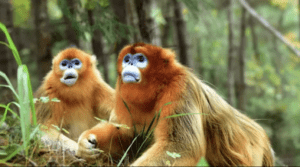

Family Life

Golden monkeys live in large, complex social groups that can include hundreds of individuals. These large groups are divided into smaller family units led by one adult male and several females with their offspring.

Mothers give birth to a single baby after a gestation period of about six to seven months. Babies are born with lighter fur and cling closely to their mothers for warmth and safety.

Social bonds are very strong. Grooming is an important activity that strengthens relationships within the group and helps maintain cooperation and harmony.
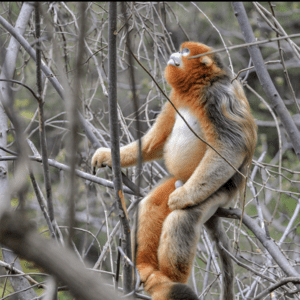

Why They Are Threatened

Golden monkeys have lost much of their habitat due to logging, agriculture, and infrastructure development. Forest fragmentation isolates populations, making it harder for groups to interact and maintain genetic diversity.

Although hunting has decreased, it historically contributed to population declines. Habitat fragmentation remains the biggest long-term threat.

Conservation programs in China have helped stabilize some populations through the creation of nature reserves and forest protection laws, but continued habitat protection is essential.
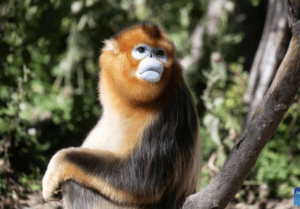

Ten Fun Facts

  1. Golden monkeys can survive in snowy mountain environments.
  2. Their bright blue faces make them easy to recognize.
  3. They can live at elevations over 10,000 feet.
  4. They rely heavily on tree lichens during winter.
  5. Their fur changes thickness with the seasons.
  6. They live in some of the largest social groups of any primate.
  7. Babies are born with lighter-colored fur.
  8. They communicate using a wide range of vocal sounds.
  9. Their scientific name honors Roxelana, a historical figure known for her beauty.
  10. They are considered a national treasure in China.

What Can People Do to Help?

  • Support forest conservation efforts in China.
  • Choose sustainably sourced wood and paper products.
  • Raise awareness about endangered primates.
  • Support wildlife research and protected area programs.
  • Donate to conservation organizations working in Asian mountain ecosystems.
  • Promote responsible eco-tourism that respects wildlife habitats.
  • Encourage global efforts to reduce deforestation.

Gold Transparency 2023 Candid badge.

GuideStar is the world’s largest source of information on nonprofit organizations.


They gather and provide access to the most comprehensive, up-to-date, and accurate nonprofit information which is available to potential funders and donors.

Less than five percent of non-profits registered with GuideStar are recognized with a Gold Seal. A Gold Seal status is the leading symbol of non-profit transparency and accountability.

Start a Community Garden

A community garden is a wonderful way to bring people together while growing fresh, healthy food. Kids can ask their school, local library, or community center if there’s space to start a garden, then invite neighbors and classmates to help plant, water, and harvest vegetables or flowers. Some gardens even donate their extra produce to food banks or share it with neighbors who need it. It’s a hands-on way to learn about nature, teamwork, and taking care of your community’s shared spaces.

SAFE Worldwide Kid's Zone

Raise Funds for Local Wildlife Center

Wildlife centers take care of injured or orphaned animals, and they always need extra support to keep helping. Kids can host a bake sale, lemonade stand, or online fundraiser, or organize a “walk-a-thon” with friends and family to raise money for a wildlife rescue near them. You could also collect donated supplies the center needs, like towels, blankets, or pet food. Even a small donation can help feed, shelter, or heal an animal in need.

SAFE Worldwide Kid's Zone

Recycling Project

Recycling projects let kids turn everyday trash into something useful — or at least keep it out of landfills! You could start a recycling bin program at your school, organize a can and bottle drive to raise money for charity, or get creative and turn old materials into art, planters, or bird feeders. You might even research your town’s recycling rules and make a poster or flyer to help neighbors recycle correctly. Small habits, like rinsing containers or separating paper from plastic, add up to a big impact when a whole community joins in.

SAFE Worldwide Kid's Zone

Booth at Local Farmers Markets

Setting up a booth at your local farmers market is a great way to get your whole neighborhood excited about helping the planet. You could raise money for a cause you care about — like a wildlife shelter, a tree-planting group, or a beach cleanup fund — by selling homemade crafts, lemonade, or baked goods. You could also use your booth to teach people about recycling, showing them fun facts or simple tips for sorting their trash the right way. It’s a great way to practice public speaking, teamwork, and making a real difference in your community.

SAFE Worldwide Kid's Zone

Beach Clean-Ups

Every year on the third Saturday of September, people around the world celebrate International Coastal Cleanup Day, and you can sign up with local groups in your community to join thousands of other volunteers picking up trash along the shore. But you don’t have to wait for that one day — cleanups can happen any time! Grab some gloves, trash bags, and a few friends, and organize your own cleanup day at a nearby river, stream, lake, or beach. It’s a fun way to hang out with friends while protecting fish, turtles, and birds from plastic and litter. Nationalcleanupday.

SAFE Worldwide Kid's Zone

Tree Planting Events

Planting trees is one of the easiest ways kids can help fight climate change and give animals a home. You can join organizations like SAFE Worldwide, One Tree Planted, or the Arbor Day Foundation, which often have kid-friendly volunteer days and even let you sponsor a tree from home. Or, team up with your family, neighbors, or scout troop to start your own mini tree-planting project in a local park, schoolyard, or empty lot (just ask permission first!). Every tree you plant helps clean the air, cool the planet, and grow into a home for birds and squirrels for years to come.

SAFE Worldwide Kid's Zone