Quick Facts
-
Official Species Name: Panthera onca
-
Estimated Population: Approximately 64,000 adults remaining
-
Conservation Status: Near Threatened
-
Range: Mexico, Central America, and South America (especially the Amazon Basin)
-
Reasons for Population Decline: Deforestation, habitat fragmentation, poaching, human-wildlife conflict
Unique Features
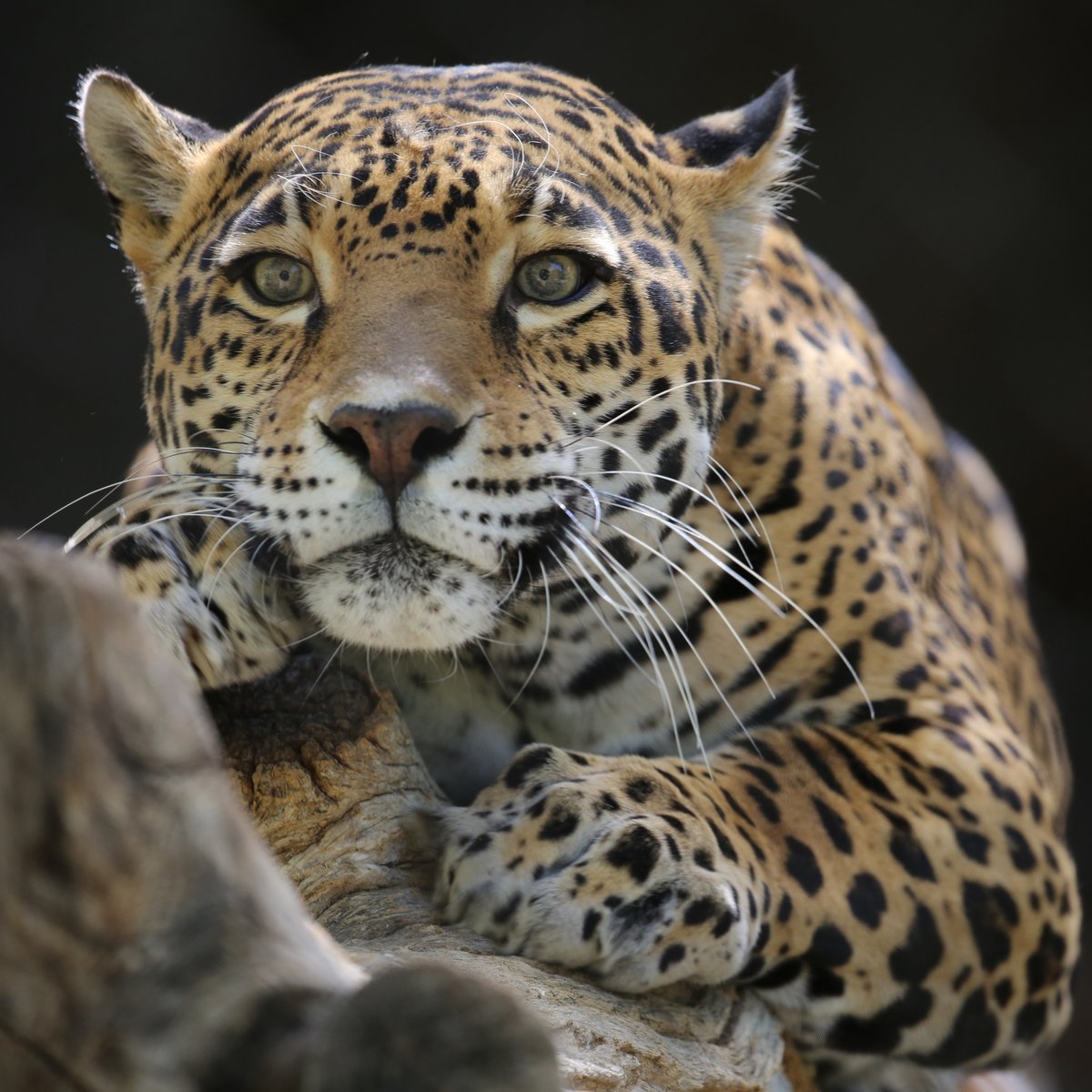
The jaguar is the largest cat in the Americas and the third-largest big cat in the world, after the tiger and lion. It is easily recognized by its golden coat covered in black rosettes. Unlike leopards, jaguar rosettes often have small black spots in the center.
Jaguars are incredibly powerful. They have the strongest bite force of any big cat relative to their size. Instead of suffocating prey like many other cats, jaguars often kill with a single crushing bite to the skull or shell.
Some jaguars are melanistic (often called “black panthers”), appearing almost entirely black, though their rosette patterns are still visible in certain light.
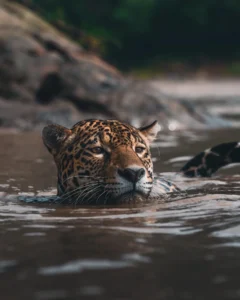
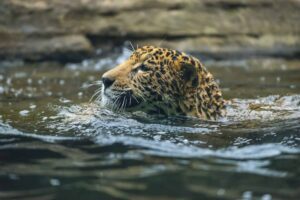
They are also excellent swimmers, which is unusual among big cats.
How They Survive in Their Habitat
Jaguars thrive in dense tropical rainforests, wetlands, grasslands, and scrub forests. They prefer habitats near water such as rivers and swamps.
They are opportunistic predators and have one of the most varied diets of any big cat. They hunt deer, capybaras, peccaries, monkeys, fish, turtles, and even caimans. Their powerful jaws allow them to pierce turtle shells and reptile armor.
Jaguars are solitary and mostly active at night. Their spotted coat provides camouflage in dappled forest light, helping them stalk prey silently before launching a short, explosive ambush.
Their strong swimming ability allows them to cross rivers easily and hunt aquatic animals.
Family Life
Jaguars are solitary except during mating. Males and females come together briefly, then separate after breeding.
After a gestation period of about 90–110 days, a female gives birth to one to four cubs in a hidden den. Cubs are born blind and completely dependent on their mother.
The mother raises the cubs alone, teaching them how to hunt and survive. Young jaguars stay with their mother for up to two years before becoming independent.
Males do not help raise the young but may maintain large territories that overlap with several females.
Why They Are Threatened
The greatest threat to jaguars is habitat loss due to deforestation. Large areas of rainforest are cleared for cattle ranching, agriculture, mining, and infrastructure.
As forests shrink, jaguars are forced into closer contact with humans and livestock. Ranchers may kill jaguars to protect cattle.
Poaching also occurs for their beautiful pelts and body parts. Although international trade is illegal, demand still exists in some areas.
Habitat fragmentation isolates populations, reducing genetic diversity and making survival more difficult long term.
Ten Fun Facts
-
Jaguars have the strongest bite force of any big cat.
-
They can bite through turtle shells.
-
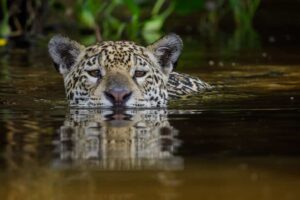
Jaguars are excellent swimmers and often hunt in water.
-
They are the only big cat native to the Americas.
-
Black jaguars are known as black panthers.
-
A jaguar’s roar sounds like a deep, rasping cough.
-
They can leap up to 10 feet (3 meters) high.
-
Jaguars play an important role in balancing ecosystems.
-
Their rosette patterns are unique to each individual.
-
Ancient civilizations like the Maya and Aztec revered jaguars as symbols of power.
What Can People Do to Help?
-
Support rainforest conservation efforts.
-
Choose products that are certified deforestation-free.
-
Support wildlife corridors that connect fragmented habitats.
-
Avoid purchasing illegal wildlife products.
-
Support ranching practices that reduce conflict with predators.
-
Donate to organizations protecting big cats in Latin America.
-
Raise awareness about the importance of apex predators in ecosystems.