Quick Facts
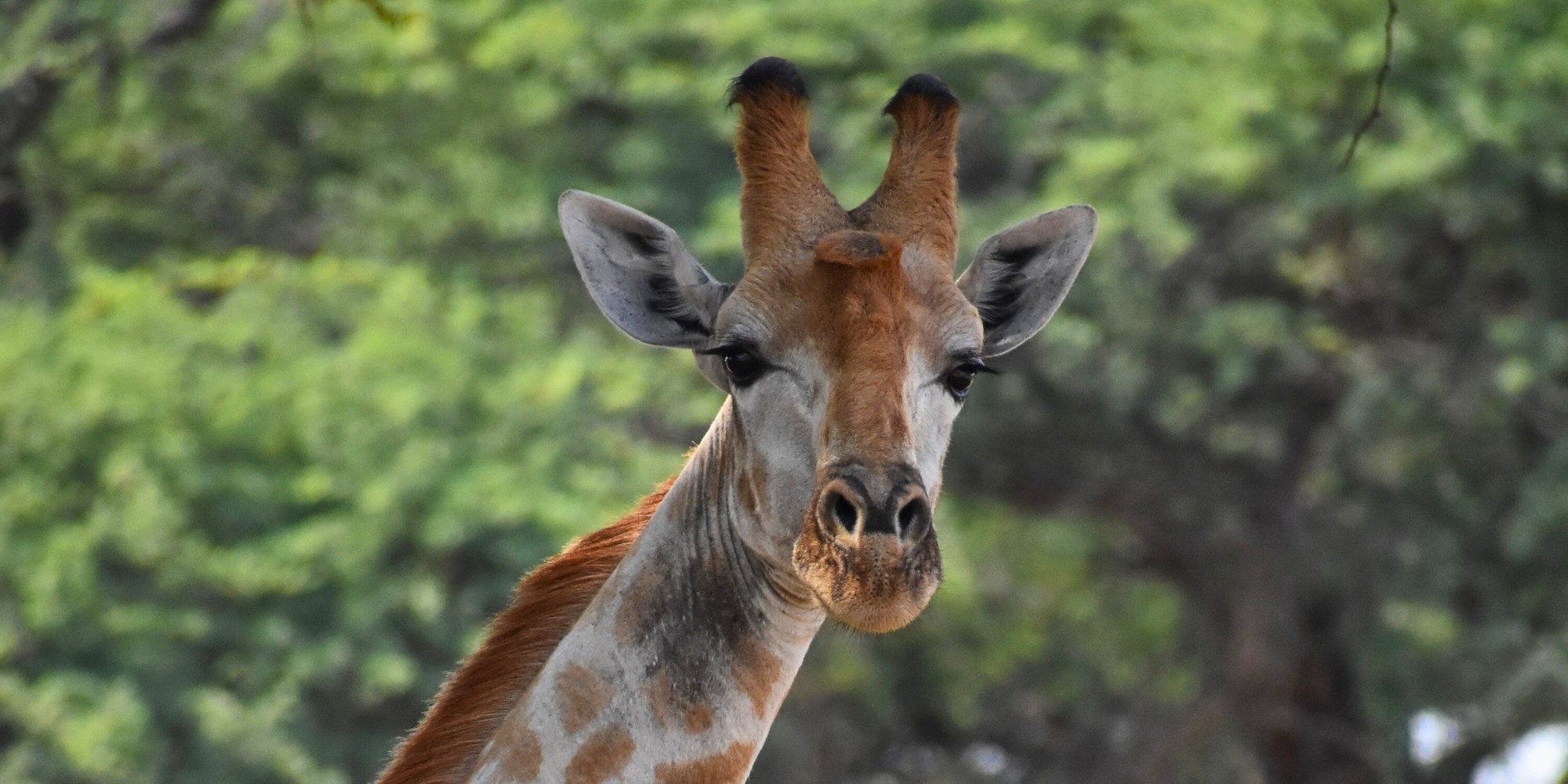
- Official Species Name: Giraffa species (includes several species such as the Northern, Reticulated, Masai, and Southern giraffe)
- Estimated Population: Approximately 117,000 in the wild
- Conservation Status: Vulnerable (some species are Endangered or Critically Endangered)
- Range: Sub-Saharan Africa
- Reasons for Population Decline: Habitat loss, poaching, human-wildlife conflict, civil unrest
Unique Features
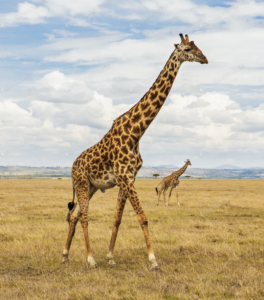
Giraffes are the tallest land animals on Earth, with males reaching heights of up to 18 feet (5.5 meters). Their long necks contain the same number of vertebrae as humans—just seven—but each vertebra is greatly elongated.
Their spotted coat patterns are unique to each individual, much like human fingerprints. These patterns not only provide camouflage among trees and dappled sunlight but may also help regulate body temperature.
Giraffes have long, dark-colored tongues that can measure up to 18–20 inches (45–50 cm). Their tough, prehensile tongues help them grasp thorny acacia branches without injury.
They also have powerful hearts—about 25 pounds (11 kg)—which pump blood all the way up their long necks to their brains.
How They Survive in Their Habitat
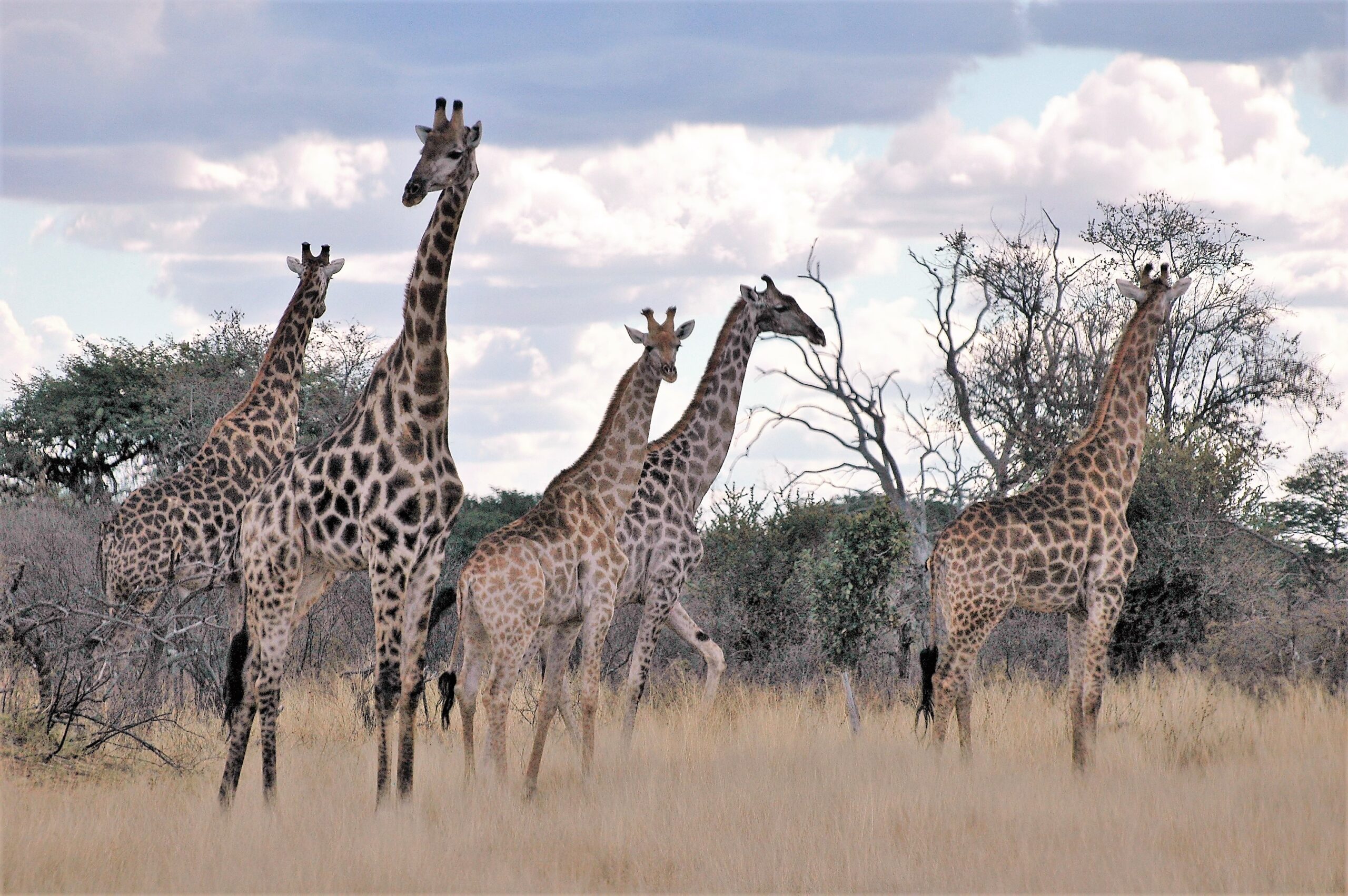
Giraffes live in savannas, grasslands, and open woodlands. Their height allows them to reach leaves high in trees that other herbivores cannot access, reducing competition for food.
They primarily feed on acacia leaves but also eat flowers, fruits, and shrubs. Their tough lips and tongues protect them from thorns.
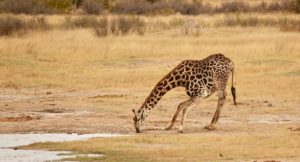
When drinking water, giraffes must awkwardly spread their legs and bend down, making them vulnerable to predators. To stay safe, they usually drink quickly and remain alert.
Their long legs also help them run at speeds up to 35 miles per hour (56 km/h) over short distances, allowing them to escape predators like lions.
Family Life
Giraffes are social animals that live in loose groups called towers. These groups are fluid, meaning members come and go rather than staying in fixed herds.
Females often gather in nursery groups where mothers watch over calves together. A newborn calf can stand within an hour of birth and is about 6 feet (1.8 meters) tall at birth.
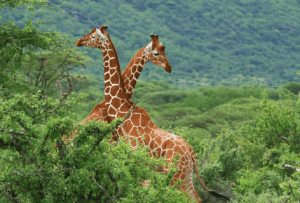
Males sometimes engage in “necking,” a behavior where they swing their necks and heads at each other to establish dominance. These contests determine breeding rights without usually causing serious injury.
Why They Are Threatened
Although giraffes once roamed widely across Africa, their populations have declined significantly over the past few decades in what some call a “silent extinction.”
Habitat loss from expanding agriculture, human settlements, and infrastructure development reduces available land. Poaching for meat, hides, and tails also impacts populations.
In some regions, political instability and lack of wildlife protection make conservation efforts more difficult. Certain giraffe species, such as the Northern giraffe, are facing especially severe declines.
Ten Fun Facts
- Giraffes are the tallest mammals on Earth.
- Their necks contain only seven vertebrae—just like humans.
- Each giraffe’s spot pattern is unique.
- Their tongues can be nearly 20 inches long.
- A giraffe’s kick can kill a lion.
- Newborn calves can stand within an hour of birth.
- They sleep very little—sometimes only 30 minutes a day.
- Their heart weighs around 25 pounds.
- They can run up to 35 miles per hour.
- Groups of giraffes are called a “tower.”
What Can People Do to Help?
- Support wildlife conservation organizations working in Africa.
- Promote sustainable agriculture that protects savanna habitats.
- Avoid purchasing products made from giraffe parts.
- Support eco-tourism that benefits local communities and wildlife.
- Advocate for stronger wildlife protection laws.
- Educate others about giraffe population declines.
- Donate to organizations that focus on giraffe research and habitat protection.