Quick Facts
-
Official Species Name: Gavialis gangeticus
-
Estimated Population: Fewer than 1,000 mature individuals
-
Conservation Status: Critically Endangered
-
Range: Northern Indian subcontinent (India and Nepal)
-
Reasons for Population Decline: Habitat loss, river pollution, fishing net entanglement, dam construction, egg collection
Unique Features
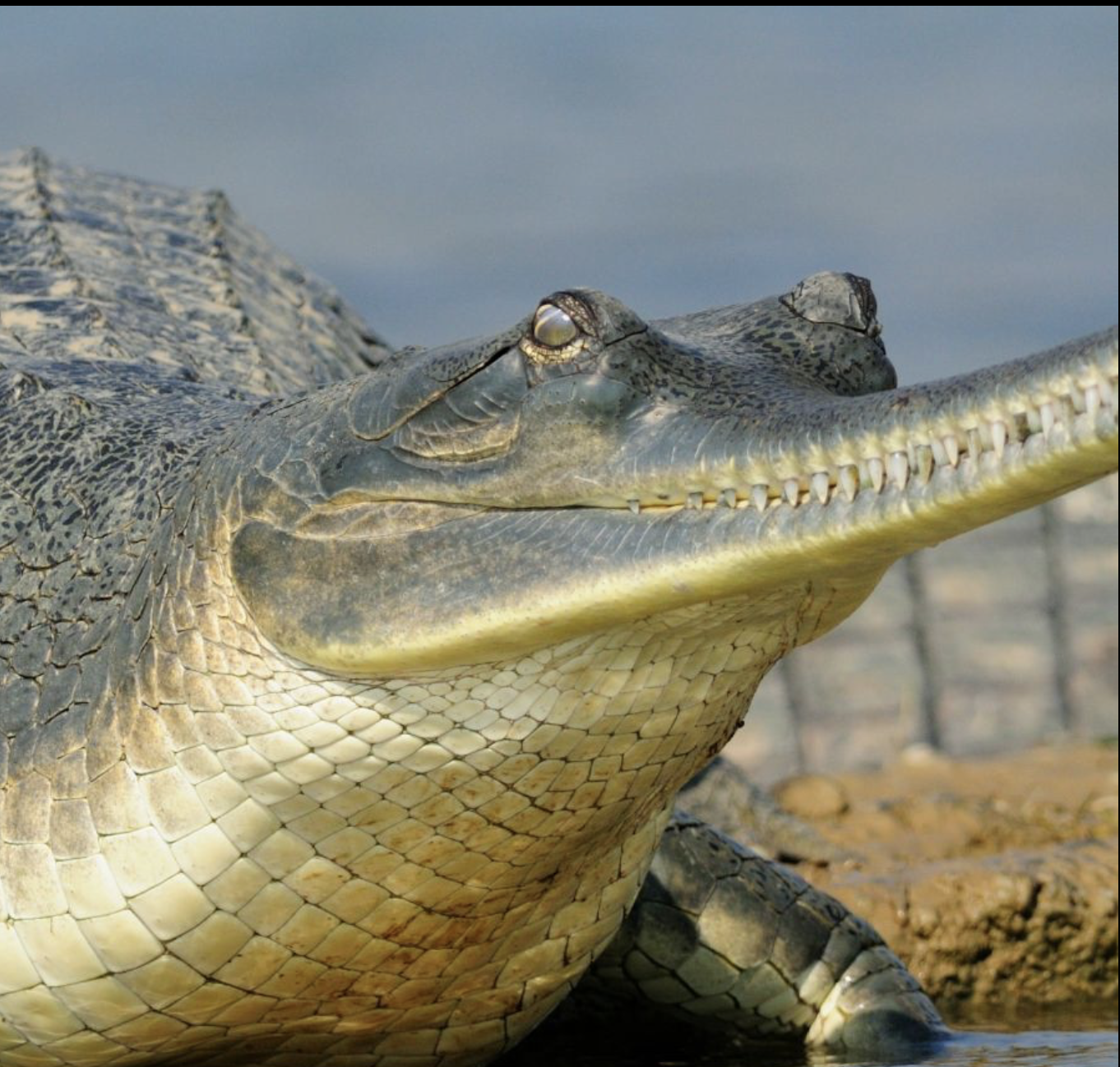
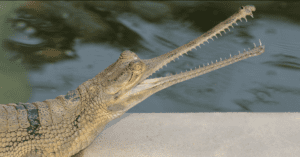
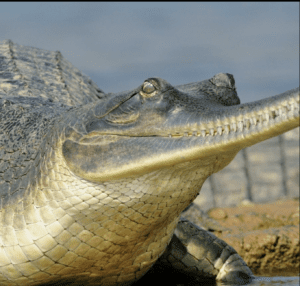
The gharial is one of the most distinctive crocodilian species in the world. It has an extremely long, narrow snout lined with over 100 sharp interlocking teeth—perfectly designed for catching slippery fish.
Adult males develop a bulb-like growth at the tip of their snout called a “ghara,” which resembles a clay pot. This structure amplifies vocalizations and is used to attract females during breeding season.
Unlike other crocodiles, gharials have relatively weak legs and are not well suited for walking on land. They are highly specialized for life in water, with streamlined bodies built for swimming.
How They Survive in Their Habitat
Gharials live in large, slow-moving rivers with deep pools and sandy banks. They are almost entirely aquatic and spend most of their time swimming or basking along riverbanks.
Their slender snouts reduce water resistance, allowing them to snap quickly at fish with precision. Fish make up nearly their entire diet, making them one of the most fish-specialized crocodilians.
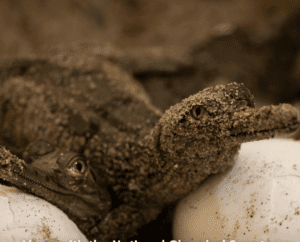
They rely on clean, undisturbed river systems for nesting. Females lay eggs in sandy banks during the dry season, where the warmth of the sun incubates the eggs until hatching.
Family Life
Gharials gather in groups along rivers, especially in basking areas. During breeding season, dominant males use their ghara to produce buzzing or hissing sounds to attract females and deter rival males.
After laying 30–50 eggs in a nest dug into sandy riverbanks, females guard the nesting area. Although they protect hatchlings from predators, gharials do not carry their young in their mouths like other crocodile species due to their narrow snouts.
Young gharials stay near shallow waters for safety as they grow and develop hunting skills.
Why They Are Threatened
Gharials have experienced dramatic declines over the past century. River pollution, sand mining, dam construction, and irrigation projects have destroyed and fragmented their natural habitat.
Fishing nets pose a serious threat, as gharials can become entangled and drown. Egg collection and accidental capture also impact populations.
Because they are so specialized for fish and large river systems, any disruption to river ecosystems directly affects their survival. Conservation programs have helped reintroduce gharials to protected rivers, but their numbers remain low.
Ten Fun Facts
-
Gharials have over 100 sharp teeth.
-
Adult males grow a bulb called a “ghara” on their snout.
-
They are among the most fish-specialized crocodilians.
-
Their long snout reduces drag while swimming.
-
They can grow up to 20 feet (6 meters) long.
-
Gharials rarely leave the water except to bask or nest.
-
They are generally not considered a threat to humans.
-
Females can lay up to 50 eggs at a time.
-
Hatchlings communicate with chirping sounds before emerging.
-
They are one of the oldest surviving crocodilian lineages.
What Can People Do to Help?
-
Support river conservation and restoration programs in India and Nepal.
-
Advocate against illegal sand mining and river pollution.
-
Promote sustainable fishing practices to reduce net entanglement.
-
Support wildlife sanctuaries and reintroduction programs.
-
Raise awareness about freshwater ecosystem conservation.
-
Encourage protection of nesting beaches along rivers.
-
Support organizations working to protect endangered crocodilians.