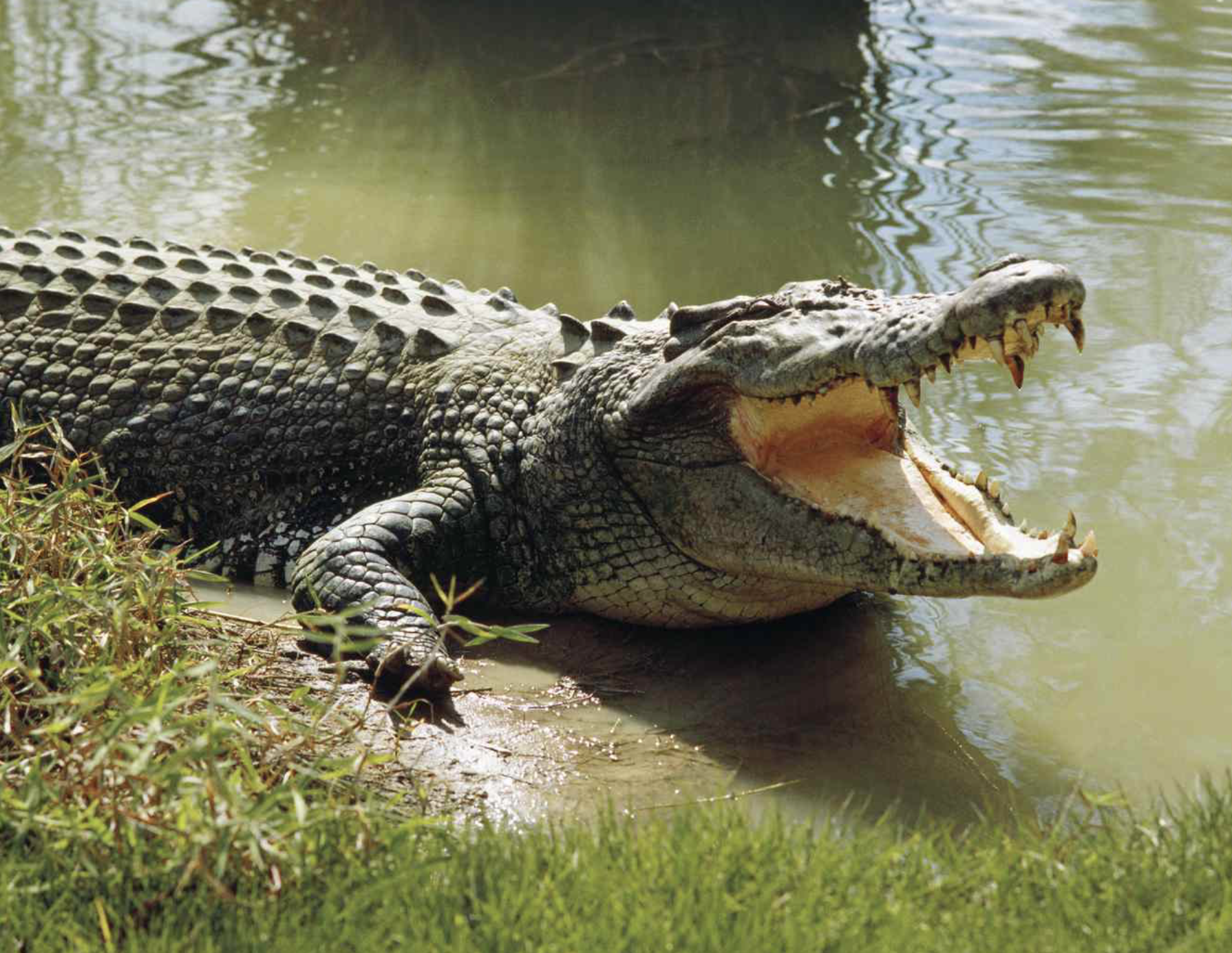
Quick Facts
- Official Species: Group: Family Crocodylidae
- Estimated Number of Species: 14 recognized species
- Conservation Status: Varies by species (some Least Concern, others Critically Endangered)
- Range: Africa, Asia, the Americas, and Australia
- Reasons for Population Decline: Habitat loss, illegal hunting, pollution, human-wildlife conflict
Unique Features
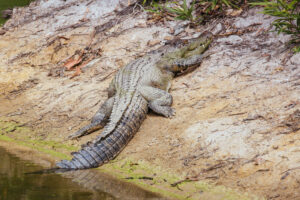
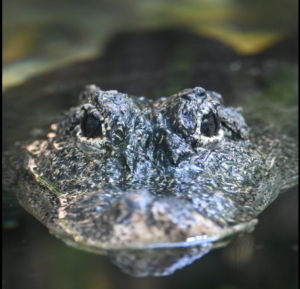
Crocodiles are large, semi-aquatic reptiles known for their powerful jaws and armored bodies. Their thick, scaly skin is reinforced with bony plates called osteoderms, providing protection against predators and rivals. Crocodiles have one of the strongest bite forces in the animal kingdom, allowing them to capture and subdue large prey. Their eyes, ears, and nostrils are positioned on top of their heads, enabling them to see, hear, and breathe while the rest of their body remains submerged. They also possess highly sensitive pressure receptors in their jaws that detect movement in the water.
How They Survive in Their Habitat
Crocodiles thrive in rivers, lakes, wetlands, estuaries, and mangrove swamps. As cold-blooded reptiles, they regulate their body temperature by basking in the sun and retreating to water to cool down. They are ambush predators, lying motionless for long periods before launching a sudden, explosive attack on fish, birds, mammals, or other reptiles. Their powerful tails propel them swiftly through water, while their webbed feet assist with steering. Crocodiles can slow their metabolism significantly, allowing them to survive for months without food if necessary.
Family Life
Unlike many reptiles, crocodiles show notable parental care. After laying 20–60 eggs in a nest made of vegetation or sand, the female guards the nest fiercely against predators. When the eggs begin to hatch, the mother often helps dig them out and may gently carry the hatchlings to the water in her mouth. In some species, both parents help protect the young for several months. Despite this care, many hatchlings fall prey to birds, fish, and other predators.
Why They Are Threatened
Crocodile populations have declined in many regions due to habitat destruction, especially the draining of wetlands for agriculture and development. Historically, they were heavily hunted for their valuable skins. Although regulated farming has reduced pressure in some areas, illegal poaching still occurs. Pollution and entanglement in fishing gear also threaten certain species. Additionally, human-crocodile conflict can arise when expanding communities encroach on crocodile habitats.
Ten Fun Facts
- Crocodiles can hold their breath underwater for over an hour.
- They have one of the strongest bite forces of any living animal.
- Crocodiles have existed for over 200 million years.
- Their hearts have four chambers, similar to birds and mammals.
- Baby crocodiles communicate with chirping sounds before hatching.
- The temperature of the nest determines the sex of hatchlings.
- Saltwater crocodiles are the largest living reptiles.
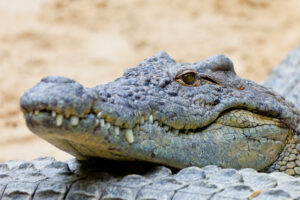
- Crocodiles can replace their teeth throughout their lives.
- They use a “death roll” to tear apart large prey.
- Some species can tolerate saltwater thanks to special glands in their tongues.
What You Can Do to Help
- Support wetland conservation initiatives.
- Avoid purchasing products made from illegal wildlife skins.
- Promote coexistence programs in regions where humans and crocodiles share habitats.
- Support organizations protecting endangered crocodile species.
- Reduce water pollution that harms aquatic ecosystems.
- Educate others about the ecological importance of apex predators.