Quick Facts
- Official Species Name: Rhinopithecus roxellana
- Estimated Population: Approximately 20,000–25,000
- Conservation Status: Endangered
- Range: Central and Southwest China (Qinling, Minshan, and Shennongjia Mountains)
- Reasons for Population Decline: Habitat loss, logging, fragmentation, historical hunting
Unique Features
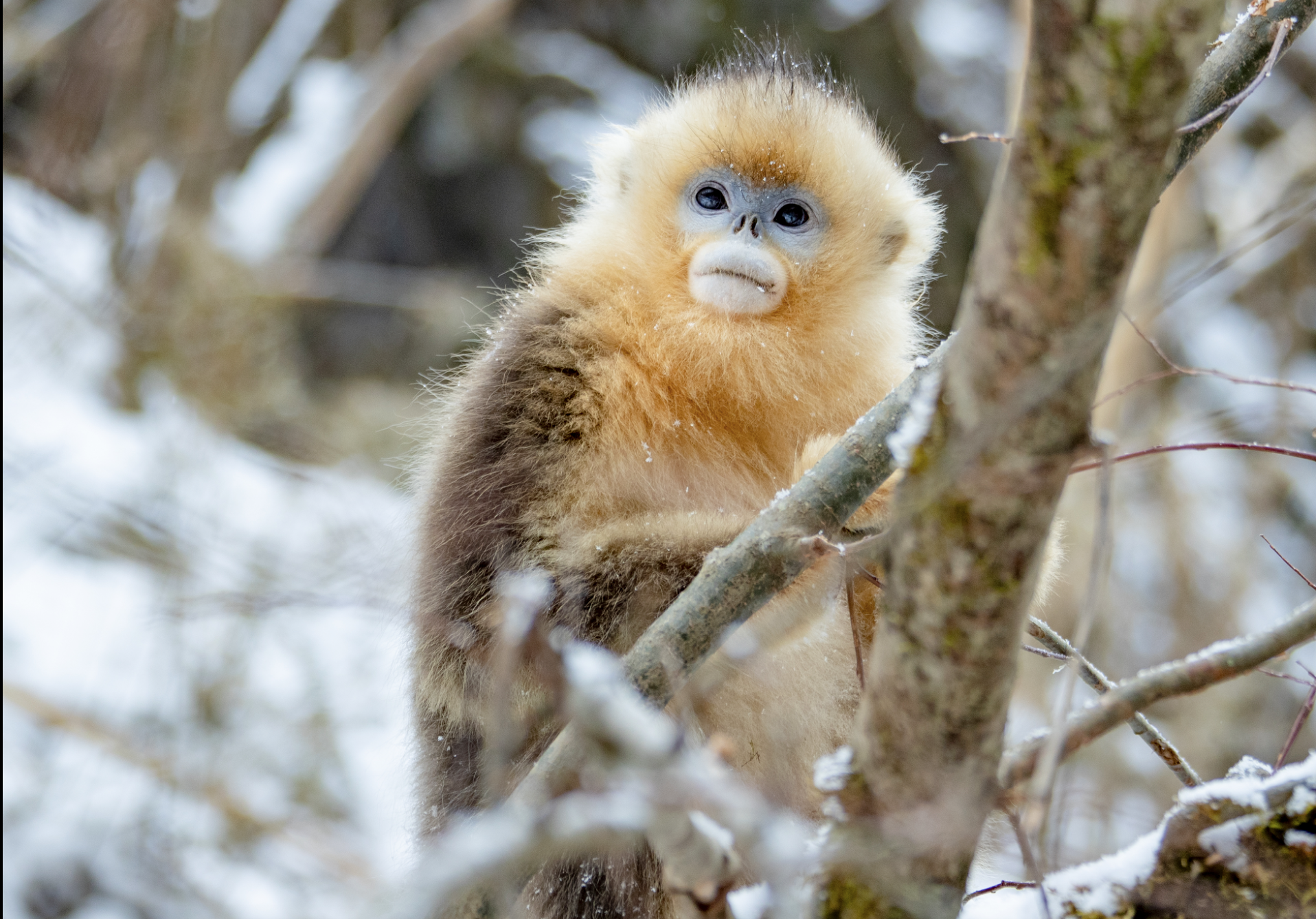
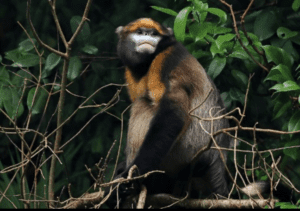
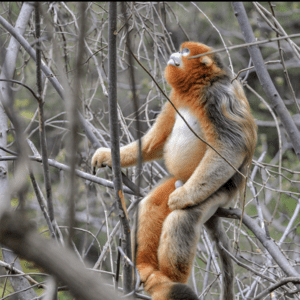
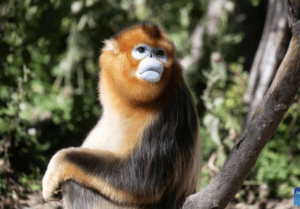
Golden monkeys are famous for their striking appearance. They have long, silky golden-orange fur, pale blue faces, and an upturned “snub” nose. Their thick fur keeps them warm in cold mountain climates, even in snowy winters.
Their noses are small and flat, which helps reduce the risk of frostbite in freezing temperatures. The bright golden coat contrasts beautifully against snowy forests, making them one of the most visually stunning primates in the world.
They also have complex vocal communication systems, using a variety of calls to communicate within their large social groups.
How They Survive in Their Habitat
Golden monkeys live in temperate mountain forests at elevations of up to 10,000 feet (3,000 meters). Winters in these areas are harsh, with heavy snow and freezing temperatures.
They survive by eating a varied diet that includes leaves, fruits, seeds, bark, buds, and lichens. During winter, lichens growing on trees become a crucial food source when other foods are scarce.
Their thick fur provides insulation against the cold, and they often huddle together in groups to conserve body heat. Their strong limbs allow them to leap between trees in steep, rugged terrain.
Family Life
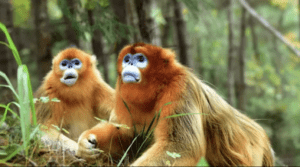
Golden monkeys live in large, complex social groups that can include hundreds of individuals. These large groups are divided into smaller family units led by one adult male and several females with their offspring.
Mothers give birth to a single baby after a gestation period of about six to seven months. Babies are born with lighter fur and cling closely to their mothers for warmth and safety.
Social bonds are very strong. Grooming is an important activity that strengthens relationships within the group and helps maintain cooperation and harmony.
Why They Are Threatened
Golden monkeys have lost much of their habitat due to logging, agriculture, and infrastructure development. Forest fragmentation isolates populations, making it harder for groups to interact and maintain genetic diversity.
Although hunting has decreased, it historically contributed to population declines. Habitat fragmentation remains the biggest long-term threat.
Conservation programs in China have helped stabilize some populations through the creation of nature reserves and forest protection laws, but continued habitat protection is essential.
Ten Fun Facts
- Golden monkeys can survive in snowy mountain environments.
- Their bright blue faces make them easy to recognize.
- They can live at elevations over 10,000 feet.
- They rely heavily on tree lichens during winter.
- Their fur changes thickness with the seasons.
- They live in some of the largest social groups of any primate.
- Babies are born with lighter-colored fur.
- They communicate using a wide range of vocal sounds.
- Their scientific name honors Roxelana, a historical figure known for her beauty.
- They are considered a national treasure in China.
What Can People Do to Help?
- Support forest conservation efforts in China.
- Choose sustainably sourced wood and paper products.
- Raise awareness about endangered primates.
- Support wildlife research and protected area programs.
- Donate to conservation organizations working in Asian mountain ecosystems.
- Promote responsible eco-tourism that respects wildlife habitats.
- Encourage global efforts to reduce deforestation.