Quick Facts
- Official Species Name: Panthera uncia
- Estimated Population: Approximately 4,000–6,500 individuals
- Conservation Status: Vulnerable
- Range: Central and South Asia (Himalayas, Tibet, Mongolia, Central Asia)
- Reasons for Population Decline: Poaching, habitat loss, human conflict, prey depletion
Unique Features
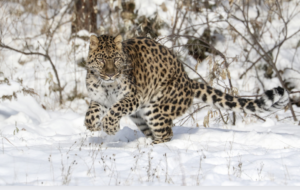
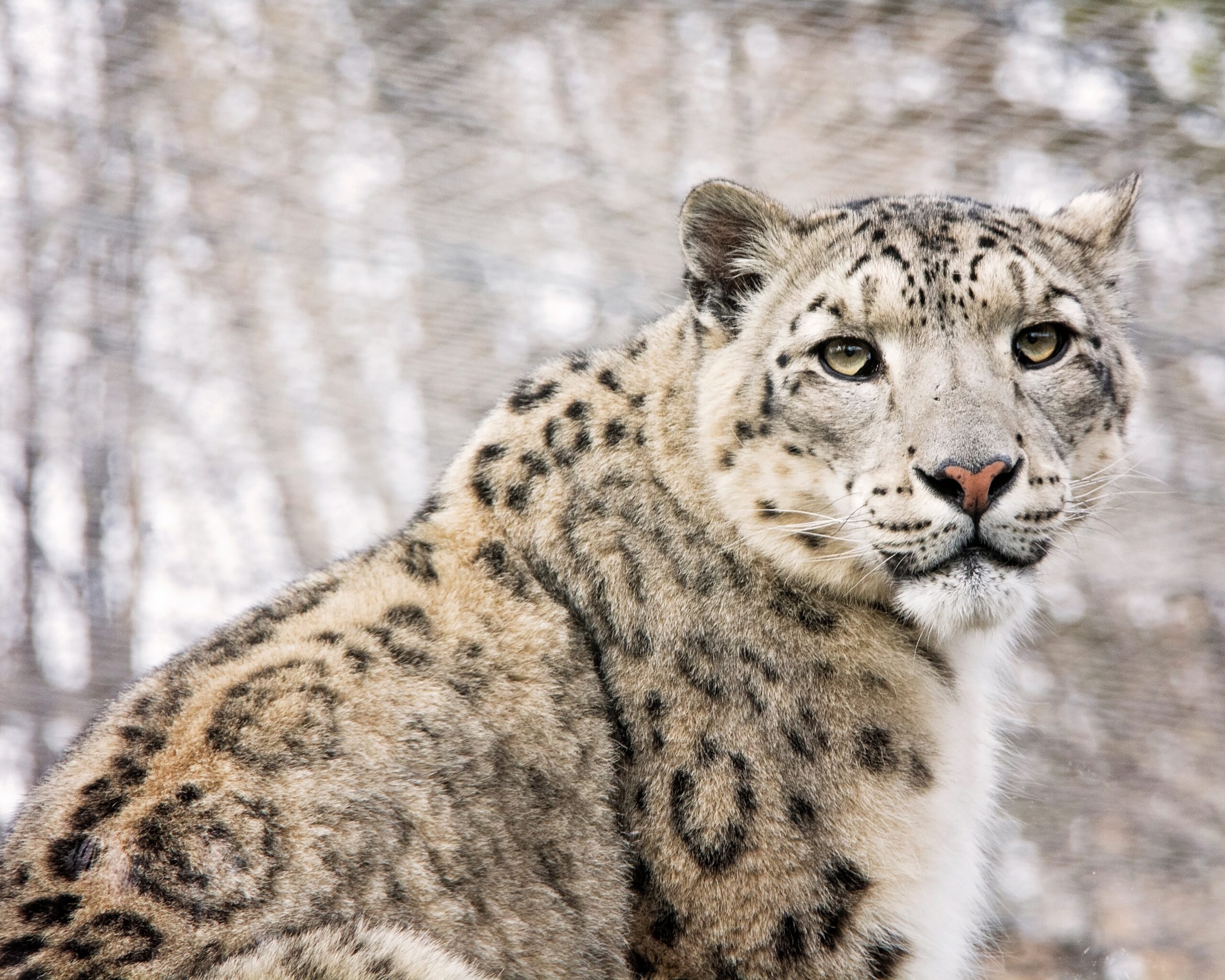
The snow leopard is one of the most beautifully adapted big cats in the world, perfectly built for life in extreme mountain environments. Its thick, smoky-gray coat is covered in dark rosettes, providing excellent camouflage against rocky, snowy terrain.
One of its most striking features is its long, thick tail, which can be nearly as long as its body. This tail helps with balance on steep cliffs and can also be wrapped around the body like a blanket for warmth in freezing temperatures.
Snow leopards have powerful hind legs that allow them to leap up to 50 feet (15 meters) in a single bound—one of the longest jumps of any animal. Their large, fur-covered paws act like natural snowshoes, helping them walk across deep snow without sinking.
How They Survive in Their Habitat
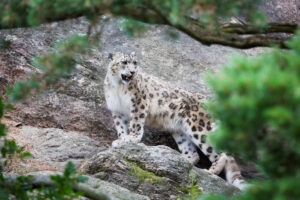
Snow leopards live in some of the harshest environments on Earth—high-altitude mountain ranges with freezing temperatures, thin air, and rugged terrain. They are typically found at elevations between 9,800 and 17,000 feet (3,000–5,200 meters).
They are solitary and elusive, relying on stealth and camouflage to hunt prey such as blue sheep, ibex, and smaller mammals. Their pale coat blends seamlessly into rocky landscapes, making them nearly invisible.
Snow leopards are highly adapted to cold climates. Their thick fur, small rounded ears (which reduce heat loss), and enlarged nasal cavities help warm cold air before it reaches their lungs.
Because prey can be scarce, they have large territories and may travel long distances across mountains in search of food.
Family Life
Snow leopards are solitary animals except during mating season. Males and females come together briefly to breed, after which the female raises the cubs alone.
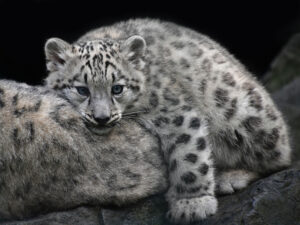
After a gestation period of about 90–100 days, a female gives birth to 1–3 cubs in a sheltered den, often among rocks. Cubs are born blind and rely entirely on their mother for warmth and protection.
As they grow, the mother teaches them how to hunt and navigate the difficult mountain terrain. Young snow leopards typically stay with their mother for up to two years before becoming independent.
Why They Are Threatened
Snow leopards face a number of growing threats across their range. Poaching for their beautiful fur and body parts continues to be a major issue, despite legal protections.
Human-wildlife conflict is also significant. As livestock grazing expands into snow leopard habitat, leopards may prey on domestic animals, leading herders to kill them in retaliation.
Climate change is altering fragile mountain ecosystems, affecting both the snow leopard and its prey. Habitat fragmentation and declining prey populations further threaten their survival.
Because snow leopards live in remote and rugged areas, monitoring populations is difficult, and conservation efforts require international cooperation across many countries.
Ten Fun Facts
- Snow leopards are often called “ghosts of the mountains.”
- They can leap up to 50 feet in a single jump.
- Their tails help them balance and stay warm.
- They cannot roar like other big cats—they make chuffing sounds instead.
- Their paws act like natural snowshoes.
- They live at extremely high elevations.
- Their thick fur can grow up to 5 inches long.
- They are incredibly elusive and rarely seen in the wild.
- Their nasal cavities help warm cold air.
- They are one of the most mysterious big cats in the world.
What Can People Do to Help?
- Support conservation programs protecting snow leopard habitats.
- Promote coexistence programs with local herding communities.
- Oppose illegal wildlife trade and poaching.
- Support sustainable livestock practices to reduce conflict.
- Advocate for climate action to protect mountain ecosystems.
- Donate to organizations working across snow leopard range countries.
- Raise awareness about this elusive and endangered species.