
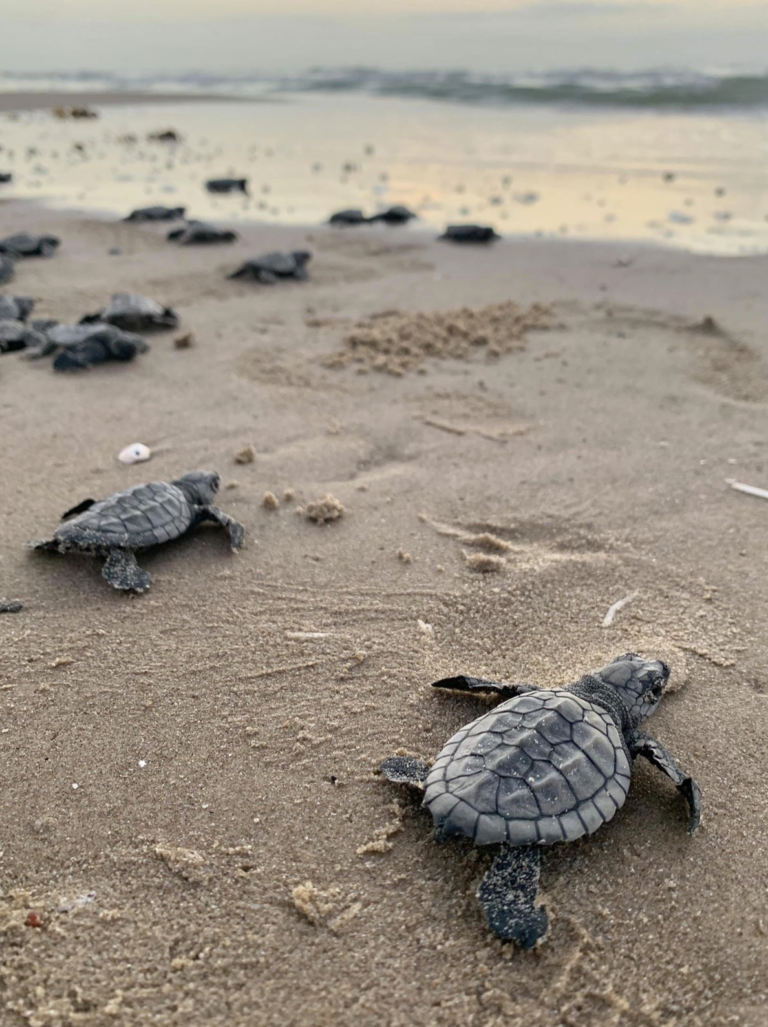
The Kemp’s Ridley Sea Turtle is the smallest sea turtle in the world reaching only two feet in shell length and weighing up to 100 pounds. It has a triangular-shaped head with a slightly hooked beak. Adults are a greyish-green color on top and on the bottom, they have a pale yellowish bottom shell. Each of the front flippers has one claw, while the back flippers may have one or two.
This turtle’s diet consists mainly of swimming crabs, but may also include fish, jellyfish, and mollusks. They find these in shallow waters where they prefer to reside. The juveniles tend to live in floating seaweed beds for the first few years.
Most females return to a single beach in Rancho Nuevo, Mexico to lay their eggs. These females come ashore in large groups called arribada, which means arrival in Spanish. There are many theories on what triggers an arribada, including offshore winds, lunar cycles and the release of pheromones by females. Additionally, some biologists think nesting in groups is a strategy to reduce predation by overwhelming predators with numbers.
The Kemp’s Ridley sea turtle nests from April to July and unlike the other species of turtles that nest at night the Kemp’s Ridley nests during the day. Some think this is to avoid nighttime predators. Each turtle lays 2-3 clutches per season and they return to the beach to nest every 1-3 years. The females lay approximately 100 eggs in the sand, which incubate for 50 to 60 days.
When the eggs hatch the baby turtles orient seaward and crawl towards the horizon.
Kemp’s ridley turtles prefer water temperatures in the 70s and 80s. This makes the gulf of Maine and around the Cape suitable for them in the summer. However, winters often bring cold temperatures that spell disaster for these sea turtles, who get hypothermic, which no longer allow them to swim. The event is called cold stun.
Due to climate change, these cold stun events are becoming more common and affecting more sea turtles than ever before. In 2020, when Texas experienced a week-long cold snap, thousands of sea turtles and hundreds of Kemp’s Sea Turtles would have died if it had not been for the hundreds of volunteers who helped save them and bring them to sanctuaries that kept them safe until the temperatures warmed again and the sea turtles were all released back to sea.
The Kemp’s Ridley Sea Turtles are critically endangered and humans must play a role in saving the species. If you would like to learn more about this species and wish to donate to their cause, please visit the following sites:
www.seaturtleinc.org
www.pegasusfoundation.org
Lepidochelys kempli
7,000-9,000 nesting females
Critically Endangered
Northern Gulf of Mexico, near Louisiana waters.
South Padre Island, TX where they nest.
Bycatch in Fishing Gear
Harvest of Turtles and Eggs
Loss and Degradation of Nesting Habitat
Ocean Pollution/Marine Debris
Vessel Strikes
Climate Change

A community garden is a wonderful way to bring people together while growing fresh, healthy food. Kids can ask their school, local library, or community center if there’s space to start a garden, then invite neighbors and classmates to help plant, water, and harvest vegetables or flowers. Some gardens even donate their extra produce to food banks or share it with neighbors who need it. It’s a hands-on way to learn about nature, teamwork, and taking care of your community’s shared spaces.
Wildlife centers take care of injured or orphaned animals, and they always need extra support to keep helping. Kids can host a bake sale, lemonade stand, or online fundraiser, or organize a “walk-a-thon” with friends and family to raise money for a wildlife rescue near them. You could also collect donated supplies the center needs, like towels, blankets, or pet food. Even a small donation can help feed, shelter, or heal an animal in need.
Recycling projects let kids turn everyday trash into something useful — or at least keep it out of landfills! You could start a recycling bin program at your school, organize a can and bottle drive to raise money for charity, or get creative and turn old materials into art, planters, or bird feeders. You might even research your town’s recycling rules and make a poster or flyer to help neighbors recycle correctly. Small habits, like rinsing containers or separating paper from plastic, add up to a big impact when a whole community joins in.
Setting up a booth at your local farmers market is a great way to get your whole neighborhood excited about helping the planet. You could raise money for a cause you care about — like a wildlife shelter, a tree-planting group, or a beach cleanup fund — by selling homemade crafts, lemonade, or baked goods. You could also use your booth to teach people about recycling, showing them fun facts or simple tips for sorting their trash the right way. It’s a great way to practice public speaking, teamwork, and making a real difference in your community.
Every year on the third Saturday of September, people around the world celebrate International Coastal Cleanup Day, and you can sign up with local groups in your community to join thousands of other volunteers picking up trash along the shore. But you don’t have to wait for that one day — cleanups can happen any time! Grab some gloves, trash bags, and a few friends, and organize your own cleanup day at a nearby river, stream, lake, or beach. It’s a fun way to hang out with friends while protecting fish, turtles, and birds from plastic and litter. Nationalcleanupday.
Planting trees is one of the easiest ways kids can help fight climate change and give animals a home. You can join organizations like SAFE Worldwide, One Tree Planted, or the Arbor Day Foundation, which often have kid-friendly volunteer days and even let you sponsor a tree from home. Or, team up with your family, neighbors, or scout troop to start your own mini tree-planting project in a local park, schoolyard, or empty lot (just ask permission first!). Every tree you plant helps clean the air, cool the planet, and grow into a home for birds and squirrels for years to come.