
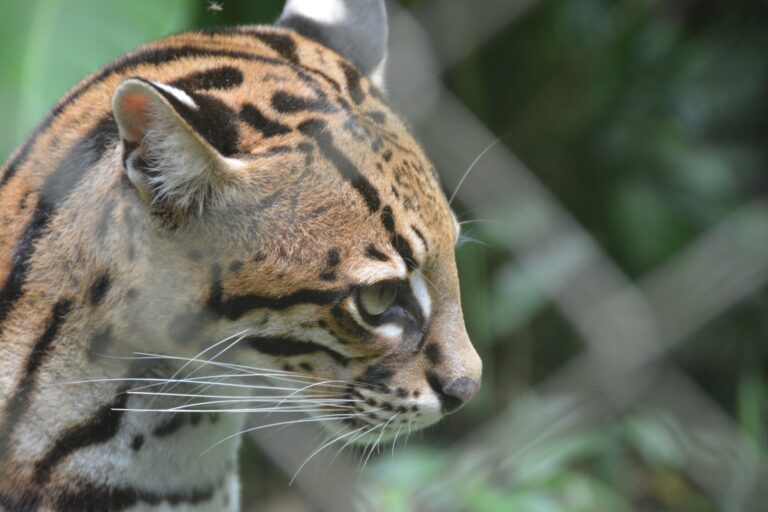
From the southern United States to northern Argentina, the ocelot can be found up to 3,000 meters in elevation (9,800 ft). It’s only found in Texas and Arizona in the United States, and it’s gone extinct in Louisiana and Arkansas. Ocelot fossils have been discovered in Florida, notably at the Reddick Fossil Site. Tropical forests, thorn woods, mangrove swamps, and savannas are all home to this species.
According to a 2019 study in the Brazilian Amazon, it likes environments with plenty of prey and water and avoids other predators. Due to a shortage of prey, it prefers regions with extensive forest cover and water sources, away from roads and human habitation. It avoids steep slopes and extremely elevated areas. When ocelots cohabit with larger predators like cougars and humans, they may adjust their activity hours to avoid them and seek deep cover to avoid competitors.
It adapts well to its surroundings, therefore factors other than the aforementioned have no bearing on its habitat selection. The jaguar, jaguarundi, margay, oncilla, and cougar all share a substantial portion of their range.
To catch prey, ocelots have been spotted following scent trails. They forage for prey at a modest pace of about 0.3 km/h (0.2 mph). Alternatively, an ocelot may wait for prey for 30 to 60 minutes at one location before moving on to another at a speed of 0.8–1.4 km/h (0.5–0.9 mph).
To avoid being spotted by the prey, an ocelot likes to hunt in regions with foliage cover, avoiding open areas, especially on moonlit nights. It eats tiny terrestrial mammals like mice, lagomorphs, armadillos, and opossums, as well as fish, insects, reptiles, and small birds, like a carnivore. It normally eats the kill right away, but not before removing the bird’s feathers.
It usually preys on animals weighing less than 1 kg (2.2 lb), however huge ungulates like deer and sheep, as well as peccaries, are infrequently targeted. Every day, an ocelot needs 600–800 g (21–28 oz) of food to meet its energy needs. Ocelots in southeastern Brazil and iguanas in a tropical deciduous forest in Mexico both eat primates. The diet of ocelots changes depending on the season; in Venezuela, ocelots prefer iguanas and rats during the dry season and land crabs during the wet season.
The ocelot is threatened by habitat loss and fragmentation throughout its range. In Texas, agribusiness is destroying the fertile terrain that supports deep cover and provides the best habitat for the ocelot. The habitat is often fragmented into small pockets that cannot support ocelots well, leading to deaths due to starvation.
Traffic accidents have emerged as a major threat over the years as ocelots try to expand beyond their natural habitat to new areas and get hit by vehicles. In the Atlantic Forest in northeastern Argentina, it is affected by logging and poaching of prey species.
The fur trade of the 20th century also greatly affected ocelots.
Striped hyenas are the national animal of Lebanon.
They are considered to be very intelligent.
They don’t need to drink a lot of water and can go days without water if needed.
Leopardus pardalis
800,000 to 1.5 million
Vulnerable
Western North and South America
Habitat loss
Poaching
Traffic accidents/human encroachment on habitat

A community garden is a wonderful way to bring people together while growing fresh, healthy food. Kids can ask their school, local library, or community center if there’s space to start a garden, then invite neighbors and classmates to help plant, water, and harvest vegetables or flowers. Some gardens even donate their extra produce to food banks or share it with neighbors who need it. It’s a hands-on way to learn about nature, teamwork, and taking care of your community’s shared spaces.
Wildlife centers take care of injured or orphaned animals, and they always need extra support to keep helping. Kids can host a bake sale, lemonade stand, or online fundraiser, or organize a “walk-a-thon” with friends and family to raise money for a wildlife rescue near them. You could also collect donated supplies the center needs, like towels, blankets, or pet food. Even a small donation can help feed, shelter, or heal an animal in need.
Recycling projects let kids turn everyday trash into something useful — or at least keep it out of landfills! You could start a recycling bin program at your school, organize a can and bottle drive to raise money for charity, or get creative and turn old materials into art, planters, or bird feeders. You might even research your town’s recycling rules and make a poster or flyer to help neighbors recycle correctly. Small habits, like rinsing containers or separating paper from plastic, add up to a big impact when a whole community joins in.
Setting up a booth at your local farmers market is a great way to get your whole neighborhood excited about helping the planet. You could raise money for a cause you care about — like a wildlife shelter, a tree-planting group, or a beach cleanup fund — by selling homemade crafts, lemonade, or baked goods. You could also use your booth to teach people about recycling, showing them fun facts or simple tips for sorting their trash the right way. It’s a great way to practice public speaking, teamwork, and making a real difference in your community.
Every year on the third Saturday of September, people around the world celebrate International Coastal Cleanup Day, and you can sign up with local groups in your community to join thousands of other volunteers picking up trash along the shore. But you don’t have to wait for that one day — cleanups can happen any time! Grab some gloves, trash bags, and a few friends, and organize your own cleanup day at a nearby river, stream, lake, or beach. It’s a fun way to hang out with friends while protecting fish, turtles, and birds from plastic and litter. Nationalcleanupday.
Planting trees is one of the easiest ways kids can help fight climate change and give animals a home. You can join organizations like SAFE Worldwide, One Tree Planted, or the Arbor Day Foundation, which often have kid-friendly volunteer days and even let you sponsor a tree from home. Or, team up with your family, neighbors, or scout troop to start your own mini tree-planting project in a local park, schoolyard, or empty lot (just ask permission first!). Every tree you plant helps clean the air, cool the planet, and grow into a home for birds and squirrels for years to come.