
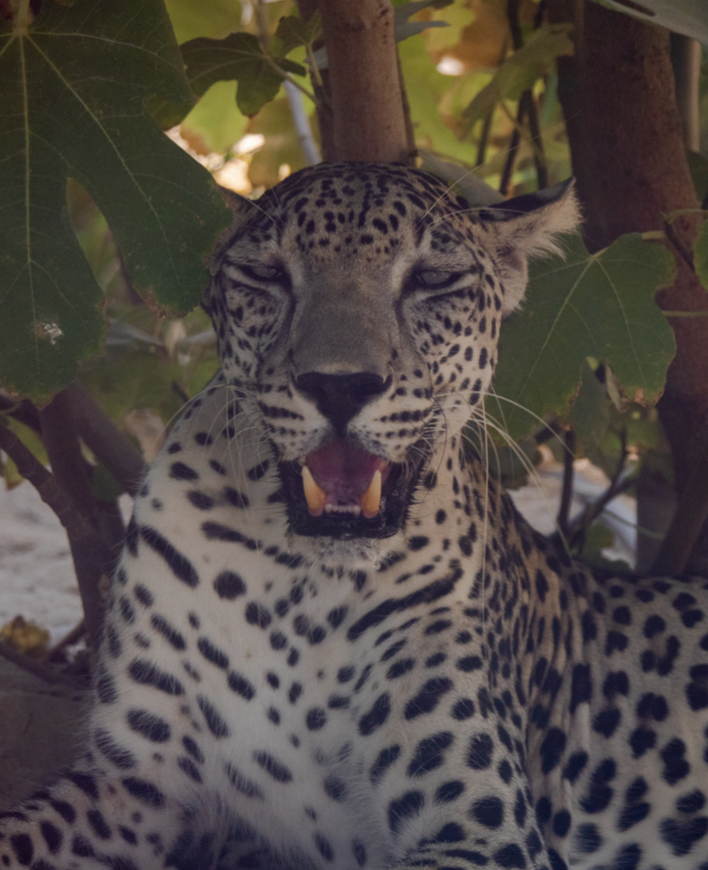
The Arabian leopard is a subspecies of leopard which is the smallest compared to the other leopard species. Arabic peninsula specifically Saudi Arabia, Oman, Yemen, Israel, and Palestine are the native habitat for Arabian leopards.
Arabian leopards are usually seen in mountain ranges and deserts. They can be identified by their unique pale yellow, deep golden, tawny, and grey fur. They have powerful paws and claws which make them great mountain climbers.
Arabian leopards live in solitary, and they mark their territories by urine, faeces, and claw marks on trees. They have a lifespan of 12 to 15 years in the wild, which is less than the other leopards that live up to 23 years.
They reach sexual maturity at age 2-2.5 years old, and they reproduce sexually all year long but especially during the rainy season. Female leopards are called leopardess and they give birth to 1-4 cubs after a 95-96 days gestation period.
There are less than 200 Arabian leopards in the world which puts this species at higher risk of extinction. They are critically endangered since 1996 according to IUCN. There are many conservation and management plans that have been implemented to help protect this species.
Arabian leopards are threatened with habitat loss caused by human interference. This reduces the number of prey available for Arabian leopards.
As a result, Arabian leopards would attack livestock which would make shepherds hunt them. Also, Arabian leopards are hunted for their valuable fur and other body parts.
Panthera Pardus Nior
200 globally
Critically endangered
Saudi Arabia, Oman, Yemen and Israel
Habitat loss
Human hunting
Lack of natural prey

A community garden is a wonderful way to bring people together while growing fresh, healthy food. Kids can ask their school, local library, or community center if there’s space to start a garden, then invite neighbors and classmates to help plant, water, and harvest vegetables or flowers. Some gardens even donate their extra produce to food banks or share it with neighbors who need it. It’s a hands-on way to learn about nature, teamwork, and taking care of your community’s shared spaces.
Wildlife centers take care of injured or orphaned animals, and they always need extra support to keep helping. Kids can host a bake sale, lemonade stand, or online fundraiser, or organize a “walk-a-thon” with friends and family to raise money for a wildlife rescue near them. You could also collect donated supplies the center needs, like towels, blankets, or pet food. Even a small donation can help feed, shelter, or heal an animal in need.
Recycling projects let kids turn everyday trash into something useful — or at least keep it out of landfills! You could start a recycling bin program at your school, organize a can and bottle drive to raise money for charity, or get creative and turn old materials into art, planters, or bird feeders. You might even research your town’s recycling rules and make a poster or flyer to help neighbors recycle correctly. Small habits, like rinsing containers or separating paper from plastic, add up to a big impact when a whole community joins in.
Setting up a booth at your local farmers market is a great way to get your whole neighborhood excited about helping the planet. You could raise money for a cause you care about — like a wildlife shelter, a tree-planting group, or a beach cleanup fund — by selling homemade crafts, lemonade, or baked goods. You could also use your booth to teach people about recycling, showing them fun facts or simple tips for sorting their trash the right way. It’s a great way to practice public speaking, teamwork, and making a real difference in your community.
Every year on the third Saturday of September, people around the world celebrate International Coastal Cleanup Day, and you can sign up with local groups in your community to join thousands of other volunteers picking up trash along the shore. But you don’t have to wait for that one day — cleanups can happen any time! Grab some gloves, trash bags, and a few friends, and organize your own cleanup day at a nearby river, stream, lake, or beach. It’s a fun way to hang out with friends while protecting fish, turtles, and birds from plastic and litter. Nationalcleanupday.
Planting trees is one of the easiest ways kids can help fight climate change and give animals a home. You can join organizations like SAFE Worldwide, One Tree Planted, or the Arbor Day Foundation, which often have kid-friendly volunteer days and even let you sponsor a tree from home. Or, team up with your family, neighbors, or scout troop to start your own mini tree-planting project in a local park, schoolyard, or empty lot (just ask permission first!). Every tree you plant helps clean the air, cool the planet, and grow into a home for birds and squirrels for years to come.