
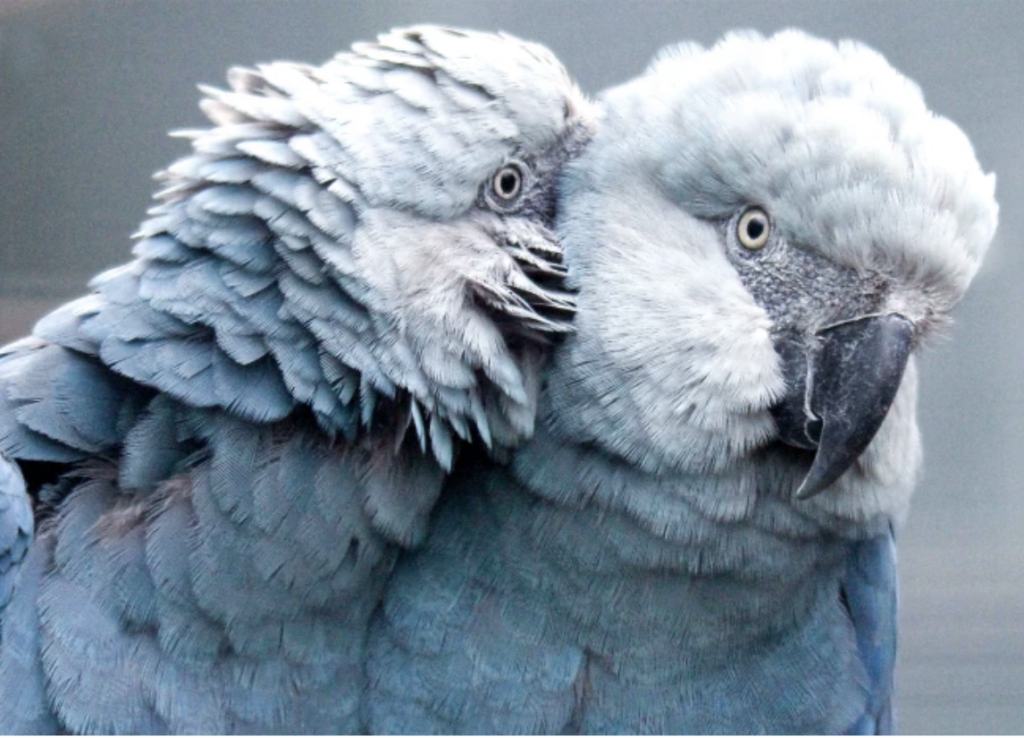
Spix’s Macaw, the smallest of the blue macaw, was first discovered and documented in the early 19 century. In the two hundred years since its discovery, there were only a handful of observations of Spix’s Macaws in their natural habitat. In 2019, the species was officially declared to be extinct in the wild.
Due to the rarity of Spix’s Macaw, most people may never have a chance to meet these little blue parrots in person, but it is easy to know them from the screen. In 2011, via the animated movie “RIO”, two Spix’s Macaw as the leading role successfully brought the public’s attention to this endangered species. As qualified movie stars, Spix’s Macaws are quite distinguishable. The adult Spix’s Macaw has stunning dull blue plumage with a faint greenish tinge on the breast and abdomen. Spix’s Macaw was discovered in Brazil in 1819, and already at that time, this species was thought to be very rare. Since 2000, no Spix’s Macaw has been observed in the wild. And after several years of surveys, IUCN officially declared that this species is extinct in the wild in 2019.
It is reported that the locals have hunted these blue macaws for food or just for fun, but this is not the main reason why their population decreased. It is Spix’s Macaws’ beauty that makes them famous in the world, but this feature also attracts greedy people who bring disasters to them.
From last century, the trappers not only captured the adults but also removed their nesting and eggs from nests for illegal bird trade. Even in that time, the collectors were willing to pay up to $40,000 for a Spix’s Macaw.And nowadays, in the black market the captive birds could be worth five times or more that amount. Due to the monetary value of Spix’s Macaws and the lack of research on them, there are a lot of difficulties the protection activities for Spix’s Macaws need to overcome.
After two decades of the Spix’s Macaws vanishing in the wild, the conservationists never give up on rebuilding the population in the wild. There is exciting news that, in 2022, twenty Spix’s Macaws will be released by the end of year.
The released birds from captivity are expected to be the vanguard of a new population in their natural habitat, caatinga, a tropical dry forest in northeastern Brazil. This reinduction plan is so ambitious that no one could promise if it will succeed or not.
The project is estimated that at least one-third of the birds will be lost in the first year, and if the loss is too high, the left birds might be taken back in. But although there are so many uncertainties, the scientists still hold hope for this plan. Andy they also believe that the protection project for flagship will help preserve and restore the Spix’s Macaws’ habitat, and help many other species too.
Cyanopsitta spixii
160 in captivity.
Extinct in the wild. Project to reintroduce them exist.
Brazil
Illegal wildlife trafficking
Habitat loss
Hunting and trapping (poaching)

A community garden is a wonderful way to bring people together while growing fresh, healthy food. Kids can ask their school, local library, or community center if there’s space to start a garden, then invite neighbors and classmates to help plant, water, and harvest vegetables or flowers. Some gardens even donate their extra produce to food banks or share it with neighbors who need it. It’s a hands-on way to learn about nature, teamwork, and taking care of your community’s shared spaces.
Wildlife centers take care of injured or orphaned animals, and they always need extra support to keep helping. Kids can host a bake sale, lemonade stand, or online fundraiser, or organize a “walk-a-thon” with friends and family to raise money for a wildlife rescue near them. You could also collect donated supplies the center needs, like towels, blankets, or pet food. Even a small donation can help feed, shelter, or heal an animal in need.
Recycling projects let kids turn everyday trash into something useful — or at least keep it out of landfills! You could start a recycling bin program at your school, organize a can and bottle drive to raise money for charity, or get creative and turn old materials into art, planters, or bird feeders. You might even research your town’s recycling rules and make a poster or flyer to help neighbors recycle correctly. Small habits, like rinsing containers or separating paper from plastic, add up to a big impact when a whole community joins in.
Setting up a booth at your local farmers market is a great way to get your whole neighborhood excited about helping the planet. You could raise money for a cause you care about — like a wildlife shelter, a tree-planting group, or a beach cleanup fund — by selling homemade crafts, lemonade, or baked goods. You could also use your booth to teach people about recycling, showing them fun facts or simple tips for sorting their trash the right way. It’s a great way to practice public speaking, teamwork, and making a real difference in your community.
Every year on the third Saturday of September, people around the world celebrate International Coastal Cleanup Day, and you can sign up with local groups in your community to join thousands of other volunteers picking up trash along the shore. But you don’t have to wait for that one day — cleanups can happen any time! Grab some gloves, trash bags, and a few friends, and organize your own cleanup day at a nearby river, stream, lake, or beach. It’s a fun way to hang out with friends while protecting fish, turtles, and birds from plastic and litter. Nationalcleanupday.
Planting trees is one of the easiest ways kids can help fight climate change and give animals a home. You can join organizations like SAFE Worldwide, One Tree Planted, or the Arbor Day Foundation, which often have kid-friendly volunteer days and even let you sponsor a tree from home. Or, team up with your family, neighbors, or scout troop to start your own mini tree-planting project in a local park, schoolyard, or empty lot (just ask permission first!). Every tree you plant helps clean the air, cool the planet, and grow into a home for birds and squirrels for years to come.