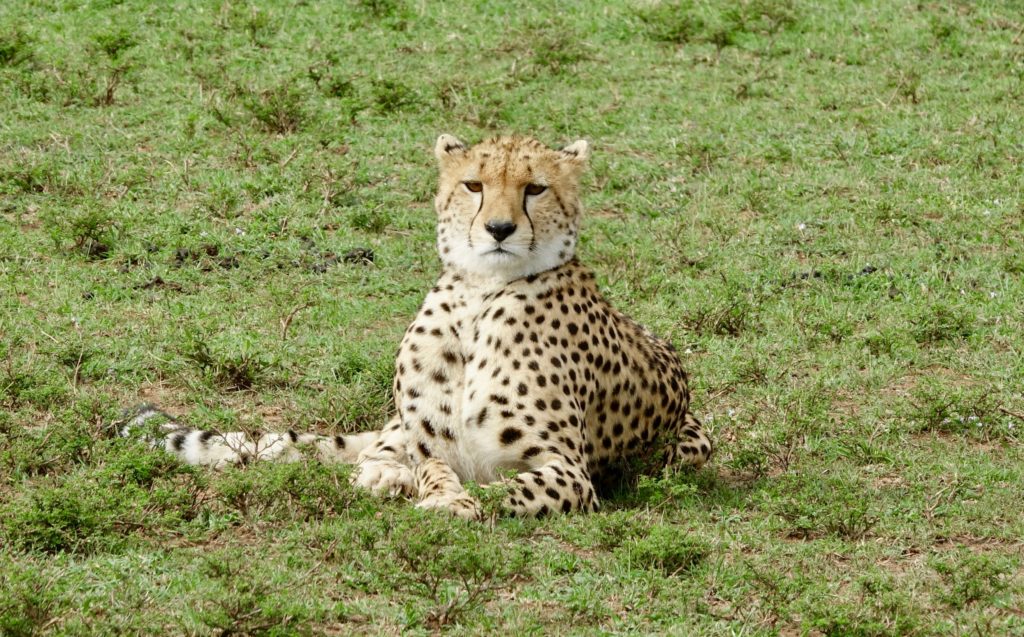
Quick Facts
-
Official Species Name: Acinonyx jubatus
-
Estimated Population: Approximately 7,000 in the wild
-
Conservation Status: Vulnerable
-
Range: Africa (small population in Iran)
-
Reasons for Population Decline: Habitat loss, human conflict, illegal wildlife trafficking, loss of prey
Unique Features
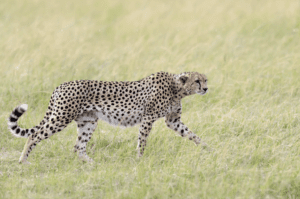
The cheetah is the fastest land animal on Earth, capable of reaching speeds up to 60–70 mph (97–113 km/h) in short bursts. Its slender, lightweight body is built for speed, with long legs, a deep chest for large lungs, and a flexible spine that allows for an extended stride during sprints.
Unlike other big cats, cheetahs have semi-retractable claws that function like cleats, providing traction while running. Their long tail acts as a rudder, helping them steer sharply while chasing prey at high speeds.
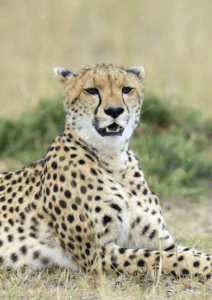
Cheetahs are easily recognized by the distinctive black “tear marks” that run from the inner corners of their eyes down to their mouths. These markings reduce glare from the sun and help improve focus on prey during hunts.
How They Survive in Their Habitat
Cheetahs primarily inhabit open grasslands and savannas, where their speed gives them an advantage. Their spotted coats provide camouflage among tall grasses, allowing them to stalk prey closely before launching a sprint.
They rely on incredible acceleration and agility to catch medium-sized antelope such as gazelles and impalas. Hunts are usually brief—lasting less than a minute—because sprinting at high speeds requires enormous energy. After a chase, cheetahs need time to rest and recover.
Cheetahs are diurnal hunters, meaning they often hunt during early morning or late afternoon. This reduces competition with larger predators like lions and hyenas, which are more active at night.
Family Life
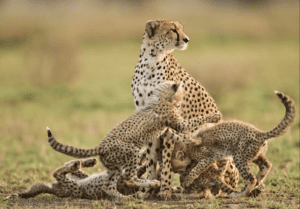
Female cheetahs are solitary except when raising cubs. After a gestation period of about 90–95 days, a mother gives birth to a litter of three to five cubs. Cubs are born with a mantle of long, silvery fur along their backs, which helps camouflage them and may mimic the appearance of a honey badger to deter predators.
The mother raises the cubs alone, teaching them hunting and survival skills over the course of about 18 months. Cub mortality is high due to predation by lions, hyenas, and other threats.
Male cheetahs sometimes form small groups called coalitions, often made up of brothers from the same litter. These coalitions help males defend territories and increase their chances of mating.
Why They Are Threatened
Cheetah populations have declined significantly due to habitat fragmentation and human expansion. As farmland and settlements grow, cheetahs lose the wide-open spaces they need to hunt and roam.
Human-wildlife conflict is another major threat. Cheetahs may prey on livestock when natural prey is scarce, leading to retaliation from farmers.
Illegal wildlife trafficking also impacts the species, particularly through the capture and sale of cheetah cubs as exotic pets. Additionally, reduced prey populations and competition with larger predators further strain their survival.
With relatively low genetic diversity, cheetahs are also more vulnerable to disease and environmental changes.
Ten Fun Facts
-
Cheetahs can accelerate from 0 to 60 mph in just a few seconds.
-
They cannot roar like lions or tigers; instead, they chirp and purr.
-
Their long tail helps them balance and steer during high-speed chases.
-
A sprint usually lasts less than 30 seconds.
-
Cheetah cubs have a long mantle of fur for camouflage.
-
They rely more on sight than smell when hunting.
-
Coalitions of male cheetahs often consist of brothers.
-
Cheetahs have larger nasal passages to take in more oxygen while running.
-
They prefer open habitats where they can use their speed effectively.
-
They are one of the oldest big cat species, with fossils dating back millions of years.
What Can You Do to Help?
-
Support conservation programs that protect cheetah habitats.
-
Promote coexistence programs that help farmers protect livestock without harming wildlife.
-
Oppose illegal wildlife trafficking and the exotic pet trade.
-
Support anti-poaching efforts and wildlife law enforcement.
-
Choose eco-tourism operators that support local conservation initiatives.
-
Advocate for land-use planning that preserves wildlife corridors.
-
Raise awareness about the cheetah’s vulnerable status and conservation needs.