
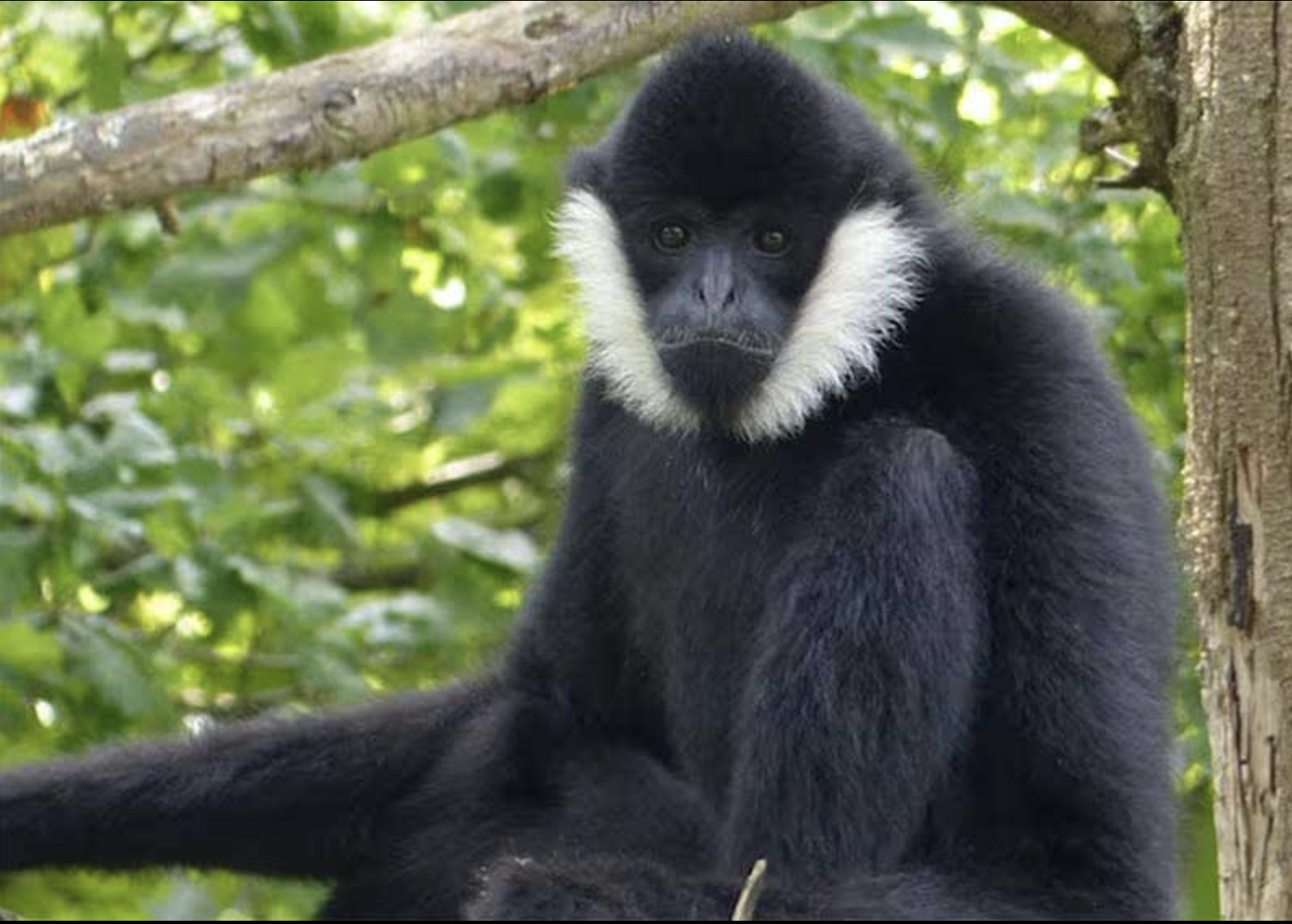
Quick Facts
-
Official Species Name: Nomascus concolor
-
Estimated Population: Fewer than 2,000 individuals
-
Conservation Status: Critically Endangered
-
Range: China, Laos, Vietnam
-
Reasons for Population Decline: Deforestation, habitat fragmentation, hunting, illegal wildlife trafficking
Unique Features
Black crested gibbons are known for their haunting, melodic songs that echo across forest valleys. Mated pairs perform duets to defend their territory and strengthen their bond.
They are true apes, not monkeys, and do not have tails. Their extremely long arms allow them to swing gracefully through the trees at high speeds in a movement called brachiation.
How They Survive in Their Habitat
They live almost entirely in the forest canopy, feeding primarily on fruit, leaves, and flowers. Their agility allows them to move efficiently between trees without descending to the ground.
Because they rely on continuous forest cover, intact canopy corridors are essential to their survival.

Family Life
Gibbons live in small family groups consisting of a monogamous pair and their offspring. Both parents may participate in caring for young.
Family groups defend their territory through vocal displays rather than physical confrontation.
Why They Are Threatened
Rapid deforestation for agriculture and development has fragmented their habitat. Hunting for bushmeat and illegal capture for the pet trade further reduces already small populations.
Because they live in isolated forest patches, small groups struggle with limited genetic diversity.
10 Fun Facts
- They are true apes, not monkeys.
- They do not have tails.
- Their songs can travel long distances.
- They can swing up to 35 mph.
- Males and females often have different coloring.
- They are highly territorial.
- They eat mostly fruit.
- They are among the rarest primates in the world.
- They rarely come to the ground.
- They form strong family bonds.
What Can You Do to Help?
-
Support rainforest protection and restoration projects.
-
Avoid products linked to deforestation (unsustainable palm oil, illegal timber).
-
Support anti-trafficking efforts focused on primates.
-
Advocate for protected forest corridors.
-
Raise awareness about endangered apes and habitat destruction.