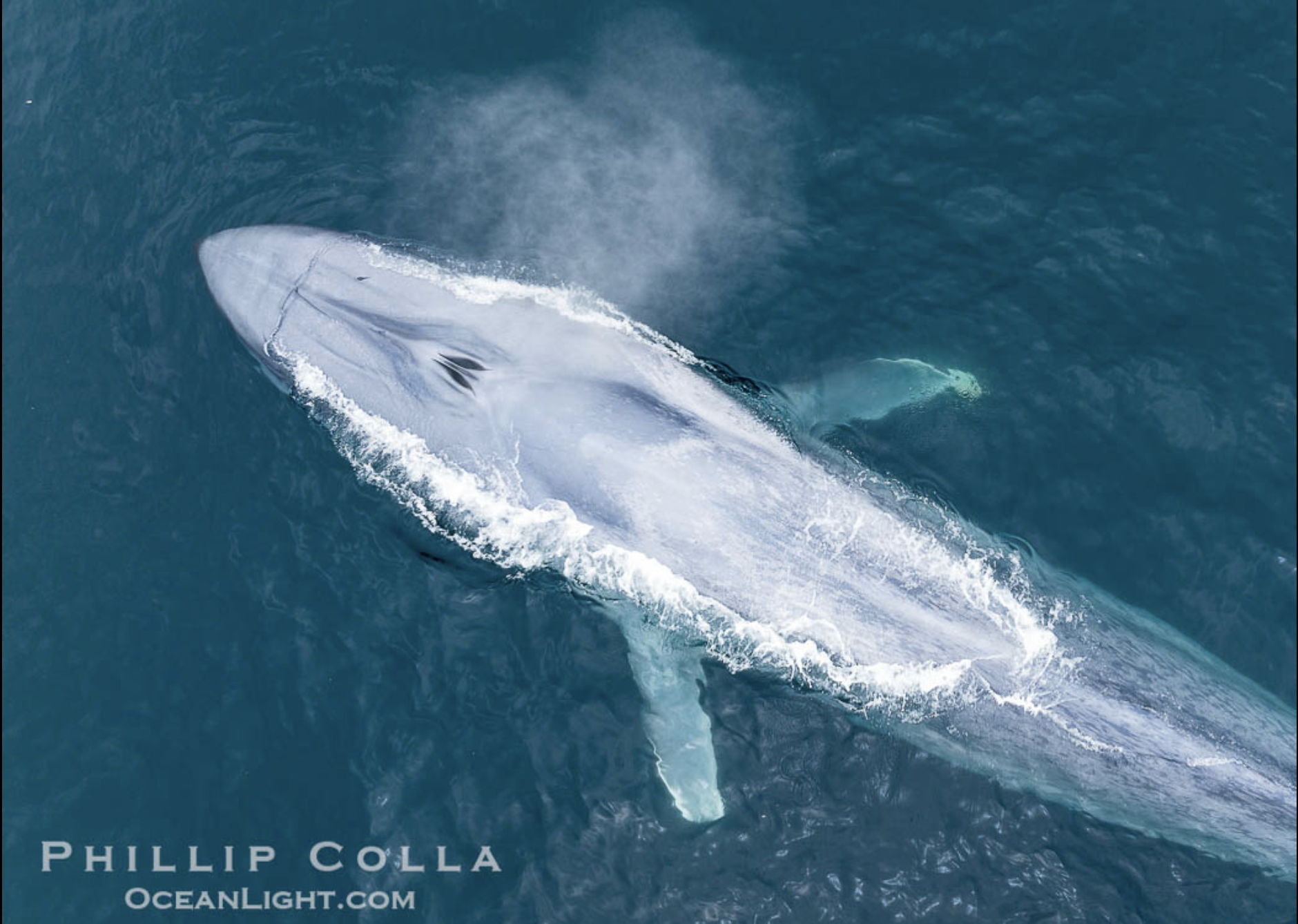
Quick Facts
- Official Species Name: Balaenoptera musculus
- Estimated Population: 10,000–25,000 worldwide
- Conservation Status: Endangered
- Range: Oceans worldwide
- Reasons for Population Decline: Commercial whaling, ship strikes, climate change, ocean noise, entanglement
How They Survive in Their Habitat
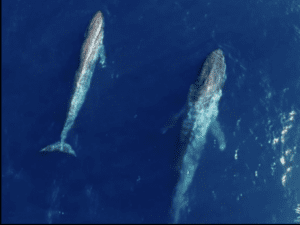
Blue whales are highly migratory marine mammals. They typically spend summers in cold, nutrient-rich polar waters where krill are abundant. During winter, they migrate thousands of miles to warmer tropical or subtropical waters to breed and give birth.
Their feeding strategy is called lunge feeding. They accelerate toward dense swarms of krill, open their enormous mouths, and engulf huge volumes of water. Their baleen plates then trap the krill inside while seawater is expelled. An adult blue whale can consume up to 4 tons of krill per day during peak feeding season.
Their thick layer of blubber insulates them against cold ocean temperatures and provides energy reserves during long migrations when they may eat very little. Their streamlined bodies and powerful tail flukes allow them to travel efficiently across vast ocean distances.
Family Life
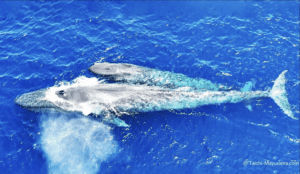
Blue whales are generally solitary or found in small, loose groups. Unlike some whale species, they do not form large pods. However, mothers and calves share a strong bond.
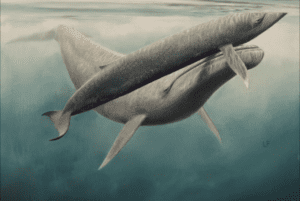
After a gestation period of about 11–12 months, a female gives birth to a single calf. At birth, calves can measure around 23 feet (7 meters) long and weigh up to 3 tons. Calves nurse on rich, fatty milk and can gain up to 200 pounds (90 kg) per day.
The mother stays with her calf for several months, guiding it to feeding grounds and protecting it from potential threats such as orcas. This early period is critical for the calf’s survival and development.
Why They Are Threatened
Blue whales were heavily hunted during the 20th century in commercial whaling operations. Tens of thousands were killed for their oil, meat, and baleen, pushing the species to the brink of extinction. Although commercial whaling has largely stopped, populations have been slow to recover.
Today, they face several ongoing threats. Ship strikes are a major concern, as their large size and surface-feeding behavior make collisions more likely. Entanglement in fishing gear can cause injury or death.
Climate change is altering ocean ecosystems, affecting krill populations that blue whales depend on for food. Increasing ocean noise from shipping and industrial activity also disrupts their communication, which is vital for navigation and breeding.
While their numbers have improved since the whaling ban, blue whales remain endangered and vulnerable to environmental changes.
Ten Fun Facts
- Blue whales are the largest animals ever known to exist.
- Their heart can weigh as much as 400 pounds (180 kg).
- They can consume up to 4 tons of krill in a single day.
- Their calls are among the loudest sounds made by any animal.
- A blue whale calf can gain around 200 pounds per day.
- Their blow (spout) can reach up to 30 feet (9 meters) high.
- They can live 70–90 years or longer.
- They migrate thousands of miles each year.
- Their tongue can weigh as much as an elephant.
- Despite their size, they feed on some of the smallest marine animals.
What Can You Do to Help?
- Support marine conservation organizations working to protect whale habitats.
- Advocate for shipping lane changes in high-risk whale areas to reduce ship strikes.
- Reduce plastic use and ocean pollution.
- Support sustainable seafood choices to reduce harmful fishing practices.
- Encourage policies that address climate change and protect marine ecosystems.
- Participate in or support ocean clean-up efforts.
- Raise awareness about the importance of protecting the world’s oceans and marine life.