Quick Facts
- Official Species Name: Chelonoidis species (multiple species and subspecies)
- Estimated Population: Around 15,000–20,000 in the wild
- Conservation Status: Vulnerable to Critically Endangered (varies by species)
- Range: Galápagos Islands, Ecuador
- Reasons for Population Decline: Historic hunting, invasive species, habitat destruction
Unique Features
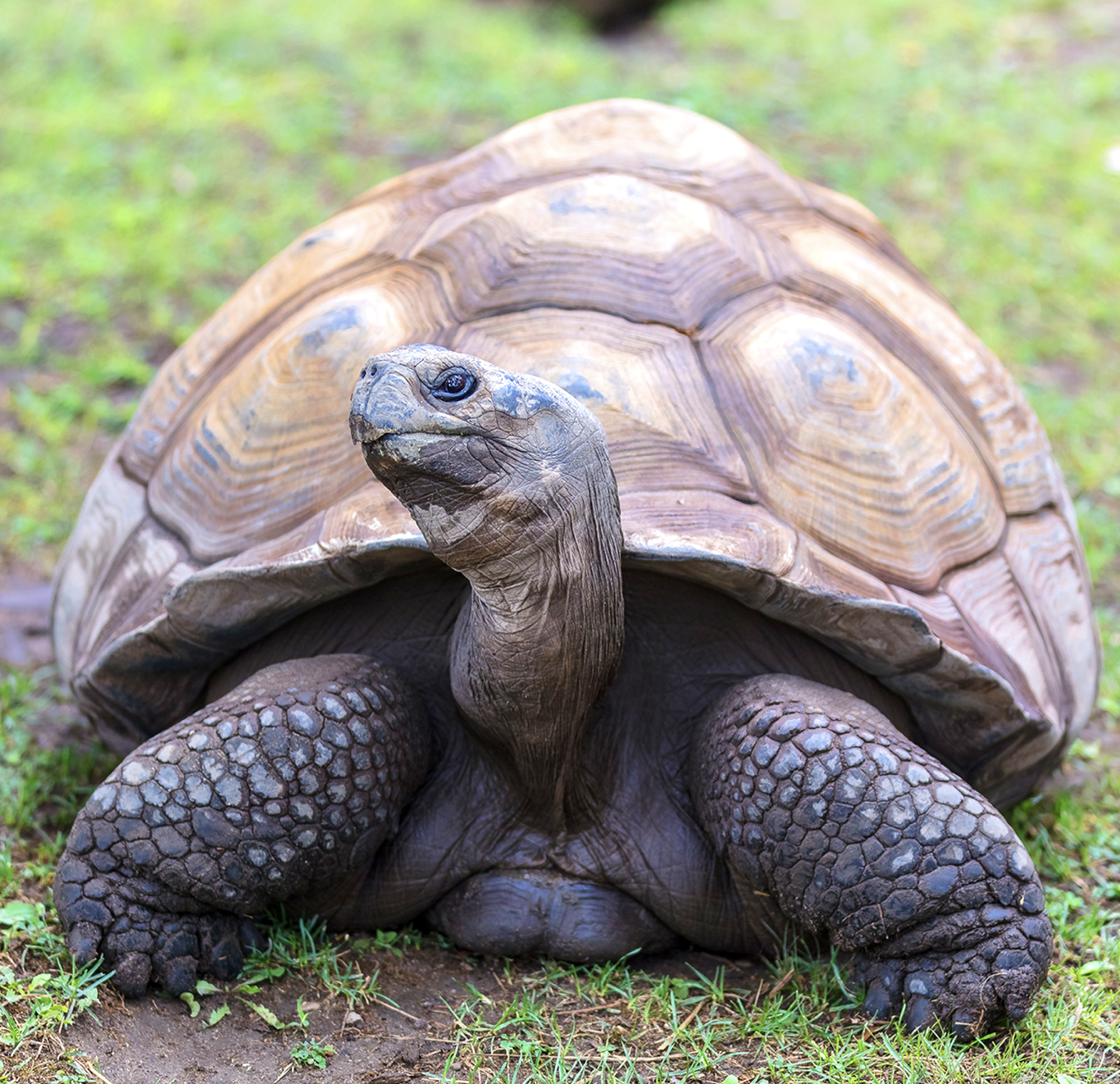
Galápagos giant tortoises are the largest tortoises on Earth. Some individuals can weigh over 500 pounds (225 kg) and grow more than 4 feet (1.2 meters) long.
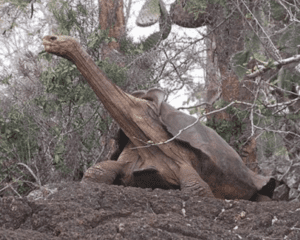
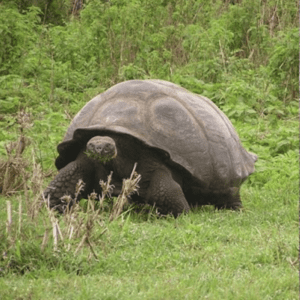
They are famous for their enormous domed or saddleback-shaped shells. The shape of the shell often depends on the island they live on. Dome-shaped shells are common on islands with abundant ground vegetation, while saddleback shells allow tortoises to stretch their necks higher to reach shrubs and cactus pads.
These tortoises are also known for their incredible longevity. Many live over 100 years, and some individuals have reached 150 years or more.
How They Survive in Their Habitat
Giant tortoises are herbivores and feed on grasses, leaves, fruits, and cactus. They can store water in their bodies and survive long periods without drinking—an important adaptation on islands where fresh water can be scarce.
They move slowly but efficiently across rocky lava fields, coastal plains, and lush highlands. Their strong legs support their heavy shells and help them travel long distances in search of food.
Because they have few natural predators as adults, their main survival strategy is their protective shell. When threatened, they pull their head and legs inside for protection.
Family Life
Giant tortoises are generally solitary but may gather in feeding or watering areas. During mating season, males compete for females by stretching their necks and raising themselves up to appear taller and more dominant.
Females travel to sandy nesting areas where they dig holes and lay 2–16 eggs. After covering the nest, they leave the eggs to incubate in the warm soil.
Hatchlings are vulnerable to predators such as introduced rats and feral cats. Those that survive can grow slowly over decades into massive adults.
Why They Are Threatened
In the 1700s and 1800s, sailors and whalers hunted giant tortoises heavily for food because they could survive for months aboard ships without water or food. This caused dramatic population declines.
Introduced animals such as goats destroyed vegetation, while rats, pigs, and cats preyed on eggs and hatchlings. Habitat destruction also reduced available nesting and feeding areas.
Today, conservation programs have helped many populations recover, but some species remain critically endangered due to their limited ranges and small numbers.
Ten Fun Facts
- Giant tortoises can live over 150 years.
- They are the largest tortoises in the world.
- Their shell shape can differ depending on their island.
- They can go months without food or water.
- Charles Darwin studied them during his voyage to the Galápagos.
- They help shape their ecosystem by spreading seeds through their droppings.
- Hatchling sex can depend on the temperature of the nest.
- Some tortoises migrate seasonally between lowlands and highlands.
- They have slow metabolisms that help them conserve energy.
- Each island population evolved slightly differently over time.
What Can People Do to Help?
- Support conservation programs in the Galápagos Islands.
- Avoid introducing non-native species when traveling.
- Follow wildlife guidelines when visiting protected areas.
- Support sustainable tourism practices.
- Donate to organizations working to restore tortoise habitats.
- Learn about invasive species and their impacts.
- Promote global conservation awareness for island ecosystems.