Quick Facts
-
Official Species Name: Panthera tigris sumatrae
-
Estimated Population: Approximately 400–600 individuals remaining
-
Conservation Status: Critically Endangered
-
Range: Indonesian island of Sumatra
-
Reasons for Population Decline: Deforestation, palm oil expansion, poaching, human-wildlife conflict
Unique Features
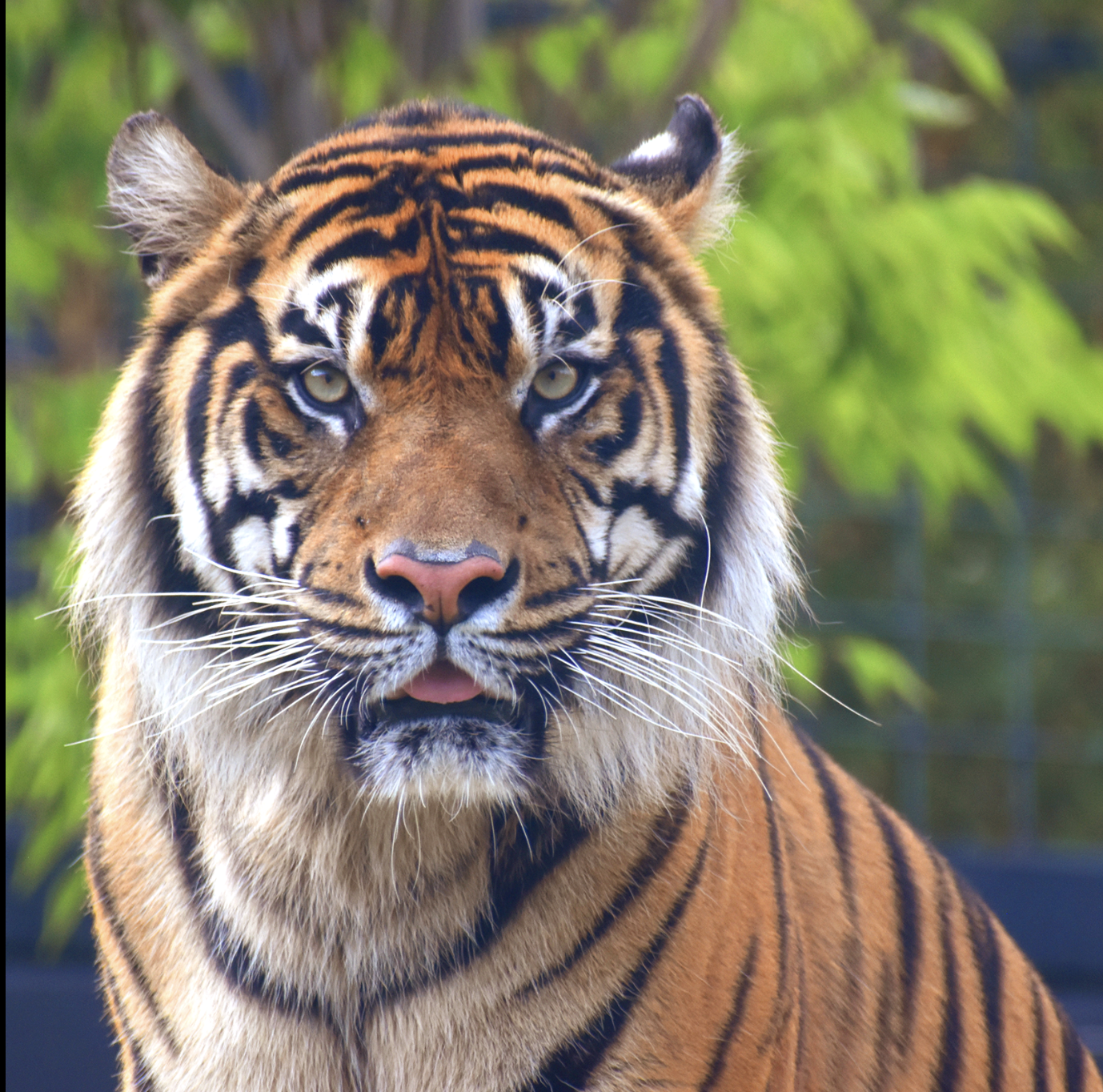
The Sumatran tiger is the smallest surviving subspecies of tiger, perfectly adapted to dense jungle life. Its coat is darker orange with closely spaced black stripes, helping it blend into thick forests.
It has longer fur and a more pronounced mane-like ruff around the neck compared to other tigers, especially in males.
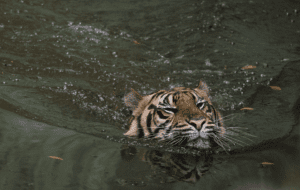
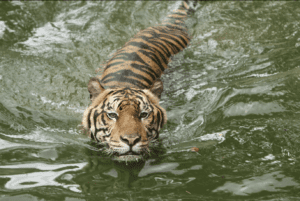
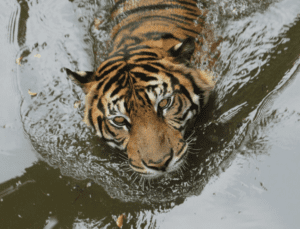
Unlike mainland tigers, Sumatran tigers have partially webbed paws, making them strong swimmers and well-suited to navigating rivers and swampy terrain.
Their smaller size allows them to move quietly and efficiently through dense vegetation where larger tigers would struggle.
How They Survive in Their Habitat
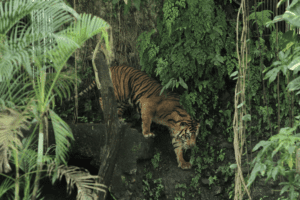
Sumatran tigers live in tropical rainforests, peat swamps, and mountainous forests. These habitats provide dense cover for stalking prey.
They are powerful carnivores that hunt animals such as deer, wild boar, tapirs, and monkeys. Like all tigers, they are ambush predators—relying on stealth, camouflage, and short bursts of speed.
They are solitary and mostly active at night. Their striped coats break up their outline in the forest, making them nearly invisible to prey.
Their strong swimming ability helps them cross rivers and expand their hunting territory.
Family Life
Sumatran tigers are solitary animals. Males and females only come together to mate.
After a gestation period of about 100–110 days, a female gives birth to 2–3 cubs in a hidden den. Cubs are born blind and rely entirely on their mother.
The mother raises and protects the cubs alone, teaching them to hunt and survive. Young tigers typically stay with their mother for about 18–24 months before becoming independent.
Males do not help raise the cubs but maintain territories that may overlap with several females.
Why They Are Threatened
The biggest threat to Sumatran tigers is habitat loss. Large areas of forest are cleared for palm oil plantations, logging, and agriculture.
As forests shrink, tigers are forced into closer contact with humans. This leads to conflict with farmers, and tigers may be killed in retaliation.
Poaching is another serious threat. Tigers are hunted for their skins, bones, and body parts, which are illegally traded.
Because the population is so small and isolated, genetic diversity is decreasing, making long-term survival more difficult.
Ten Fun Facts
-
Sumatran tigers are the smallest tiger subspecies.
-
They are excellent swimmers and enjoy water.
-
Their stripes are unique—no two tigers have the same pattern.
-
They can leap over 20 feet (6 meters) in a single bound.
-
A tiger’s roar can be heard up to 2 miles (3 km) away.
-
They use scent markings to communicate with other tigers.
-
Their rough tongues help strip meat from bones.
-
They are apex predators, keeping ecosystems balanced.
-
They prefer dense forests rather than open grasslands.
-
They are the last surviving tiger subspecies in Indonesia.
What Can People Do to Help?
-
Support organizations protecting Sumatran forests and wildlife.
-
Choose products made with sustainable palm oil or avoid unsustainable palm oil altogether.
-
Avoid purchasing products that contribute to deforestation.
-
Support anti-poaching efforts and wildlife protection laws.
-
Promote awareness about endangered species in Indonesia.
-
Encourage companies to adopt sustainable sourcing practices.
-
Help fund conservation programs that protect tiger habitats.