Quick Facts
-
Official Species Name: Loxodonta cyclotis
-
Estimated Population: Fewer than 150,000 (rapidly declining)
-
Conservation Status: Critically Endangered
-
Range: Central and West Africa (Congo Basin forests)
-
Reasons for Population Decline: Poaching for ivory, habitat loss, deforestation, human conflict
Unique Features
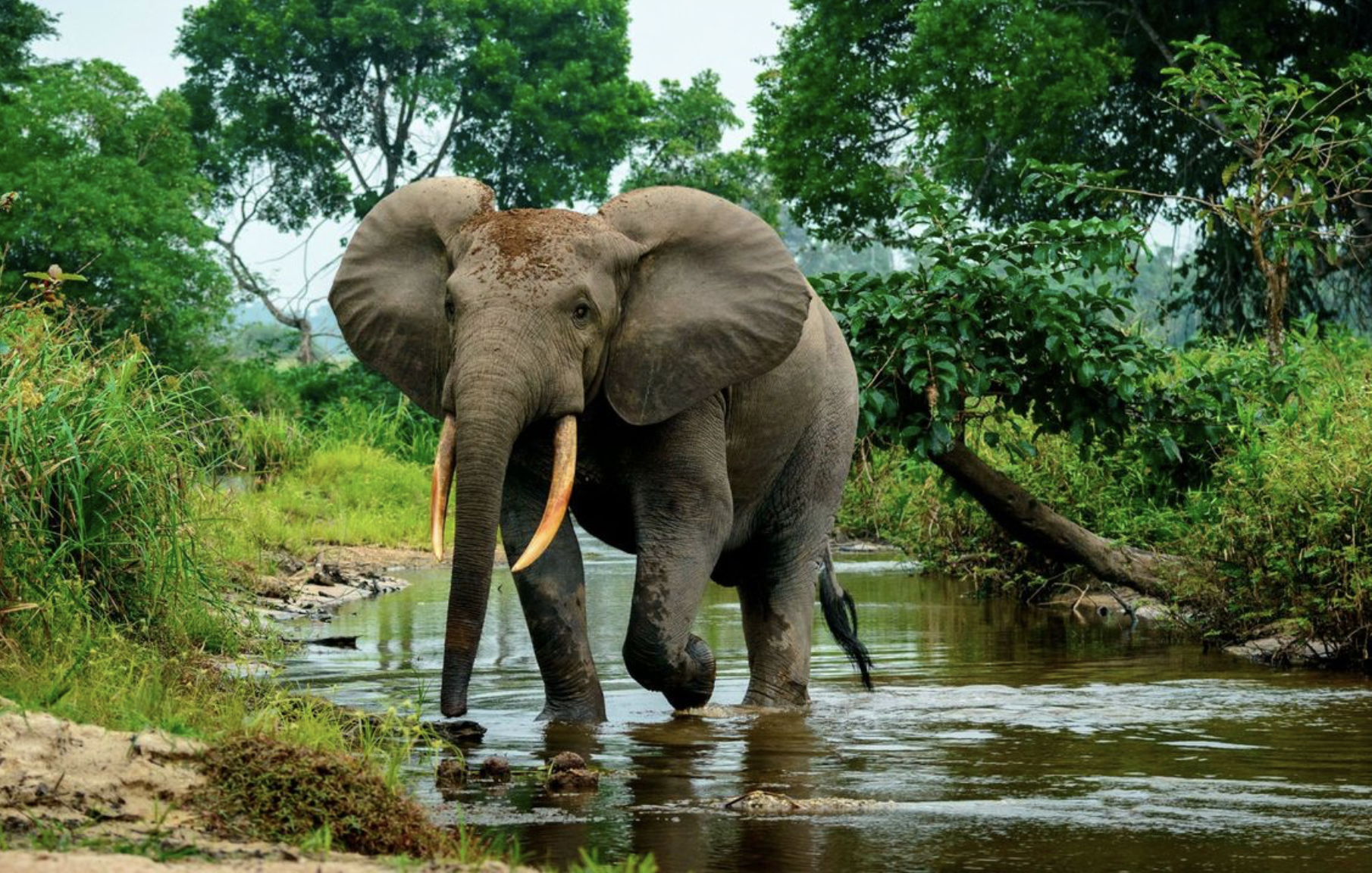
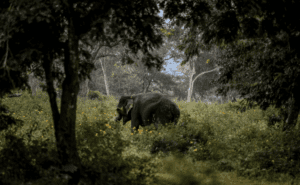
Forest elephants are smaller and more compact than their savanna relatives. They have straighter, thinner tusks that point downward, which help them navigate dense forest vegetation and dig for minerals. Their ears are more rounded, and their skin is slightly darker.
Their tusks are highly valued in illegal ivory markets, which has unfortunately made them a prime target for poachers. Unlike savanna elephants, forest elephants are specially adapted to life in thick rainforests, moving quietly through dense undergrowth.
They play a critical ecological role as “gardeners of the forest.” By eating fruit and dispersing seeds over long distances, they help maintain forest diversity and regeneration.
How They Survive in Their Habitat
Forest elephants inhabit dense tropical rainforests where visibility is limited and terrain can be challenging. They use their excellent sense of smell and hearing to navigate and locate food.
Their diet consists primarily of fruits, leaves, bark, and roots. They are particularly important for dispersing large seeds that other animals cannot swallow. Many tree species depend on elephants to spread their seeds and maintain healthy forest ecosystems.
Forest elephants also create clearings and pathways through vegetation, which benefit other species. They frequently visit forest clearings known as “bais,” where they gather to socialize and access mineral-rich soil.
Family Life
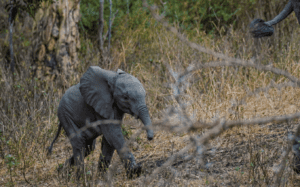
Forest elephants live in smaller family groups compared to savanna elephants, usually consisting of a mother and her offspring. These family units may occasionally join larger groups at feeding sites or forest clearings.
Like all elephants, they are matriarchal. The oldest female leads the group and guides them to food and water sources. Elephants form deep emotional bonds, display empathy, and communicate through vocalizations, touch, and low-frequency rumbles that can travel long distances through the forest.
Females give birth to a single calf after a gestation period of about 22 months—the longest pregnancy of any land mammal. Calves remain dependent on their mothers for several years.
Why They Are Threatened
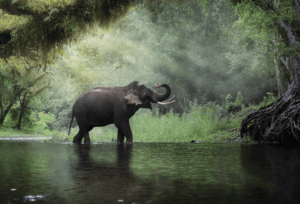
Forest elephants have experienced severe population declines over the past few decades. Poaching for ivory is the most significant threat. Their tusks are often harder and straighter than those of savanna elephants, making them highly sought after.
Habitat destruction from logging, agriculture, and mining has fragmented their forest homes. Expanding road networks make remote forests more accessible to poachers.
Because forest elephants reproduce slowly—typically having one calf every 5–6 years—populations struggle to recover from heavy losses. Their disappearance would have devastating effects on rainforest ecosystems
Ten Fun Facts
-
Forest elephants are a separate species from African savanna elephants.
-
Their tusks are straighter and thinner than savanna elephants’ tusks.
-
They help plant entire forests by dispersing seeds.
-
They communicate using low-frequency sounds that travel through dense vegetation.
-
Their pregnancy lasts about 22 months.
-
They create forest clearings used by many other animals.
-
Forest elephants are excellent swimmers.
-
They can detect vibrations through the ground.
-
Calves can stand shortly after birth.
-
They are sometimes called the “engineers” of the rainforest.
What Can People Do to Help?
-
Support anti-poaching initiatives and wildlife law enforcement.
-
Avoid purchasing ivory or products made from wildlife parts.
-
Support sustainable forestry and responsible land-use practices.
-
Advocate for stronger protections of Congo Basin rainforests.
-
Support conservation organizations working with local communities.
-
Raise awareness about the difference between forest and savanna elephants.
-
Encourage global efforts to reduce demand for illegal ivory.