Quick Facts
- Official Species Name: Gorilla beringei graueri
- Estimated Population: Approximately 6,000
- Conservation Status: Critically Endangered
- Range: Eastern Democratic Republic of Congo
- Reasons for Population Decline: Habitat loss, poaching, illegal mining, civil unrest
Unique Features
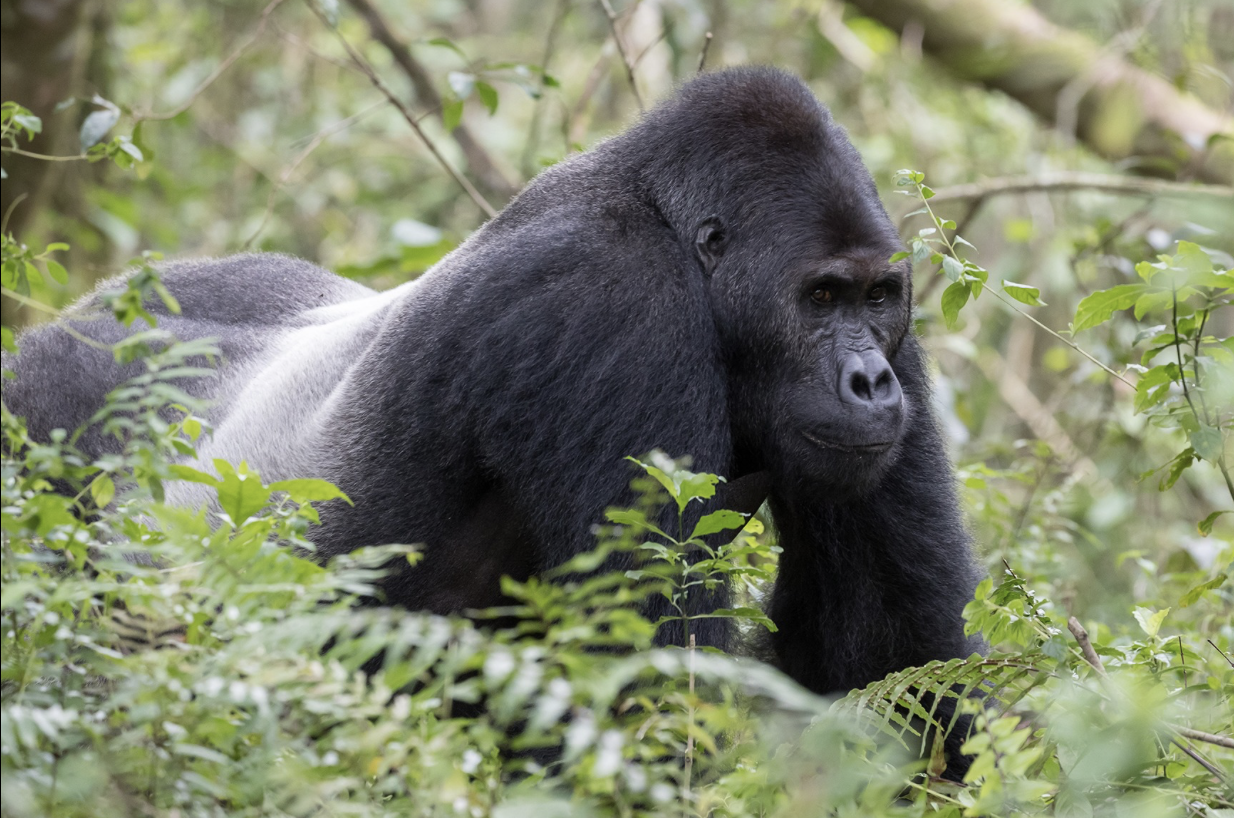
The Eastern lowland gorilla, also known as Grauer’s gorilla, is the largest of all gorilla subspecies. Adult males, known as silverbacks, can weigh up to 400 pounds (180 kg) and develop a distinctive silver patch of hair across their backs as they mature.
They have broad chests, large hands, and powerful arms built for climbing and knuckle-walking. Compared to mountain gorillas, Eastern lowland gorillas tend to have slightly shorter hair and a more robust body structure.
Like other gorillas, they possess remarkable intelligence and emotional depth. They use a variety of vocalizations, gestures, and facial expressions to communicate within their groups.
How They Survive in Their Habitat
Eastern lowland gorillas inhabit dense tropical rainforests and mountainous regions of the eastern Congo. Their diet consists mainly of leaves, stems, fruit, bark, and roots. Because fruit availability varies seasonally, they adjust their feeding patterns based on what is available.
They spend much of their day foraging and resting. Their large size allows them to process tough vegetation efficiently. By moving through the forest and dispersing seeds in their droppings, they play an important role in maintaining forest health and regeneration.
They build new nests each night from branches and leaves, either on the ground or in trees, providing a safe place to sleep.
Family Life
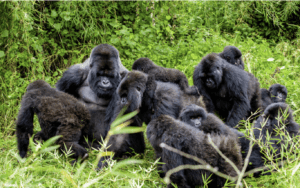
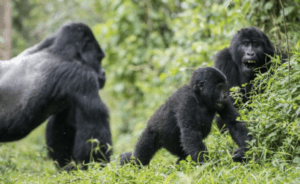
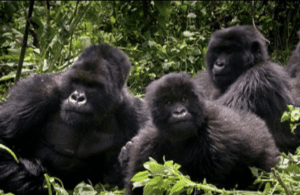
Eastern lowland gorillas live in stable family groups led by a dominant silverback male. A typical group includes several females and their offspring.
The silverback is responsible for protecting the group, making decisions about movement and feeding sites, and mediating conflicts. If threatened, he may beat his chest, vocalize loudly, or charge to defend his family.
Females usually give birth to one infant after an 8.5-month gestation. Infants are completely dependent on their mothers and ride on their backs as they grow. Strong bonds form between mothers and offspring, and young gorillas remain in the group for several years before dispersing.
Why They Are Threatened
Eastern lowland gorillas have experienced dramatic population declines in recent decades. Much of their habitat lies in regions affected by armed conflict and political instability.
Illegal mining for minerals such as coltan has destroyed large areas of forest, while armed groups often hunt gorillas for bushmeat. Poaching and snares set for other animals also injure or kill gorillas.
Habitat destruction from logging and agricultural expansion further fragments their range. Because they reproduce slowly—typically giving birth only once every four years—population recovery is extremely challenging.
Ten Fun Facts
- Eastern lowland gorillas are the largest gorilla subspecies.
- Adult males develop a silver patch of hair called a “silverback.”
- They build a new nest every night to sleep in.
- Gorillas share about 98% of their DNA with humans.
- They communicate using over 20 different vocalizations.
- Young gorillas love to play and wrestle with each other.
- A silverback’s chest beat can be heard from nearly a mile away.
- They are primarily herbivores but occasionally eat insects.
- Their strong hands allow them to manipulate branches with ease.
- They are important seed dispersers in their forest ecosystem.
What Can You Do to Help?
- Support conservation organizations working in the Democratic Republic of Congo.
- Advocate for responsible mineral sourcing to reduce illegal mining impacts.
- Oppose bushmeat hunting and illegal wildlife trade.
- Support protected areas such as Kahuzi-Biega National Park.
- Promote sustainable forestry and land-use practices.
- Donate to gorilla research and monitoring programs.
- Raise awareness about the connection between consumer electronics and conflict minerals.