Sloth

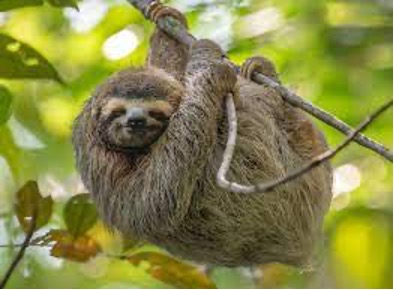
Sloth hanging from tree branch, green background.

Quick Facts

  • Official Species Name: Bradypus (Three-toed sloths) & Choloepus (Two-toed sloths)

  • Estimated Population: Varies by species; some populations are stable, while others (such as the pygmy three-toed sloth) have fewer than 1,500 individuals remaining

  • Conservation Status: Ranges from Least Concern to Critically Endangered, depending on the species

  • Range: Central & South America

  • Reasons for Population Decline: Habitat loss, deforestation, illegal wildlife trafficking, road mortality, habitat fragmentation


Sloth hanging on tree among green leaves.

Unique Features

Sloths are one of the most specialized mammals in the world. Their famously slow movement is not laziness — it is an evolutionary survival strategy. By moving slowly, they avoid attracting the attention of predators such as jaguars and large birds of prey. Their metabolism is extremely slow, allowing them to survive on a low-calorie diet of leaves.

Their long, curved claws act like natural hooks, enabling them to hang effortlessly from tree branches for hours at a time. Special tendons lock their grip in place, so they can sleep while hanging upside down without falling. Sloths also have a unique relationship with algae that grows on their fur. This gives them a greenish tint that helps camouflage them in the rainforest canopy, blending them almost perfectly with the surrounding leaves.


How They Survive in Their Habitat

Sloths spend nearly their entire lives high in the trees of tropical rainforests. The canopy provides food, shelter, and protection. Their slow movements and natural camouflage make them difficult for predators to spot. Instead of fleeing quickly, sloths rely on staying unnoticed.

Their digestive system is specially adapted to break down tough leaves. A sloth’s stomach has multiple compartments and can take weeks to fully digest a single meal. This slow digestion matches their low-energy lifestyle. Although they appear awkward on land, sloths are surprisingly good swimmers and can move three times faster in water than on the ground. In flooded forests or during heavy rains, swimming becomes an important survival skill.


Sloth hanging on tree branch in jungle.

Family Life

Sloths are generally solitary animals and prefer to live alone in their own section of forest. They communicate occasionally through soft vocalizations, especially during mating season.

Females typically give birth to one baby at a time after a gestation period of several months. The baby clings tightly to its mother’s chest for the first months of life, nursing and learning essential survival skills. Young sloths learn which leaves are safe to eat by observing and even licking food from their mother’s mouth. After about six months, they gradually become more independent but may stay near their mother’s territory for some time before establishing their own home range.
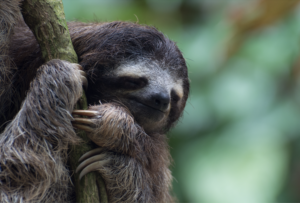

Sloth hanging on a tree branch.

Why They Are Threatened

The greatest threat to sloths is deforestation. Rainforests are being cleared for agriculture, cattle ranching, logging, and development. When trees are cut down, sloths lose not only their homes but also their food sources.

Habitat fragmentation is especially dangerous. When forests are broken into smaller patches, sloths are sometimes forced to descend to the ground to move between trees, exposing them to predators, domestic animals, and vehicle collisions. In some regions, sloths are also victims of illegal wildlife trafficking, captured for the pet trade or exploited for tourism photos.

Because sloths reproduce slowly and have only one baby at a time, their populations cannot quickly recover from major losses.
10 Fun Facts About Sloths

  1. Sloths can hold their breath for up to 40 minutes by slowing their heart rate.

  2. Algae growing on their fur helps camouflage them.

  3. It can take up to a month to digest a single meal.

  4. Sloths sleep about 10–15 hours per day in the wild.

  5. Ancient giant ground sloths once grew as large as elephants.

  6. They can rotate their heads up to 270 degrees.

  7. Sloths are excellent swimmers.

  8. Their grip is so strong they can hang even after death.

  9. Baby sloths cling to their mothers immediately after birth.

  10. There are six living species of sloths today.

_____________________________________________________________________________________________________________________________________________________________________________

What Can People Do to Help?

Protecting sloths starts with protecting forests.

  • Support rainforest conservation organizations working to preserve and restore tropical habitats.

  • Choose sustainably sourced products, especially coffee, chocolate, palm oil, and wood, to reduce deforestation.

  • Avoid wildlife selfies or attractions that allow tourists to hold sloths — this fuels illegal capture.

  • Plant trees and support reforestation efforts to reconnect fragmented habitats.

  • Raise awareness about illegal wildlife trafficking and the importance of biodiversity.

  • Advocate for stronger environmental protections that safeguard tropical ecosystems.

Every action that protects forests helps protect sloths.


Gold Transparency 2023 Candid badge.

GuideStar is the world’s largest source of information on nonprofit organizations.


They gather and provide access to the most comprehensive, up-to-date, and accurate nonprofit information which is available to potential funders and donors.

Less than five percent of non-profits registered with GuideStar are recognized with a Gold Seal. A Gold Seal status is the leading symbol of non-profit transparency and accountability.

Start a Community Garden

A community garden is a wonderful way to bring people together while growing fresh, healthy food. Kids can ask their school, local library, or community center if there’s space to start a garden, then invite neighbors and classmates to help plant, water, and harvest vegetables or flowers. Some gardens even donate their extra produce to food banks or share it with neighbors who need it. It’s a hands-on way to learn about nature, teamwork, and taking care of your community’s shared spaces.

SAFE Worldwide Kid's Zone

Raise Funds for Local Wildlife Center

Wildlife centers take care of injured or orphaned animals, and they always need extra support to keep helping. Kids can host a bake sale, lemonade stand, or online fundraiser, or organize a “walk-a-thon” with friends and family to raise money for a wildlife rescue near them. You could also collect donated supplies the center needs, like towels, blankets, or pet food. Even a small donation can help feed, shelter, or heal an animal in need.

SAFE Worldwide Kid's Zone

Recycling Project

Recycling projects let kids turn everyday trash into something useful — or at least keep it out of landfills! You could start a recycling bin program at your school, organize a can and bottle drive to raise money for charity, or get creative and turn old materials into art, planters, or bird feeders. You might even research your town’s recycling rules and make a poster or flyer to help neighbors recycle correctly. Small habits, like rinsing containers or separating paper from plastic, add up to a big impact when a whole community joins in.

SAFE Worldwide Kid's Zone

Booth at Local Farmers Markets

Setting up a booth at your local farmers market is a great way to get your whole neighborhood excited about helping the planet. You could raise money for a cause you care about — like a wildlife shelter, a tree-planting group, or a beach cleanup fund — by selling homemade crafts, lemonade, or baked goods. You could also use your booth to teach people about recycling, showing them fun facts or simple tips for sorting their trash the right way. It’s a great way to practice public speaking, teamwork, and making a real difference in your community.

SAFE Worldwide Kid's Zone

Beach Clean-Ups

Every year on the third Saturday of September, people around the world celebrate International Coastal Cleanup Day, and you can sign up with local groups in your community to join thousands of other volunteers picking up trash along the shore. But you don’t have to wait for that one day — cleanups can happen any time! Grab some gloves, trash bags, and a few friends, and organize your own cleanup day at a nearby river, stream, lake, or beach. It’s a fun way to hang out with friends while protecting fish, turtles, and birds from plastic and litter. Nationalcleanupday.

SAFE Worldwide Kid's Zone

Tree Planting Events

Planting trees is one of the easiest ways kids can help fight climate change and give animals a home. You can join organizations like SAFE Worldwide, One Tree Planted, or the Arbor Day Foundation, which often have kid-friendly volunteer days and even let you sponsor a tree from home. Or, team up with your family, neighbors, or scout troop to start your own mini tree-planting project in a local park, schoolyard, or empty lot (just ask permission first!). Every tree you plant helps clean the air, cool the planet, and grow into a home for birds and squirrels for years to come.

SAFE Worldwide Kid's Zone