Chimpanzee

Quick Facts

  • Official Species Name: Pan troglodytes
  • Estimated Population: 170,000–300,000
  • Conservation Status: Endangered
  • Range: West and Central Africa
  • Reasons for Population Decline: Habitat loss, poaching, illegal wildlife trafficking, disease
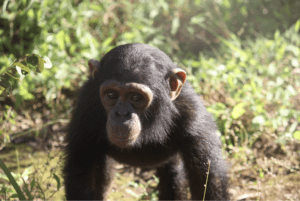
Chimpanzee walking in a grassy area.

Unique Features

Chimpanzees are our closest living relatives, sharing about 98–99% of our DNA. They have highly expressive faces, capable of showing joy, fear, anger, and curiosity. Their long arms and strong hands make them exceptional climbers, allowing them to swing through the forest canopy with agility.

Chimpanzees are highly intelligent, using tools such as sticks to extract termites from mounds or rocks to crack nuts. They have complex vocalizations and gestures for communication, and their problem-solving skills are remarkable among non-human animals.

Their hands and feet are both adapted for grasping, giving them dexterity both on the ground and in trees.

How They Survive in Their Habitat

Chimpanzees live in tropical forests and savanna-woodlands, relying on a rich diet of fruit, leaves, seeds, insects, and occasionally small mammals. They forage both on the forest floor and in the canopy, taking advantage of seasonal availability of food.

They are highly adaptable and use tools to access hard-to-reach food sources. Social learning allows knowledge about food sources, tool use, and predator avoidance to pass between generations.

Strong social bonds help chimpanzees cooperate when hunting, defending territory, or caring for vulnerable group members. Their intelligence allows them to navigate complex forest ecosystems and respond to changing environmental conditions.
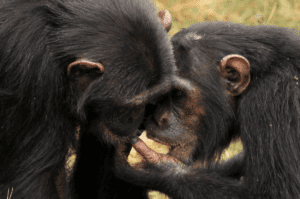
Two chimpanzees sharing food closely together.

Family Life

Chimpanzees live in large, fluid communities called fission-fusion societies, ranging from 20 to 150 individuals. Subgroups form and separate depending on food availability and social interactions.

Female chimpanzees typically care for their infants alone for the first few years, nursing and teaching them essential survival skills. Males establish dominance hierarchies, and alliances between males can influence group leadership. Grooming plays a crucial role in maintaining social bonds and reducing tension.

Community cooperation and strong family bonds are essential to survival, especially when defending territory or raising young.
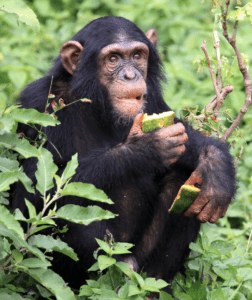
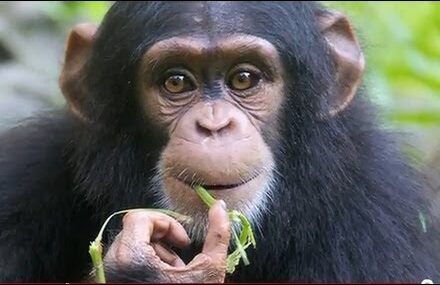
Chimpanzee eating fruit in lush greenery.

Why They Are Threatened

Chimpanzees face multiple human-related threats. Deforestation for agriculture, logging, and infrastructure destroys and fragments their habitat.

Poaching for bushmeat and capture for the illegal pet trade has significantly reduced wild populations. Diseases, sometimes transmitted from humans, also threaten their survival, as chimpanzees are highly susceptible to many human pathogens.

The combination of habitat loss, hunting, and disease, coupled with slow reproductive rates, makes their conservation urgent.

Ten Fun Facts

  • Chimpanzees share 98–99% of DNA with humans.
  • They can make and use tools to access food.
  • Chimpanzees communicate with facial expressions, gestures, and vocalizations.
  • They are excellent climbers and spend significant time in trees.
  • Grooming strengthens social bonds and reduces tension.
  • Chimpanzees can hunt in coordinated groups.
  • Mothers teach their young how to crack nuts and use sticks for termites.
  • They have strong memories and can remember locations of fruit trees.
  • Chimpanzees exhibit empathy and have been observed comforting distressed individuals.
  • They are capable of solving complex problems and using rudimentary strategies.
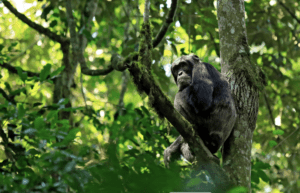
Chimpanzee sitting in a tree.

What Can You Do to Help?

  • Support organizations protecting chimpanzee habitats in Africa.
  • Advocate against deforestation and habitat fragmentation.
  • Oppose illegal wildlife trafficking and bushmeat hunting.
  • Participate in or donate to sanctuaries and rehabilitation programs.
  • Promote awareness of human-wildlife coexistence and conservation education.
  • Support ecotourism initiatives that protect natural habitats.
  • Reduce human disease transmission risks in areas where chimpanzees live.

Gold Transparency 2023 Candid badge.

GuideStar is the world’s largest source of information on nonprofit organizations.


They gather and provide access to the most comprehensive, up-to-date, and accurate nonprofit information which is available to potential funders and donors.

Less than five percent of non-profits registered with GuideStar are recognized with a Gold Seal. A Gold Seal status is the leading symbol of non-profit transparency and accountability.

Start a Community Garden

A community garden is a wonderful way to bring people together while growing fresh, healthy food. Kids can ask their school, local library, or community center if there’s space to start a garden, then invite neighbors and classmates to help plant, water, and harvest vegetables or flowers. Some gardens even donate their extra produce to food banks or share it with neighbors who need it. It’s a hands-on way to learn about nature, teamwork, and taking care of your community’s shared spaces.

SAFE Worldwide Kid's Zone

Raise Funds for Local Wildlife Center

Wildlife centers take care of injured or orphaned animals, and they always need extra support to keep helping. Kids can host a bake sale, lemonade stand, or online fundraiser, or organize a “walk-a-thon” with friends and family to raise money for a wildlife rescue near them. You could also collect donated supplies the center needs, like towels, blankets, or pet food. Even a small donation can help feed, shelter, or heal an animal in need.

SAFE Worldwide Kid's Zone

Recycling Project

Recycling projects let kids turn everyday trash into something useful — or at least keep it out of landfills! You could start a recycling bin program at your school, organize a can and bottle drive to raise money for charity, or get creative and turn old materials into art, planters, or bird feeders. You might even research your town’s recycling rules and make a poster or flyer to help neighbors recycle correctly. Small habits, like rinsing containers or separating paper from plastic, add up to a big impact when a whole community joins in.

SAFE Worldwide Kid's Zone

Booth at Local Farmers Markets

Setting up a booth at your local farmers market is a great way to get your whole neighborhood excited about helping the planet. You could raise money for a cause you care about — like a wildlife shelter, a tree-planting group, or a beach cleanup fund — by selling homemade crafts, lemonade, or baked goods. You could also use your booth to teach people about recycling, showing them fun facts or simple tips for sorting their trash the right way. It’s a great way to practice public speaking, teamwork, and making a real difference in your community.

SAFE Worldwide Kid's Zone

Beach Clean-Ups

Every year on the third Saturday of September, people around the world celebrate International Coastal Cleanup Day, and you can sign up with local groups in your community to join thousands of other volunteers picking up trash along the shore. But you don’t have to wait for that one day — cleanups can happen any time! Grab some gloves, trash bags, and a few friends, and organize your own cleanup day at a nearby river, stream, lake, or beach. It’s a fun way to hang out with friends while protecting fish, turtles, and birds from plastic and litter. Nationalcleanupday.

SAFE Worldwide Kid's Zone

Tree Planting Events

Planting trees is one of the easiest ways kids can help fight climate change and give animals a home. You can join organizations like SAFE Worldwide, One Tree Planted, or the Arbor Day Foundation, which often have kid-friendly volunteer days and even let you sponsor a tree from home. Or, team up with your family, neighbors, or scout troop to start your own mini tree-planting project in a local park, schoolyard, or empty lot (just ask permission first!). Every tree you plant helps clean the air, cool the planet, and grow into a home for birds and squirrels for years to come.

SAFE Worldwide Kid's Zone