
Quick Facts
• Official Species Name: Beatragus hunteri
• Estimated Population: Fewer than 500 individuals in the wild
• Conservation Status: Critically Endangered
• Range: Northeastern Kenya (near the Kenya–Somalia border)
• Reasons for Population Decline: Habitat loss, overgrazing, drought, disease, competition with livestock
Unique Features
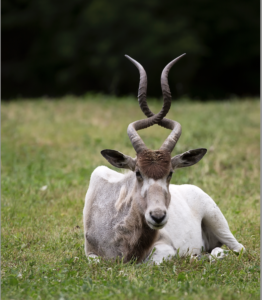
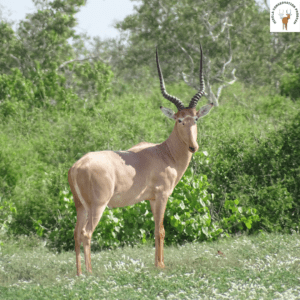
The hirola is one of the rarest antelope species on Earth and the only surviving member of its genus, making it evolutionarily unique. It is sometimes called the “four-eyed antelope” due to the large, pale preorbital glands beneath its eyes that resemble extra eyes. These glands are used for scent marking territory.
Hirola have sleek tan coats with white markings around the eyes and muzzle. Both males and females possess slender, ridged horns that curve slightly backward. Their long legs and streamlined bodies allow them to move swiftly across open grasslands. Unlike many antelope species that inhabit diverse regions, the hirola’s natural range is extremely limited, increasing its vulnerability.
How They Survive in Their Habitat
Hirola inhabit open grasslands and lightly wooded savannas where short grasses dominate. They rely on good visibility to detect predators such as lions and hyenas. As grazers, they feed primarily on grasses, selecting nutrient-rich varieties when available. During dry seasons, they depend on drought-tolerant grasses that survive harsh conditions.
They are diurnal animals, most active during cooler morning and evening hours. Herd living enhances vigilance—multiple individuals scan for danger while others feed. Their survival depends heavily on intact grassland ecosystems and balanced grazing pressures. Because they coexist with livestock, competition for grass resources can significantly affect their nutrition and reproductive success.

Family Life
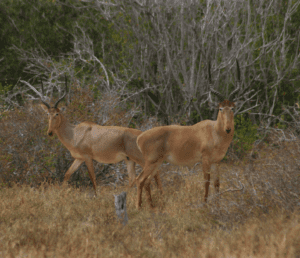
Hirola typically live in small herds composed of females and their young. Adult males establish and defend territories, marking them with scent from their facial glands. When females enter a male’s territory, mating may occur.
After a gestation period of about 7–8 months, a female gives birth to a single calf. The calf remains hidden for short periods after birth and gradually integrates into the herd. Mothers are highly attentive, guiding calves to feeding areas and remaining alert to predators. Social bonds within the herd improve calf survival in open landscapes.
Why They Are Threatened
The hirola has experienced dramatic population declines over the past several decades. Habitat loss due to expanding agriculture and livestock grazing reduces available grasslands. Overgrazing by cattle leads to habitat degradation and food competition.
Prolonged droughts, intensified by climate change, further limit food availability. Disease transmission from domestic livestock poses an additional risk. Because the population is small and fragmented, genetic diversity is limited, making the species more susceptible to environmental changes and disease outbreaks. Conservation efforts led by local communities in Kenya are critical to its survival.
Ten Fun Facts
-
The hirola is sometimes called the “world’s rarest antelope.”
-
It is the only living species in its genus.
-
Both males and females grow horns.
-
Their facial glands look like extra eyes.
-
They prefer short-grass savannas.
-
They once numbered in the tens of thousands.
-
Hirola are active during the day.
-
Community conservancies protect many remaining populations.
-
They rely heavily on grassland ecosystems.
-
Saving the hirola preserves a unique evolutionary lineage.
What You Can Do to Help
• Support community-led conservation in Kenya.
• Advocate for sustainable grazing practices.
• Donate to organizations protecting African grasslands.
• Raise awareness about lesser-known endangered species.
• Support climate resilience projects in East Africa.
• Encourage habitat restoration initiatives.