How Climate Change Is Affecting the Survival of Emperor Penguins

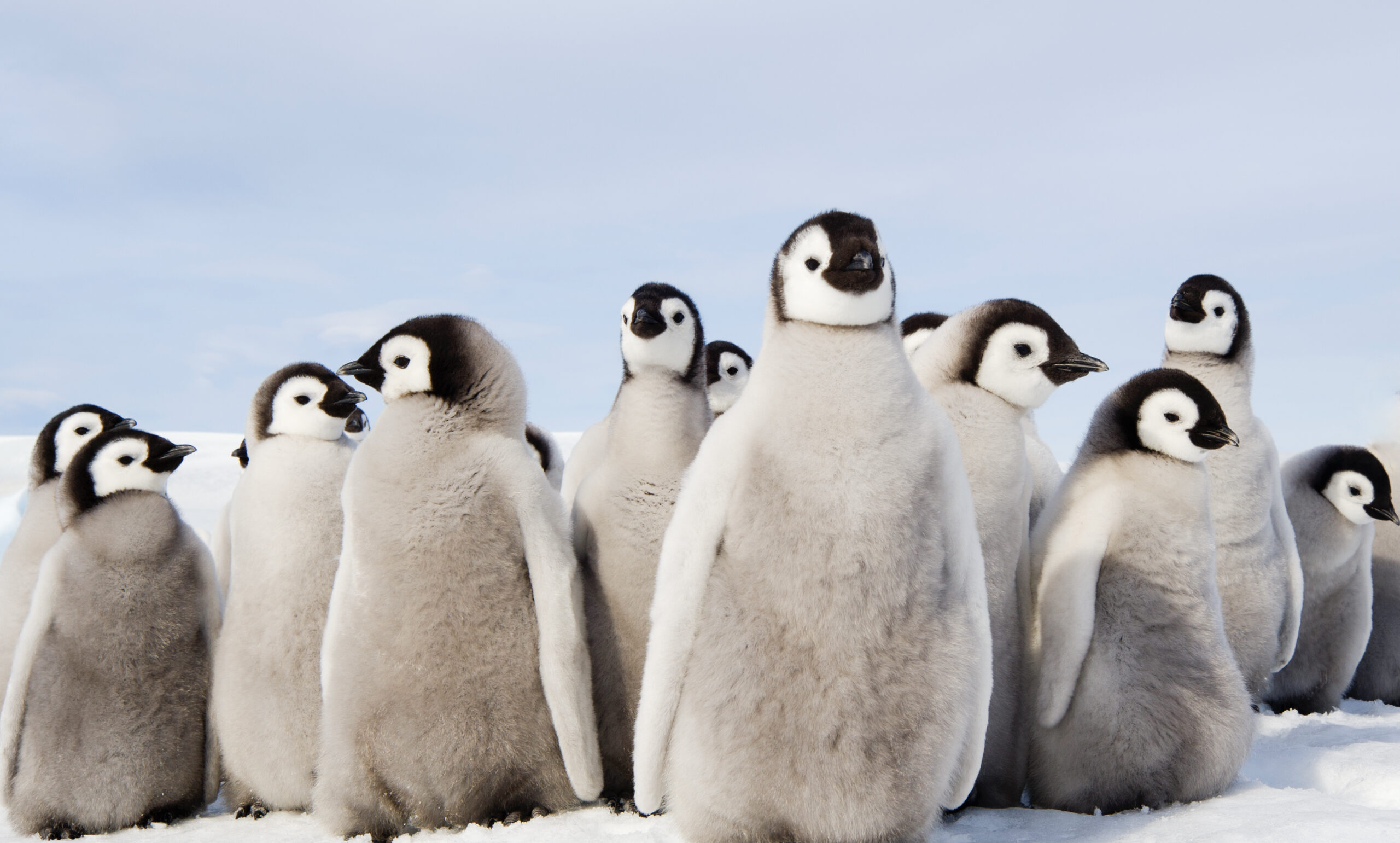
Group of fluffy penguin chicks on snow.

Share This Page

LinkedIn
Email

The Iconic Inhabitants of Antarctica

Antarctica is the coldest, driest, windiest place on Earth. Its harsh climate sees winter temperatures as low as -60 degrees Celsius (-76 degrees Fahrenheit). These extreme temperatures, however, do not make it immune to the effects of a warming planet. In fact, this frozen world is home to thousands of researchers dedicated to better understanding climate change and its effects on the animals that call this place home.

Let’s focus on one of Antarctica’s most iconic inhabitants: the emperor penguins. In August of 2021, the U.S. Fish and Wildlife Service proposed to list the emperor penguin as a threatened species under the Endangered Species Act of 1973. A threatened species is defined as one that is “likely to become an endangered species within the foreseeable future throughout all or a significant portion of its range.” This proposal came after decades of research on emperor penguin populations and the projected changes in sea ice.

The Breeding Season

Emperor penguins breed during the austral winter on land-fast sea ice, which is stable sea ice-locked to the coast, ice shelves, or islands. During the non-breeding season, penguins use the sea ice as a platform to rest and molt (shed old feathers and prepare for the growth of new ones). Pack ice is also the site where they forage for food to feed both themselves and their offspring. Emperor penguins’ prey also shifts with the sea ice. In other words, strong annual sea ice is essential to the survival of emperor penguin colonies. The warmer the global temperature, the less stable the ice. With melting and/or early fast sea ice breakup can jeopardize the survival of chicks, breeding grounds, and food supply.

As of 2020, there are 61 emperor penguin breeding colonies in existence. The global population of breeding pairs is approximately 270,000-280,000 and an estimated 625,000-650,000 individual penguins.

After analyzing projected increases in global temperature, researchers have formulated 4 potential climate scenarios and the subsequent fate of emperor penguin populations.

page2image5449888

The number above each graph is the increase in temperature above pre-industrial levels. The total population is in terms of breeding pairs. Projections were categorized into a low-emissions scenario (which is the Paris Agreement goal), moderate-emissions scenario, and high-emissions scenario.

In the low-emissions scenario, the global population of emperor penguins is projected to decline by 27% by 2050.

In the moderate emissions scenario, the global population of emperor penguins is projected to decline by 33% by 2050.

In the high-emissions scenario, the global population of emperor penguins is projected to decline by 47% by 2050.

The Great Threat of Climate Change

What does this mean, and why is it important? The biggest threat to the emperor penguin population is climate change. If our planet continues to warm up, it will detrimentally change the sea-ice and destroy the penguins’ habitat. Without the ice, they cannot continue to successfully reproduce, feed, and thrive. These long-term projections are important because we are in a period of time in which our actions can change the future and reroute its course. We can save the emperor penguin population by doing our part to reduce greenhouse gas emissions. Human choices will be the deciding factor. Changes in technology, population, and economic development will ultimately determine emission levels, which will then determine the impact on the emperor penguin population.

Three Easy Ways That You Can Help Lower Greenhouse Gas Emissions

  • Adjust your thermostat: down 3 degrees Fahrenheit in the winter, up 3 degrees Fahrenheit in the summer.
  • Use energy-saving light bulbs. Replace incandescent bulbs with LED lights.
  • Drive less. Ride your bike or walk as much as you can.

Resources

https://www.federalregister.gov/documents/2021/08/04/2021-15949/endangered-and-threatened-wildlife

https://onlinelibrary.wiley.com/doi/10.1111/gcb.15806

https://www.cnn.com/2019/04/25/weather/penguins-antarctic-halley-scn-scli-intl/index.html

Gold Transparency 2023 Candid badge.

GuideStar is the world’s largest source of information on nonprofit organizations.


They gather and provide access to the most comprehensive, up-to-date, and accurate nonprofit information which is available to potential funders and donors.

Less than five percent of non-profits registered with GuideStar are recognized with a Gold Seal. A Gold Seal status is the leading symbol of non-profit transparency and accountability.

Start a Community Garden

A community garden is a wonderful way to bring people together while growing fresh, healthy food. Kids can ask their school, local library, or community center if there’s space to start a garden, then invite neighbors and classmates to help plant, water, and harvest vegetables or flowers. Some gardens even donate their extra produce to food banks or share it with neighbors who need it. It’s a hands-on way to learn about nature, teamwork, and taking care of your community’s shared spaces.

SAFE Worldwide Kid's Zone

Raise Funds for Local Wildlife Center

Wildlife centers take care of injured or orphaned animals, and they always need extra support to keep helping. Kids can host a bake sale, lemonade stand, or online fundraiser, or organize a “walk-a-thon” with friends and family to raise money for a wildlife rescue near them. You could also collect donated supplies the center needs, like towels, blankets, or pet food. Even a small donation can help feed, shelter, or heal an animal in need.

SAFE Worldwide Kid's Zone

Recycling Project

Recycling projects let kids turn everyday trash into something useful — or at least keep it out of landfills! You could start a recycling bin program at your school, organize a can and bottle drive to raise money for charity, or get creative and turn old materials into art, planters, or bird feeders. You might even research your town’s recycling rules and make a poster or flyer to help neighbors recycle correctly. Small habits, like rinsing containers or separating paper from plastic, add up to a big impact when a whole community joins in.

SAFE Worldwide Kid's Zone

Booth at Local Farmers Markets

Setting up a booth at your local farmers market is a great way to get your whole neighborhood excited about helping the planet. You could raise money for a cause you care about — like a wildlife shelter, a tree-planting group, or a beach cleanup fund — by selling homemade crafts, lemonade, or baked goods. You could also use your booth to teach people about recycling, showing them fun facts or simple tips for sorting their trash the right way. It’s a great way to practice public speaking, teamwork, and making a real difference in your community.

SAFE Worldwide Kid's Zone

Beach Clean-Ups

Every year on the third Saturday of September, people around the world celebrate International Coastal Cleanup Day, and you can sign up with local groups in your community to join thousands of other volunteers picking up trash along the shore. But you don’t have to wait for that one day — cleanups can happen any time! Grab some gloves, trash bags, and a few friends, and organize your own cleanup day at a nearby river, stream, lake, or beach. It’s a fun way to hang out with friends while protecting fish, turtles, and birds from plastic and litter. Nationalcleanupday.

SAFE Worldwide Kid's Zone

Tree Planting Events

Planting trees is one of the easiest ways kids can help fight climate change and give animals a home. You can join organizations like SAFE Worldwide, One Tree Planted, or the Arbor Day Foundation, which often have kid-friendly volunteer days and even let you sponsor a tree from home. Or, team up with your family, neighbors, or scout troop to start your own mini tree-planting project in a local park, schoolyard, or empty lot (just ask permission first!). Every tree you plant helps clean the air, cool the planet, and grow into a home for birds and squirrels for years to come.

SAFE Worldwide Kid's Zone