

Every hour, we lose about a football field of Louisiana Wetlands to the ocean. This loss is caused by a combination of factors, some natural and some man-made, and is leading to an ongoing environmental crisis that is already having extreme ramifications on not only native species but also human populations living in the area. Unchecked, we could see the complete destruction of this essential habitat (and the subsequent extinction of multiple species) within 200 years. Understanding the issue is the first step in discovering how we can best go about combating what is rapidly becoming a grave ecological catastrophe.

What Are the Wetlands? A Refuge for Near-Extinct Species and Humans Alike
Louisiana’s coastal wetlands serve a variety of roles that are important to both human and nonhuman animals. Marshes and swamps constitute an essential part of the life cycle of an incredible number of creatures. Not only do they serve as nurseries for young and developing wildlife (such as commercially caught fish and crustaceans), but also as hunting grounds for predators. Louisiana alone produces half of the shrimp consumed nationwide and is home to some 100,000 nesting pairs of wading birds—all of which rely heavily on the wetlands from the moment they’re born.
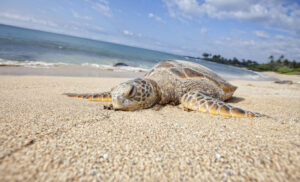
A variety of near-extinct species also rely on the wetlands for their continued survival. In addition to a collection of rare plant species, Louisiana is home to bald eagles, Kemp’s Ridley sea turtles, the Louisiana black bear, and more. Many of these species are exclusively found in Louisiana and the ones that aren’t are considered globally rare. As such, the populations in Louisiana are representative of a large portion of the entirety of the species currently existing on the planet.

In addition to supporting near-extinct species, the wetlands are also valuable for human populations living in the area. Wetlands serve as buffers against storm surges, help to filter local water, provide bountiful harvests of fish, and offer exciting opportunities for ecotourism. Economically speaking, Louisiana alone supports a $1 billion seafood industry that is intrinsically tied to the wetlands and the reproduction cycle of local species. One projection by the Louisiana Coastal Wetlands Conservation and Restoration Task Force calculated the value of Louisiana’s coastal wetlands as exceeding $100 billion.
Going Under—Why Louisiana’s Coast is Sinking
The main threat to the wetlands is a process known as subsidence. Subsidence, in layman terms, merely refers to the sinking or caving in of earth. While some of the subsidence in Louisiana can be explained by wholly natural phenomenon—attributable to shifts in the course of the Mississippi River—the rate at which it is occurring cannot. To explain this phenomenon, we need to look no further than human interference in the environment. Since humans entered Louisiana, we’ve been damming and diverting existing waterways without regard for consequence. This activity has only increased in recent years—to foreseeably dire outcomes. Generally, sediment would be deposited in the wetlands through the natural course of the water cycle and periodic flooding (https://pubs.usgs.gov/fs/la-wetlands/). However, with humans blocking that natural flow, fewer essential minerals are deposited in the delta. Without that sediment, the process of subsidence is accelerated to a terrifying degree. Couple that with the manipulation of waterways for boats and energy projects which allow saltwater to flow from the ocean back into the brackish and freshwater wetlands, as well as the draining of wetlands for agricultural use, and the picture becomes clear as to why these areas and the creatures that live in them are disappearing at such a freakish rate.
As if this weren’t enough, we also have to contend with anthropogenic climate change. As ocean temperatures rise, so do water levels and the frequency of violent storm systems. Currently, the wetlands are protected barrier islands that protect them from storm surges. However, these barrier islands are quickly eroding. If projections are correct, then by the end of this century, the wetlands could see their complete disappearance. If that happened, then Louisiana’s coast would suffer the full brunt of tidal currents, storm surges, and other ocean processes that would only serve to accelerate the erosion of the coastal area. In other words, much like with the concept of runaway greenhouse warming, we could see in Louisiana a case of runaway erosion, in which the processes at hand cause the wetlands to disappear at a faster and faster rate, compounding upon itself until the entire area is completely sunk.
The Hard Work Ahead, The Good Work Already Done
Here’s the big question: what can we do about it? Unsurprisingly, there has been a great deal of effort put into saving the wetlands. They’re not only an invaluable resource but also home to a great number of people and a precious trove of animal life and ecological diversity. For decades, the Louisiana Department of Wildlife and Fisheries and the U.S. Fish and Wildlife Service have been pouring hundreds of millions of dollars into acquiring land for wildlife refuges and management programs. Smaller groups have focused their efforts on other tasks, such as restoring areas of the wetlands and collecting seeds to preserve the native plant life of the area. These efforts shouldn’t be discounted. While ultimately not enough on their own to avoid catastrophe, they reflect the long-running consensus that the Louisiana wetlands are valuable natural spaces that are worth preserving.

On the financial side of things, the aftermath of Hurricane Katrina made the importance of conservation efforts painfully clear. As we know, powerful storms, hurricanes, and flooding events will only increase in frequency as ocean temperatures rise. Without the natural buttresses of the wetlands and their protective islands, cities near Louisiana’s coast are put at extreme risk by these natural phenomena. Understanding this, back in 2010, the city of New Orleans included the conservation of the wetlands in their green infrastructure and resilience masterplan. Since then, conservation initiatives have continued to crop up. One plan calls for an estimated $1-$3 billion over the next twenty years to keep the wetlands afloat—in a manner of speaking, of course. As we mentioned before, the wetlands have an estimated value of somewhere close to $100 billion, so while $1-$3 billion might sound like a lot, it’s a relatively small price to pay if the efforts do in fact pan out.
For us as individuals, the best courses of action remain those of education and supporting the groups on the ground fighting to preserve our natural spaces. If you live in the Louisiana area, take your grievances to the polls. Unfortunately, as with most environmental issues, this is not a problem that can be solved with individual action alone—regardless of how commendable it might be. Even the official site for the Coastal Wetlands Planning, Protection and Restoration Act admits that “current funding levels do not support all of the necessary restoration required for a sustainable ecosystem. It is essential that the government of Louisiana recognizes the importance of the wetlands for the continued survival of both humans and nonhuman animals in the area. Fortunately, unlike some other ecological crises, this issue has an easily quantifiable price tag. With any luck, that might be enough to motivate legislators to consider more seriously the funding of preservation efforts in the area.

What SAFE Worldwide is doing to help
As always, SAFE Worldwide is committed to detailing and educating the general public on the effects of anthropogenic climate change and habitat destruction in the world’s most vulnerable ecological zones. If you want to learn more about conservation efforts around the globe and how you can make a difference, follow us on social media and check out our website to get updated information on endangered species and ongoing environmental crises.
Sources Cited
https://pubs.usgs.gov/fs/la-wetlands/
https://www.factcheck.org/2017/03/land-loss-in-louisiana/