Quick Facts
• Official Species Name: Orcinus orca
• Estimated Population: Approximately 50,000 worldwide (varies significantly by population)
• Conservation Status: Data Deficient globally (some populations Endangered or Critically Endangered)
• Range: Found in every ocean, from Arctic and Antarctic waters to tropical seas
• Reasons for Population Decline: Pollution (PCBs and toxins), prey depletion, vessel noise, ship strikes, climate change
Unique Features
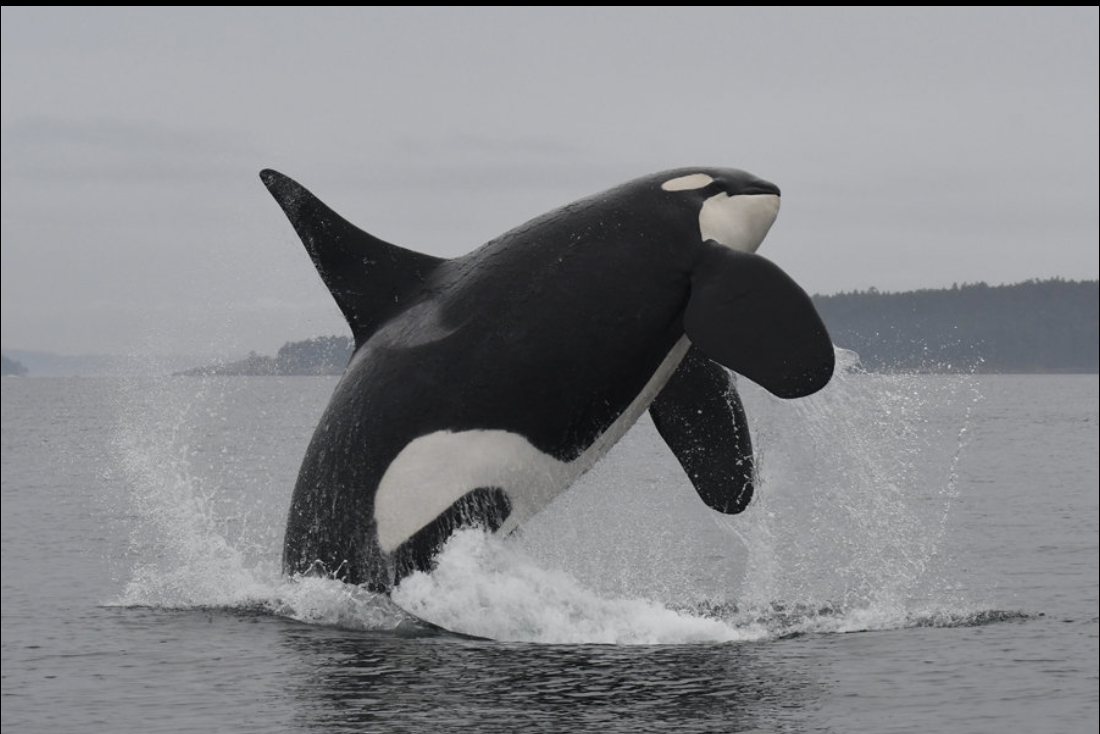
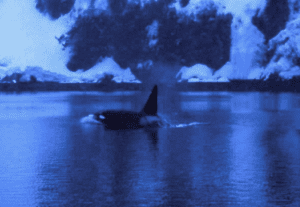
Orcas, commonly known as killer whales, are the largest members of the dolphin family. Males can reach up to 32 feet (9.8 meters) in length and weigh over 10 tons, with dorsal fins that can grow nearly 6 feet tall. Their striking black-and-white coloration may help camouflage them in the ocean by blending with light from above and darker depths below. Orcas are among the most intelligent marine mammals, possessing complex brains and demonstrating problem-solving skills, coordinated hunting strategies, and strong cultural traditions. Different populations, known as ecotypes, have distinct diets, behaviors, vocal dialects, and even social customs that are passed down through generations.
How They Survive in Their Habitat
Orcas are highly adaptable and thrive in a wide range of marine environments, from icy polar regions to warm coastal waters. They are apex predators and hunt cooperatively in family groups called pods. Depending on the ecotype, their diet may consist primarily of fish (such as salmon), marine mammals (including seals and sea lions), sharks, rays, or even large whales. Some populations use sophisticated hunting techniques, such as creating waves to wash seals off ice floes or working together to herd fish into tight balls. Their echolocation abilities allow them to navigate and locate prey even in dark or murky waters.
Family Life
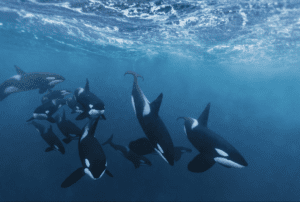
Orcas live in tight-knit matrilineal family groups led by older females, often grandmothers. Both male and female offspring typically remain with their mothers for life, forming stable pods that can include multiple generations. These family bonds are among the strongest observed in the animal kingdom. Communication is central to pod life; each pod has its own unique dialect of clicks, whistles, and calls. Females have one of the longest post-reproductive lifespans of any non-human species, and older females play a crucial role in guiding their families to food sources and sharing ecological knowledge.
Why They Are Threatened
Although orcas are widespread, many distinct populations are at risk. Persistent organic pollutants such as PCBs accumulate in their fatty tissues, weakening immune systems and reducing reproductive success. Overfishing reduces the availability of key prey species like salmon. Increasing vessel traffic and underwater noise from ships and sonar interfere with echolocation and communication. In some regions, oil spills and industrial pollution further degrade habitat quality. Because orcas reproduce slowly—females typically give birth to a single calf every 3–10 years—population recovery can take decades.
Ten Fun Facts
-
Orcas are dolphins, not true whales.
-
They are found in every ocean on Earth.
-
Each pod has its own unique vocal dialect.
-
Orcas can swim up to 34 miles per hour (56 km/h).
-
Males have the tallest dorsal fins of any dolphin species.
-
They use echolocation to hunt and navigate.
-
Some orcas specialize in hunting sharks and can flip them into paralysis.
-
Females can live 80–90 years or more.
-
Orcas are apex predators with no natural predators.
-
Cultural traditions in orca pods are passed down through generations.
What You Can Do to Help
• Support organizations protecting marine habitats and endangered orca populations.
• Choose sustainably sourced seafood to help maintain healthy fish stocks.
• Reduce plastic use and prevent ocean pollution.
• Support policies that limit underwater noise and vessel disturbance.
• Advocate for clean energy solutions to combat climate change.
• Stay informed and raise awareness about threatened orca populations.