

Picture of Stori Smith

Stori Smith

Senior Staff Writer for SAFE Worldwide

Sea Turtle Nesting Site:

A Turtle Tradition

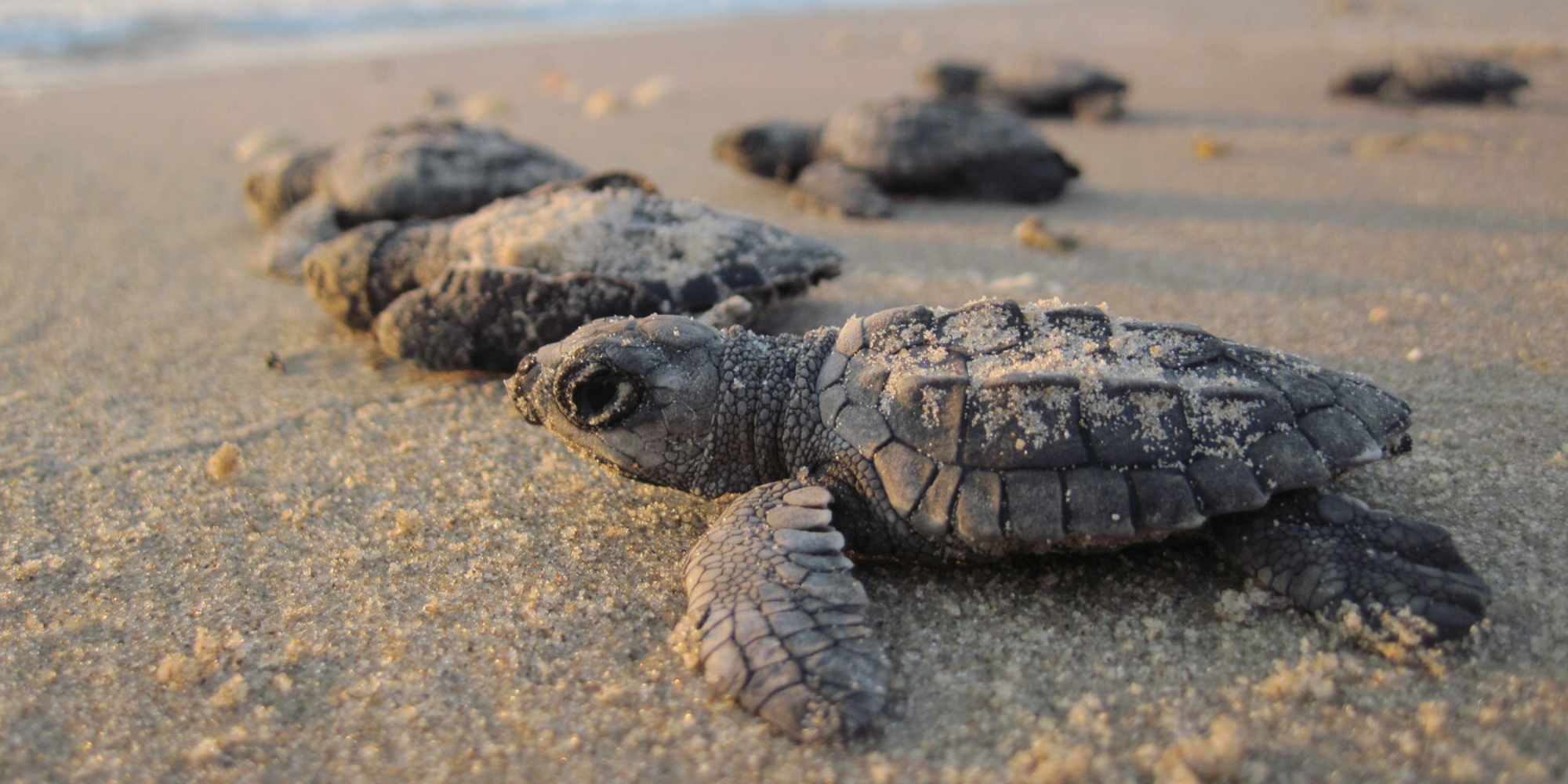
Kemp’s ridley (Lepidochelys kempii) sea turtle hatchlings scuttle across the sand. Photo: NPS

As they scuttle across the sand toward the ocean, newborn sea turtles are already creating decades-deep memories. They imprint on the chemical specifics of the sand, coast, and ocean. These become a coordinate system of directional cues that, ten to fifteen years later, guide mature females back to their birthplace. Just as the tide predictably rolls on and off the shore, the females return year after year to the same beach. In this way, sea turtle nesting site is based on where the mother was born. 

Why Return to the Same Beach? 

Researchers think sea turtles do this to ensure they lay their eggs somewhere safe. A nesting site needs specific sand type, temperature, accessibility, and low predator presence. Sea turtles seem to trust the beach their mothers chose for them. How exactly, after ten to fifteen years and across 1000 miles, do they find the spot they were born? The answer is still unclear. 

One idea is sea turtles have magnetic particles in their brains. These particles may detect and respond to planetary angles of inclination and declination. By picking up on their birthplace’s unique magnetic features, they seem to create their own compass that points back to their very first beach. This magnetic imprinting is repeated generation after generation, making sea turtle nesting site a tradition of sorts. Shifts in Earth’s magnet field occasionally cause sea turtles to miss their target. But, overall, the animals have remarkable accuracy across their entire reproductive decades. 

Using Nesting Site Selection to Save a Species

Conservationists have even enlisted sea turtles’ internal compasses to help species recover. The Kemp’s ridley sea turtle’s nest numbers in Tamaulipas, Mexico, reached unsustainable lows due to human interference. Conservationists responded by moving eggs from Mexico to Padre Island, Texas, between 1978 and 1988. They hoped this would provide a new nesting site for the critically endangered species. In 1996, one of the relocated females returned to Padre Island to lay her eggs. Since then, Kemp’s ridley sea turtles have continued to return to the Texas nesting site. Twenty-five years after the relocation project, Kemp’s ridley worldwide nest counts increased from 702 to 20,000

Since then, oil spills and pollution have taken a toll on the species. But if we continue to conserve the Kemp’s ridley—and all other sea turtles—hopefully, far beyond our own lifetimes, sea turtle hatchlings will crawl across the same stretch of shoreline we see their ancestors traveling today. 

 

Watch our Wild and Wonderful Wildlife video to learn more about threats to sea turtles and how to help. 


Sources

Emslie, Karen. “How do sea turtles find their way home?” Discover Wildlife, https://www.discoverwildlife.com/animal-facts/reptiles/how-do-sea-turtles-find-their-way-home/

“How Baby Sea Turtles Find Their Way Home.” WETA, https://weta.org/watch/shows/its-okay-be-smart/how-baby-sea-turtles-find-their-way-home

“The Story of the Kemp’s Ridley.” National Park Service, 10 Oct. 2020, https://www.nps.gov/pais/learn/nature/kempsridleystory.htm

Gold Transparency 2023 Candid badge.

GuideStar is the world’s largest source of information on nonprofit organizations.


They gather and provide access to the most comprehensive, up-to-date, and accurate nonprofit information which is available to potential funders and donors.

Less than five percent of non-profits registered with GuideStar are recognized with a Gold Seal. A Gold Seal status is the leading symbol of non-profit transparency and accountability.

Start a Community Garden

A community garden is a wonderful way to bring people together while growing fresh, healthy food. Kids can ask their school, local library, or community center if there’s space to start a garden, then invite neighbors and classmates to help plant, water, and harvest vegetables or flowers. Some gardens even donate their extra produce to food banks or share it with neighbors who need it. It’s a hands-on way to learn about nature, teamwork, and taking care of your community’s shared spaces.

SAFE Worldwide Kid's Zone

Raise Funds for Local Wildlife Center

Wildlife centers take care of injured or orphaned animals, and they always need extra support to keep helping. Kids can host a bake sale, lemonade stand, or online fundraiser, or organize a “walk-a-thon” with friends and family to raise money for a wildlife rescue near them. You could also collect donated supplies the center needs, like towels, blankets, or pet food. Even a small donation can help feed, shelter, or heal an animal in need.

SAFE Worldwide Kid's Zone

Recycling Project

Recycling projects let kids turn everyday trash into something useful — or at least keep it out of landfills! You could start a recycling bin program at your school, organize a can and bottle drive to raise money for charity, or get creative and turn old materials into art, planters, or bird feeders. You might even research your town’s recycling rules and make a poster or flyer to help neighbors recycle correctly. Small habits, like rinsing containers or separating paper from plastic, add up to a big impact when a whole community joins in.

SAFE Worldwide Kid's Zone

Booth at Local Farmers Markets

Setting up a booth at your local farmers market is a great way to get your whole neighborhood excited about helping the planet. You could raise money for a cause you care about — like a wildlife shelter, a tree-planting group, or a beach cleanup fund — by selling homemade crafts, lemonade, or baked goods. You could also use your booth to teach people about recycling, showing them fun facts or simple tips for sorting their trash the right way. It’s a great way to practice public speaking, teamwork, and making a real difference in your community.

SAFE Worldwide Kid's Zone

Beach Clean-Ups

Every year on the third Saturday of September, people around the world celebrate International Coastal Cleanup Day, and you can sign up with local groups in your community to join thousands of other volunteers picking up trash along the shore. But you don’t have to wait for that one day — cleanups can happen any time! Grab some gloves, trash bags, and a few friends, and organize your own cleanup day at a nearby river, stream, lake, or beach. It’s a fun way to hang out with friends while protecting fish, turtles, and birds from plastic and litter. Nationalcleanupday.

SAFE Worldwide Kid's Zone

Tree Planting Events

Planting trees is one of the easiest ways kids can help fight climate change and give animals a home. You can join organizations like SAFE Worldwide, One Tree Planted, or the Arbor Day Foundation, which often have kid-friendly volunteer days and even let you sponsor a tree from home. Or, team up with your family, neighbors, or scout troop to start your own mini tree-planting project in a local park, schoolyard, or empty lot (just ask permission first!). Every tree you plant helps clean the air, cool the planet, and grow into a home for birds and squirrels for years to come.

SAFE Worldwide Kid's Zone