
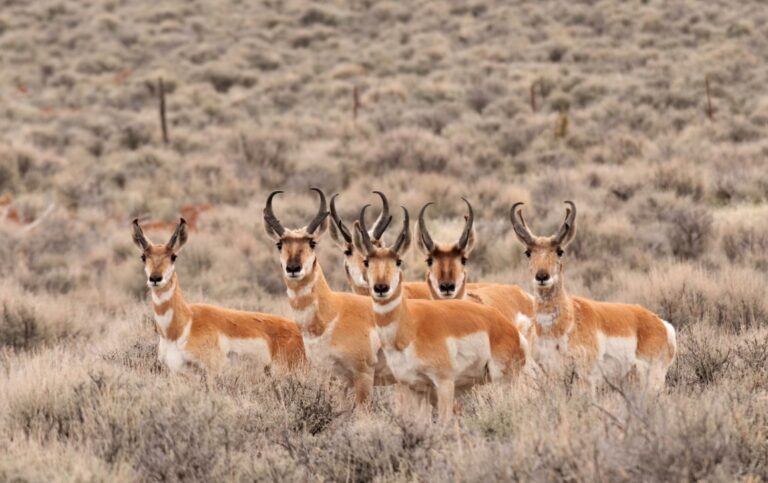
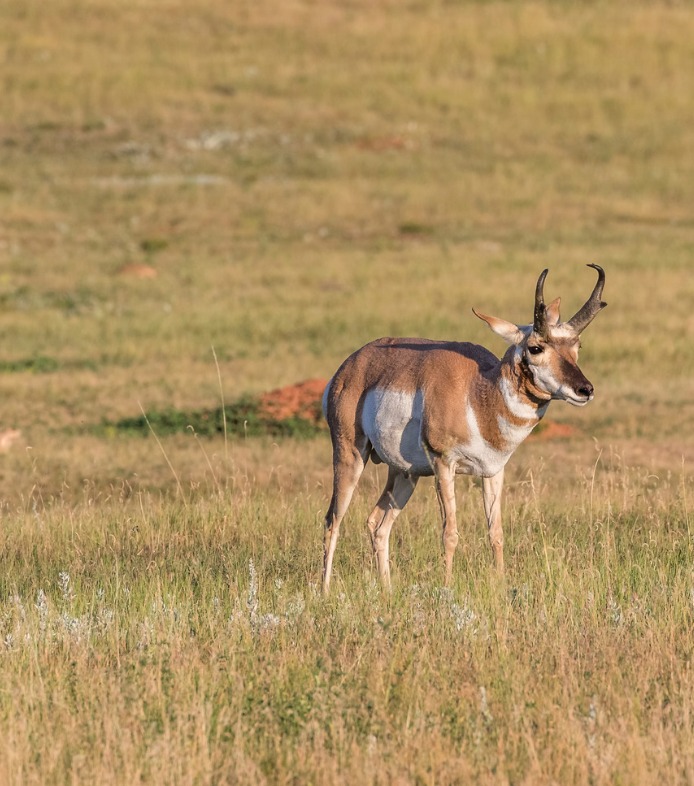
Pronghorn antelope, pronghorn sheep, American antelope or prongbuck, all of these names refer to the same species native to North America which is simply called Pronghorn. Although this hoofed species looks like an antelope or a goat, it’s unique enough to have its own taxonomic family, Antilocapridae. Same with its relatives, all pronghorns have a pair of horns. While the female’s horns are usually just little more than bumps, the male’s horns can reach 12 inches long. The shape of these horns are also distinctive, they point backwards and branch as its name implies. The pronghorn isn’t born with the horns or carries them all life long. Every year after the mating season, the horns would shed and regrow during the winter. Before spring, all males will have their horns ready to compete for territories. The pronghorn is not a large animal, it is usually between 2.5 to 3 feet at shoulder height. Regardless of sex, pronghorn have reddish-brown fur and striking white markings that adorn their face, neck, and stomach.. The white hairs on its rump are longer and can become visible when stuck up.
Normally, Pronghorns live in small groups in summer, but in winter they tend to form large herds. Living with so many companions means a good communication system is super important to increase survival rate. Pronghorn depend on their strong vision a lot. With eyes as large as elephants’ eyes, they are able to detect dangers three miles away. When one pronghorn sees a predator, it will raise the white hair on its rump to alert others. Besides the visible warning, the pronghorn also releases an odor of danger from the glands on its rump. The scents they release can have more than one meaning, pronghorn use odor to mark territories and attract mates as well. Sending messages by both sights and scents allows pronghorns to avoid dangers efficiently. And as pronghorns are good runners, its amazing physical ability could also help it escape from unavoidable enemies.
Few animals have been as prominent as pronghorns in the history of North America. Before the Westward Movement, there were about 100 million pronghorns living on the continent and their meat fed numerous local people. With the development of humans, the number of pronghorns is significantly decreasing but luckily, except for two subspecies, most of them are not in danger of extinction. Nowadays, the major conflicts between pronghorns and humans are the obstacles on pronghorn migration. To find a warm habitat with abundant food source, pronghorn’s round trip migration happens every winter and can cover up to 300 miles. On their way, they are not only facing predators and harsh weather, but also cars, fences, buildings and other products of modern civilization. Even though pronghorns can run fast, they are not good at jumping. Therefore, these obstacles can sometimes become impassable. To help pronghorns keep behaving naturally, more wildlife corridors should be the most feasible solution.
Acinonyx jubatus
7,100 globally
Vulnerable
Parts of Africa; Central Iran
Habitat destruction
Livestock protection
Poaching

A community garden is a wonderful way to bring people together while growing fresh, healthy food. Kids can ask their school, local library, or community center if there’s space to start a garden, then invite neighbors and classmates to help plant, water, and harvest vegetables or flowers. Some gardens even donate their extra produce to food banks or share it with neighbors who need it. It’s a hands-on way to learn about nature, teamwork, and taking care of your community’s shared spaces.
Wildlife centers take care of injured or orphaned animals, and they always need extra support to keep helping. Kids can host a bake sale, lemonade stand, or online fundraiser, or organize a “walk-a-thon” with friends and family to raise money for a wildlife rescue near them. You could also collect donated supplies the center needs, like towels, blankets, or pet food. Even a small donation can help feed, shelter, or heal an animal in need.
Recycling projects let kids turn everyday trash into something useful — or at least keep it out of landfills! You could start a recycling bin program at your school, organize a can and bottle drive to raise money for charity, or get creative and turn old materials into art, planters, or bird feeders. You might even research your town’s recycling rules and make a poster or flyer to help neighbors recycle correctly. Small habits, like rinsing containers or separating paper from plastic, add up to a big impact when a whole community joins in.
Setting up a booth at your local farmers market is a great way to get your whole neighborhood excited about helping the planet. You could raise money for a cause you care about — like a wildlife shelter, a tree-planting group, or a beach cleanup fund — by selling homemade crafts, lemonade, or baked goods. You could also use your booth to teach people about recycling, showing them fun facts or simple tips for sorting their trash the right way. It’s a great way to practice public speaking, teamwork, and making a real difference in your community.
Every year on the third Saturday of September, people around the world celebrate International Coastal Cleanup Day, and you can sign up with local groups in your community to join thousands of other volunteers picking up trash along the shore. But you don’t have to wait for that one day — cleanups can happen any time! Grab some gloves, trash bags, and a few friends, and organize your own cleanup day at a nearby river, stream, lake, or beach. It’s a fun way to hang out with friends while protecting fish, turtles, and birds from plastic and litter. Nationalcleanupday.
Planting trees is one of the easiest ways kids can help fight climate change and give animals a home. You can join organizations like SAFE Worldwide, One Tree Planted, or the Arbor Day Foundation, which often have kid-friendly volunteer days and even let you sponsor a tree from home. Or, team up with your family, neighbors, or scout troop to start your own mini tree-planting project in a local park, schoolyard, or empty lot (just ask permission first!). Every tree you plant helps clean the air, cool the planet, and grow into a home for birds and squirrels for years to come.