

Megafauna on the Menu: Demolishing ecology with our insatiable taste for the world’s largest species

Picture of Stori Smith

Stori Smith

Senior Staff Writer for SAFE Worldwide

Megafauna on the Menu:

Eating Large Animals to Extinction

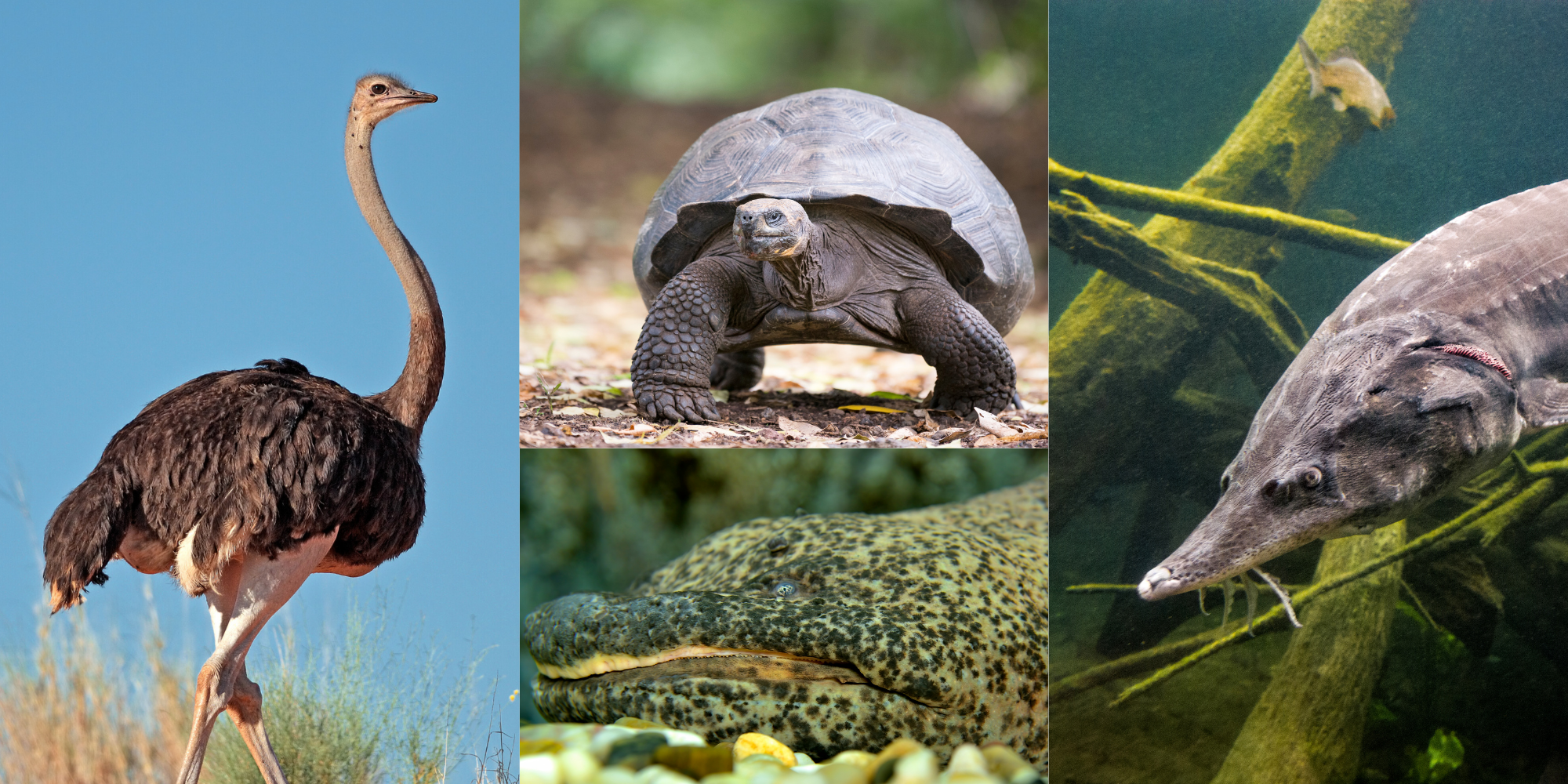
Megafauna threatened by human harvesting: (clockwise from left) ostrich, giant tortoise, beluga sturgeon, Chinese giant salamander

The world’s largest animals are collectively called megafauna. They are impressive not only in stature but also ecological impact. Conservationists describe them in many ways: keystone species with large influences on their ecosystem relative to their populations; indicator species whose wellbeing can indicate the overall health of their habitat; flagship species that captivate audiences, become the face of campaigns, and draw in donors. There is, however, another term to describe our planet’s largest inhabitants that we cannot accept: 

Dinner

We are demolishing ecology with our insatiable taste for the world’s largest species.

What’s at Stake?

Between the years 1760 and 2012, human hunting drove nine megafauna species to complete extinction or extinction in the wild. Since then, our influence on wild populations has only increased, with 70% of megafauna species currently in decline and 59% headed to probable extinction. According to a study published in 2019, harvesting for human consumption is the greatest direct threat to these animals. This, combined with other reasons for harvesting like medicinal use, bycatch, and trafficking, is risking all animal classes—fish, amphibians, birds, reptiles, and mammals. 

Humans often harvest megafauna for eggs and meat

Disrupting Ecological Order 

We are not the only predators eating these giants. Wolves hunt bison, lions hunt giraffes, orcas hunt juvenile humpback whales. But humans are unique hunters operating beyond the constraints of other species. 

Nature limits predator populations with finite food availability, but agriculture and global trade allow us to bypass this control. As a result, our population growth is explosive, geographic distribution expansive, and carrying capacity dismissed. We can also harvest much more than other predators. Tools like snares, rifles, and nets enable us to kill animals much larger and stronger than ourselves while side-stepping the danger other predators face in a hunt. This makes us such effective hunters, we have our own term: super-predators. 

Our hunting strategies are also unique in the way we select our prey. Unlike other hunters, we often target healthy adults, species without natural predators, and other apex predators. This removes invaluable breeding individuals and disrupts ecological trends. 

Due to higher resource requirements, megafauna exist at naturally lower numbers and reproduce at lower rates than smaller animals. By harvesting them–especially during their reproductive stage–we turn this natural life history into a crippling disadvantage. They’re not made to replenish their populations like most prey species. 

We are eating large animals to extinction. Since history has never seen extinction lean so heavily toward megafauna, nature is likely unprepared to respond to these impending losses. 
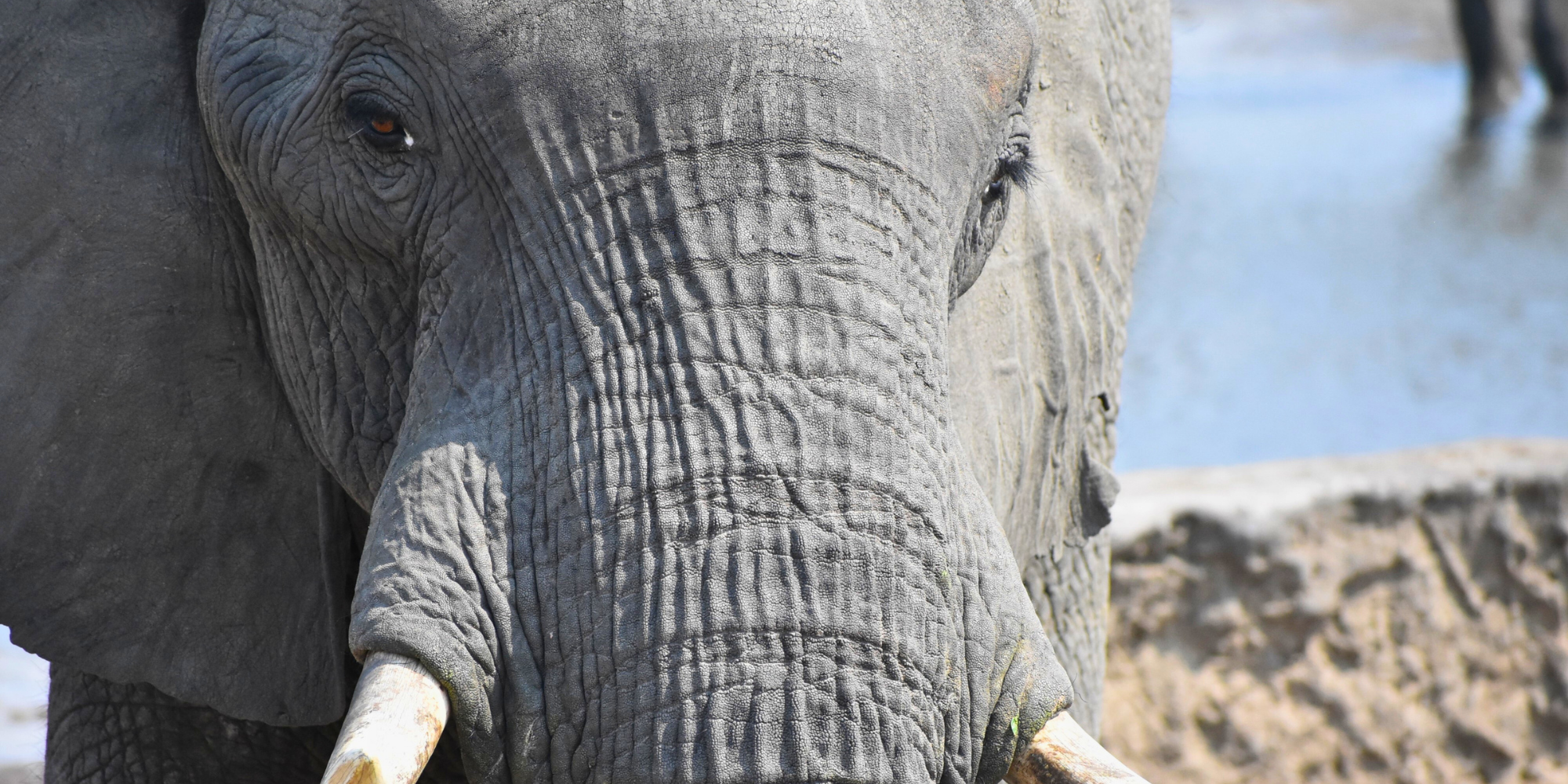
African elephants are megafauna at risk from human harvesting. Photo: Stori Smith/SAFE WW

Protecting the Giants

While we clearly have the power to harvest and devour megafauna, we have a responsibility to suppress our appetite. How? We need to address lifestyles at each extreme of the financial spectrum. 

Wealthier nations must stop increasing demand and prices for products–whether meat, medicinal, or decorative—that come from megafauna. Their governments also have the most power to campaign on behalf of wildlife and sustainable eating that replaces a taste for delicacies with conservation action. 

While bushmeat hunting has its nefarious stakeholders, it also feeds impoverished families. We need international cooperation to share the initial financial toll of expanding reliable, sustainable food systems to poorer communities. 

Public support spurs political action, so public awareness and engagement is another essential ingredient in halting megafauna harvesting. 

A combination of government and grassroots efforts helped the International Whaling Commission successfully crackdown on commercial whaling in 1982. Perhaps we can extend a similar success to sharks, giant salamanders, ostriches, turtles, gorillas, and other animals we’ve forced onto our menus and endangered species lists. Rather than ingredients to be stirred into bowls, boiled on stoves, and sold in markets, let’s allow our world’s largest animals to be keystones, indicators, flagships, and, most importantly, alive. 


Sources:

Ripple, William J., et al. “Are we eating the world’s megafauna to extinction?” Conservation Letters, vol. 12, no. 3, 06 Feb. 2019, https://conbio.onlinelibrary.wiley.com/doi/10.1111/conl.12627

Sawa, Dale B. “Deadly appetite: 10 animals we are eating into extinction.” The Guardian, 03 April 2019, https://www.theguardian.com/food/2019/apr/03/deadly-appetite-10-animals-we-are-eating-into-extinction

Gold Transparency 2023 Candid badge.

GuideStar is the world’s largest source of information on nonprofit organizations.


They gather and provide access to the most comprehensive, up-to-date, and accurate nonprofit information which is available to potential funders and donors.

Less than five percent of non-profits registered with GuideStar are recognized with a Gold Seal. A Gold Seal status is the leading symbol of non-profit transparency and accountability.

Start a Community Garden

A community garden is a wonderful way to bring people together while growing fresh, healthy food. Kids can ask their school, local library, or community center if there’s space to start a garden, then invite neighbors and classmates to help plant, water, and harvest vegetables or flowers. Some gardens even donate their extra produce to food banks or share it with neighbors who need it. It’s a hands-on way to learn about nature, teamwork, and taking care of your community’s shared spaces.

SAFE Worldwide Kid's Zone

Raise Funds for Local Wildlife Center

Wildlife centers take care of injured or orphaned animals, and they always need extra support to keep helping. Kids can host a bake sale, lemonade stand, or online fundraiser, or organize a “walk-a-thon” with friends and family to raise money for a wildlife rescue near them. You could also collect donated supplies the center needs, like towels, blankets, or pet food. Even a small donation can help feed, shelter, or heal an animal in need.

SAFE Worldwide Kid's Zone

Recycling Project

Recycling projects let kids turn everyday trash into something useful — or at least keep it out of landfills! You could start a recycling bin program at your school, organize a can and bottle drive to raise money for charity, or get creative and turn old materials into art, planters, or bird feeders. You might even research your town’s recycling rules and make a poster or flyer to help neighbors recycle correctly. Small habits, like rinsing containers or separating paper from plastic, add up to a big impact when a whole community joins in.

SAFE Worldwide Kid's Zone

Booth at Local Farmers Markets

Setting up a booth at your local farmers market is a great way to get your whole neighborhood excited about helping the planet. You could raise money for a cause you care about — like a wildlife shelter, a tree-planting group, or a beach cleanup fund — by selling homemade crafts, lemonade, or baked goods. You could also use your booth to teach people about recycling, showing them fun facts or simple tips for sorting their trash the right way. It’s a great way to practice public speaking, teamwork, and making a real difference in your community.

SAFE Worldwide Kid's Zone

Beach Clean-Ups

Every year on the third Saturday of September, people around the world celebrate International Coastal Cleanup Day, and you can sign up with local groups in your community to join thousands of other volunteers picking up trash along the shore. But you don’t have to wait for that one day — cleanups can happen any time! Grab some gloves, trash bags, and a few friends, and organize your own cleanup day at a nearby river, stream, lake, or beach. It’s a fun way to hang out with friends while protecting fish, turtles, and birds from plastic and litter. Nationalcleanupday.

SAFE Worldwide Kid's Zone

Tree Planting Events

Planting trees is one of the easiest ways kids can help fight climate change and give animals a home. You can join organizations like SAFE Worldwide, One Tree Planted, or the Arbor Day Foundation, which often have kid-friendly volunteer days and even let you sponsor a tree from home. Or, team up with your family, neighbors, or scout troop to start your own mini tree-planting project in a local park, schoolyard, or empty lot (just ask permission first!). Every tree you plant helps clean the air, cool the planet, and grow into a home for birds and squirrels for years to come.

SAFE Worldwide Kid's Zone