

Imagine yourself on a warm sunny beach, palm trees swaying overhead and crystal clear waves breaking along the coast. You look out at the horizon—baby blue for miles on end. It seems like paradise. Yet this idyllic tropical getaway is hiding a growing ecological cancer. Unbeknownst to the casual onlooker, just beneath the water and out of sight, is an ever-expanding cemetery—and we humans are the ones who are digging the graves.
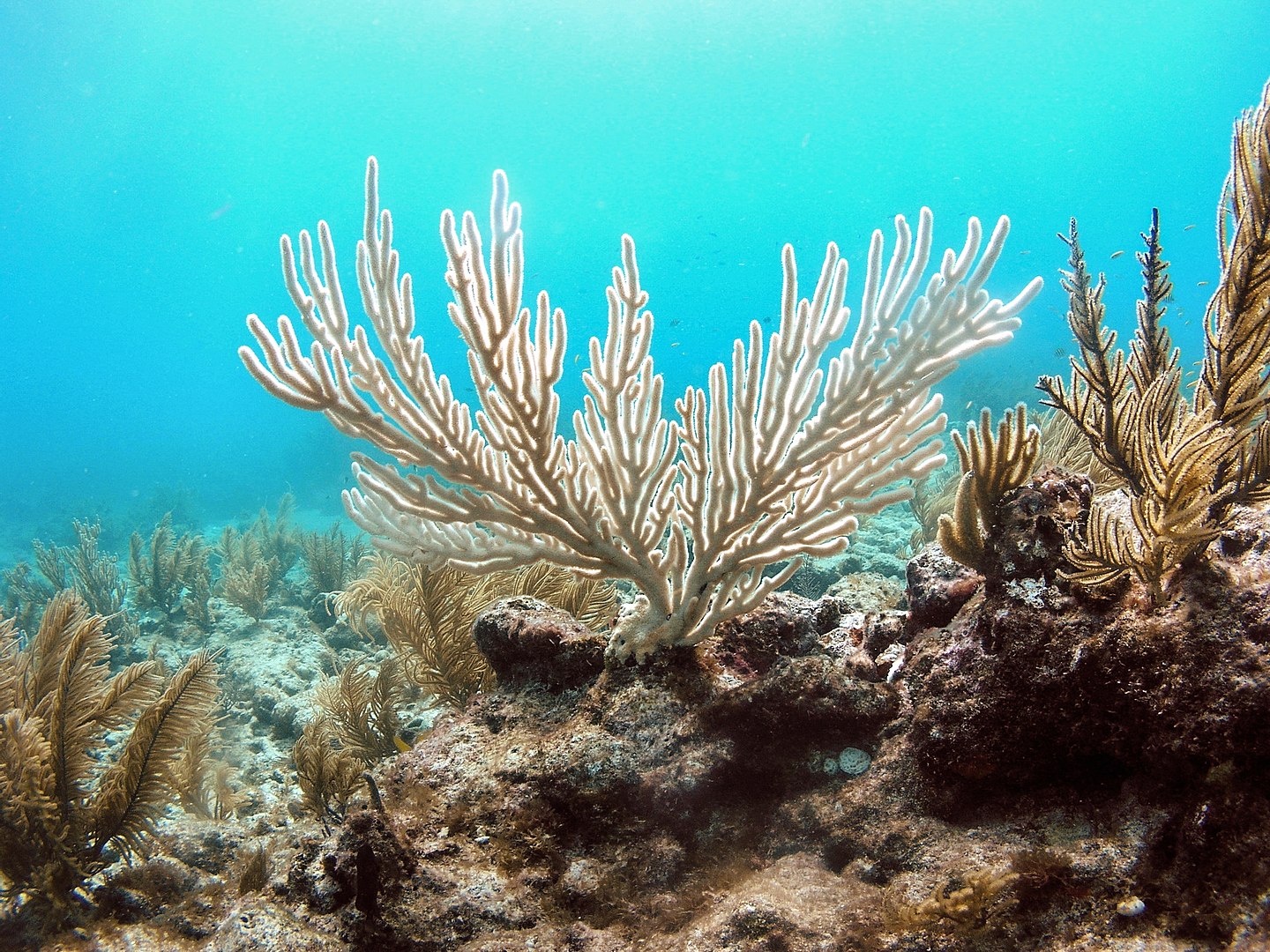
These cemeteries are coral reefs, and their destruction is one of the most serious issues facing our oceans in the increasingly devastating battle against climate change. Often called the tropical rainforests of the ocean, reefs are iconic as being bright, vibrant, and sprawling sanctuaries of life and biodiversity in seas across the world. However, many reefs nowadays are unrecognizable compared to the mental images we all have of them. An increasing number of reefs are becoming twisted expanses of chalk white husks, not dissimilar to spools of dried out snakeskin. Yet unlike snakeskin, the bleached coral that lies in knotted skeletons at the bottom of our oceans are not a vestige of an animal that’s slithered away. Much of it is still very much alive and struggling desperately to survive.
To understand the complex and dangerous issue that is coral bleaching, we first must understand the nature of coral and their role in our ocean’s ecosystems. Individual corals are tiny animals called polyps which group together into larger units known as colonies (Smithsonian, 2019). The polyps go on to calcify and form rigid constructs which animals and plants can use as shelters and hunting grounds. These structures are what we generally picture when we imagine reefs. Think of them like giant cities.
To sustain themselves, individual corals have evolved a symbiotic relationship with microscopic protozoa called zooxanthellae (CRA). When these protozoa photosynthesize, they release sugar as a waste product which the coral are happy to feed on. In return, the coral protects the protozoa. Pretty good deal for all involved. The zooxanthellae are what give the coral the bright colors we know so well. They also produce a kind of natural sunscreen that protects the coral from harsh UV rays.
This relationship is the bedrock of most healthy coral-based environments—it’s what keeps the lights on, so to speak. However, for as important as it is, it’s also very fragile. One of its main threats is rising ocean temperatures. As waters warm, the metabolic processes of the zooxanthellae are disrupted, causing them to produce toxic compounds in place of the sugars they usually make (Smithsonian, 2021). If this begins to occur, the coral are forced to eject the protozoa to protect themselves. The ejection of protozoa is what “bleaches” the corals and turns them white. But changing color is not the only consequence. As you might expect, this process causes a variety of extremely serious and deadly complications.
The first and most obvious is that the coral loses a main source of nutrients. If the coral are unable to reenter this symbiotic relationship for an extended period, they will often starve and die. The second issue involves the sunscreen the zooxanthellae produce. Without this natural sunscreen, the corals are exposed to harsh UV radiation which can make them sterile.
Bleaching is very taxing, and coral that suffer this fate will often not reproduce years following an episode (AIMS). During this period, malnourished coral can and do recover back to a healthy state. However, this process takes time and requires a stable environment—something that is becoming increasingly rare as global temperatures rise and weather becomes more sporadic and unpredictable.
The cataclysmic rise in coral bleaching has been directly linked to anthropogenic climate change. Since preindustrial times, the global average temperature has risen by nearly 1 degree Celsius, and the United Nations has warned that if we cross the 1.5 degree warming threshold, 90% of corals across the planet will be lost (BBC, 2020). Considering that an estimated 25% of all marine life rely on coral reefs at one point or another in their life cycle to survive, we are witnessing the opening acts to one of the most devastating environmental crises of our time (EPA, 2020).
If you’re like us here at SAFE, you’re probably wondering what you can do to help put an end to this ecological catastrophe. Lucky for us, there are plenty of small lifestyle changes we can make today that will create a big difference down the line, like practicing safe diving and snorkeling when visiting coral reefs, using less non-toxic sunblock, and disposing of trash and recycling properly (EPA, 2021). While these actions won’t single handedly end the crisis in our oceans, they can and do add up to make an impact! Check the link below for more great ideas on how you can help in your day-to-day life.
More important than skipping out on those plastic straws, though, is to invest your time, energy, and money into programs, campaigns, and NGOs that are actively working to better our reefs. Groups like the Coral Reef Alliance (CRA) and the Coral Reef Restoration Foundation (CRF) are working diligently to research reefs and provide them the support they need to survive the effects of climate change. Check out their mission statements and consider donating.
Like with most climate related issues, our main priority as individuals ought to be using our right to vote to put individuals who are environmentally conscious into power. Consider researching your local and state officials to see whether they support measures and legislation that protect our oceans and waterways. Even the most minor negligence in small waterways can contribute to the problem. Remember: it all ends up in the same place.
As always, SAFE is committed to providing important educational material regarding climate change and the ever changing catastrophes in our oceans. Stay up to date by following our social media and checking up on our blog. Linked below are a handful of articles on other environmental issues occurring in our oceans.
We are at a critical juncture in our species’ fight against climate change. Will we work to save the coral and preserve the delicate ecosystems of our world’s oceans? Or will we let them become yet another avoidable casualty in our planet’s man-made sixth extinction? It’s up to all of us to step up and speak up for the coral.
In Text Citations
The Ocean Portal Team Reviewed by Nancy Knowlton. (2020, February 19). Corals and Coral Reefs. Smithsonian Ocean. https://ocean.si.edu/ocean-life/invertebrates/corals-and-coral-reefs.
Supplemental Research
US Department of Commerce, N. O. and A. A. (2010, March 15). What is coral bleaching? NOAA’s National Ocean Service. https://oceanservice.noaa.gov/facts/coral_bleach.html.
Driessen, P. (2021, March 16). Saving the Red Sea’s coral reefs by building fake ones. JNS.org. https://www.jns.org/saving-the-red-seas-coral-reefs-by-building-fake-ones/.
Webster, N. (2021, July 1). Artificial reefs and sunken vessels to create underwater wildlife haven on UAE’s east coast. The National. https://www.thenationalnews.com/uae/environment/artificial-reefs-and-sunken-vessels-to-create-underwater-wildlife-haven-on-uae-s-east-coast-1.1225296.
Organizations to Visit
Coral Restoration Foundation: United States. CRF. (n.d.). https://www.coralrestoration.org/.
Home. Coral Reef Alliance. (n.d.). https://coral.org/.
Fight For Our Reef. Australian Marine Conservation Society. (2021, July 9). https://www.marineconservation.org.au/fight-for-our-reef/.
Photo Credit:
U.S. Geological Survey from Reston, VA, USA, CC BY 2.0 https://creativecommons.org/licenses/by/2.0, via Wikimedia Commons