
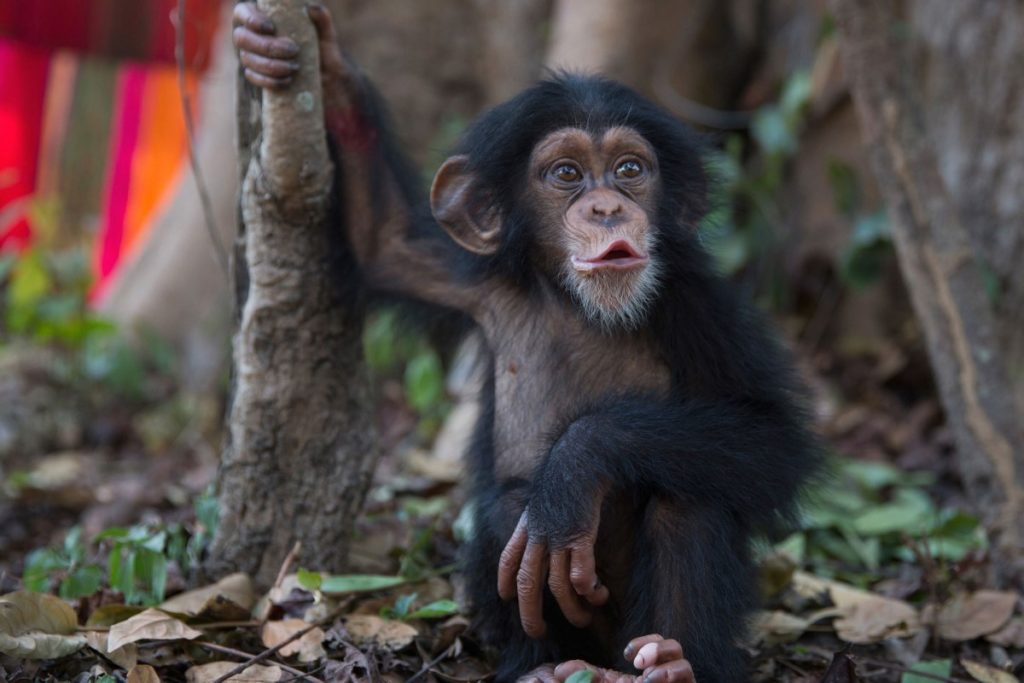
Chimpanzees are extremely intelligent and can solve a wide range of issues set before them by human trainers and experimenters. Several researchers have taught chimps to communicate using sign language or languages based on tokens or graphic representations. However, the implications of these language studies have been disputed.
Apes have not developed actual language, according to critics, in the sense that they grasp “words” as abstract symbols that may be joined in meaningful new ways. Other researchers believe that chimps have developed a true recognition of “words” as abstractions that may be applied in new settings as a result of more recent language training.
Chimpanzees are highly clever creatures who can solve a wide range of challenges brought to them by humans. A handful of scientists have taught chimps to communicate using sign language or languages based on tokens or graphic representations. However, there has been debate about the implications of these linguistic studies.
Chimpanzees live in groups ranging in size from 20 to more than 150 people, but they spend the most of their time moving in tiny, transient groups of a few individuals. These groups can be made up of people of any age and gender. Males and females both travel alone on occasion.
This fission-fusion civilization might be made up of four different types of people: all-male, adult females and progeny, adults of both sexes, or a single female and her kids. These smaller groups come in a range of shapes and sizes, and they serve a variety of purposes.
An all-male troop, for example, might be organized to hunt for meat, while a group of breastfeeding females serves as a “nursery group” for the young.
The chimpanzee is listed as an endangered species on the IUCN Red List. Chimpanzees are found both inside and outside national parks and are legally protected in much of their range. There are estimated to be between 172,700 and 299,700 chimps left in the wild, down from around a million in the early 1900s.
Chimpanzees are included in Appendix I of the Convention on International Commerce in Endangered Species (CITES), which means commercial international traffic in wild-sourced specimens, as well as any other international trade in parts and derivatives, is prohibited.
Habitat destruction, the illegal pet trade, poaching, and disease are the most serious risks to the chimpanzee. Deforestation has harmed chimpanzee habitats in both West and Central Africa. The construction of roads is a major contributor to deforestation and habitat loss.
Chimps need all the help they can from the US in order for us to see a rebound in their population.
J.A.C.K. Sanctuary was started in 2006 in Lubumbashi, DRC by two primate lovers, Franck & Roxane CHANTEREAU, who still run the sanctuary and rehabilitation center as volunteers in addition to their professional life. The sanctuary exists to facilitate wildlife confiscations by the authorities by providing a safe place for the orphans to live while a suitable wildlife environment is found where they can be released back into the wild.
Along with the DRC Wildlife Authorities, a pre-release program is scheduled before releasing the orphans back into the wild. If nothing is done to protect chimpanzees and other endangered primates, they will have totally disappeared from the wild by 2050.
Pan troglodytes
250,000 globally
Endangered
West and Central Africa
Poaching
Habitat loss
Illegal Pet Trade

A community garden is a wonderful way to bring people together while growing fresh, healthy food. Kids can ask their school, local library, or community center if there’s space to start a garden, then invite neighbors and classmates to help plant, water, and harvest vegetables or flowers. Some gardens even donate their extra produce to food banks or share it with neighbors who need it. It’s a hands-on way to learn about nature, teamwork, and taking care of your community’s shared spaces.
Wildlife centers take care of injured or orphaned animals, and they always need extra support to keep helping. Kids can host a bake sale, lemonade stand, or online fundraiser, or organize a “walk-a-thon” with friends and family to raise money for a wildlife rescue near them. You could also collect donated supplies the center needs, like towels, blankets, or pet food. Even a small donation can help feed, shelter, or heal an animal in need.
Recycling projects let kids turn everyday trash into something useful — or at least keep it out of landfills! You could start a recycling bin program at your school, organize a can and bottle drive to raise money for charity, or get creative and turn old materials into art, planters, or bird feeders. You might even research your town’s recycling rules and make a poster or flyer to help neighbors recycle correctly. Small habits, like rinsing containers or separating paper from plastic, add up to a big impact when a whole community joins in.
Setting up a booth at your local farmers market is a great way to get your whole neighborhood excited about helping the planet. You could raise money for a cause you care about — like a wildlife shelter, a tree-planting group, or a beach cleanup fund — by selling homemade crafts, lemonade, or baked goods. You could also use your booth to teach people about recycling, showing them fun facts or simple tips for sorting their trash the right way. It’s a great way to practice public speaking, teamwork, and making a real difference in your community.
Every year on the third Saturday of September, people around the world celebrate International Coastal Cleanup Day, and you can sign up with local groups in your community to join thousands of other volunteers picking up trash along the shore. But you don’t have to wait for that one day — cleanups can happen any time! Grab some gloves, trash bags, and a few friends, and organize your own cleanup day at a nearby river, stream, lake, or beach. It’s a fun way to hang out with friends while protecting fish, turtles, and birds from plastic and litter. Nationalcleanupday.
Planting trees is one of the easiest ways kids can help fight climate change and give animals a home. You can join organizations like SAFE Worldwide, One Tree Planted, or the Arbor Day Foundation, which often have kid-friendly volunteer days and even let you sponsor a tree from home. Or, team up with your family, neighbors, or scout troop to start your own mini tree-planting project in a local park, schoolyard, or empty lot (just ask permission first!). Every tree you plant helps clean the air, cool the planet, and grow into a home for birds and squirrels for years to come.