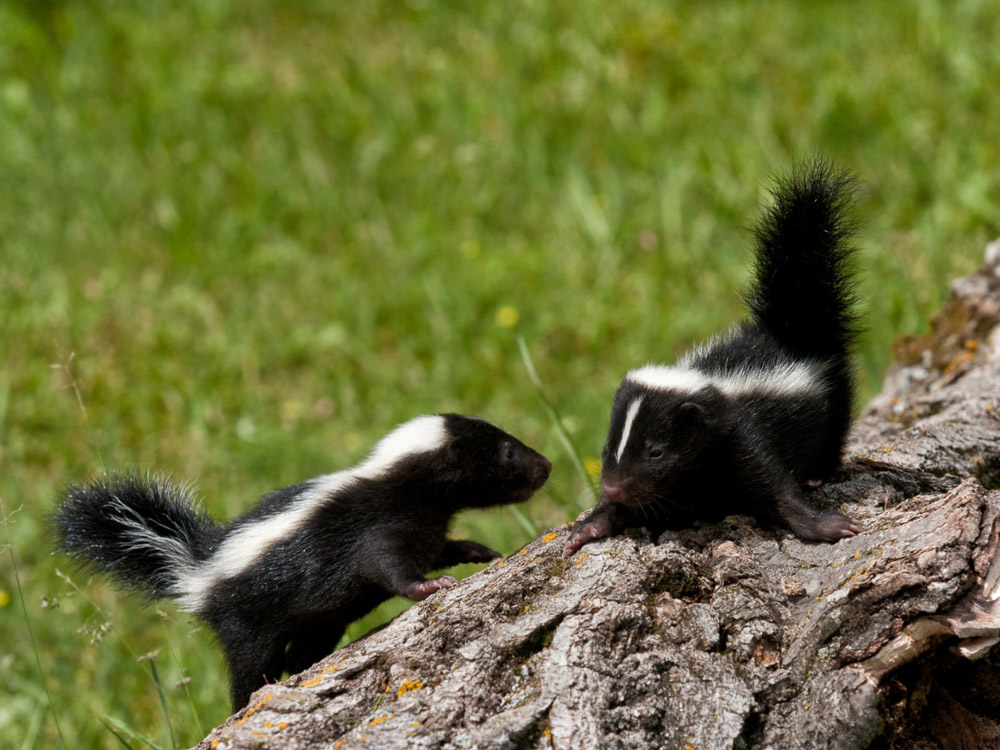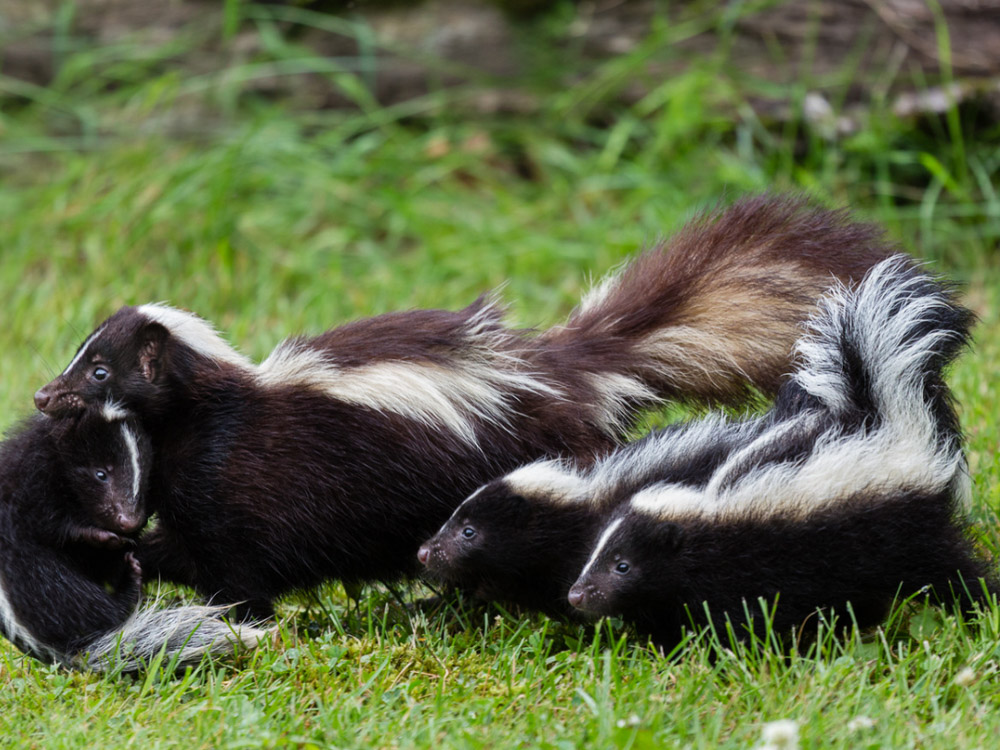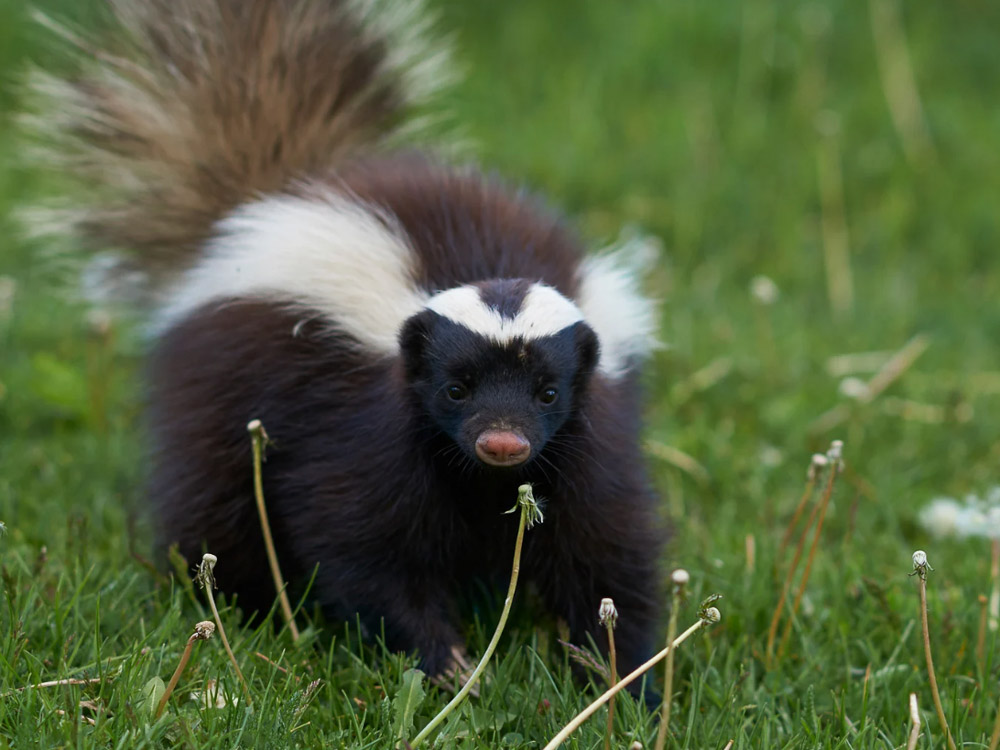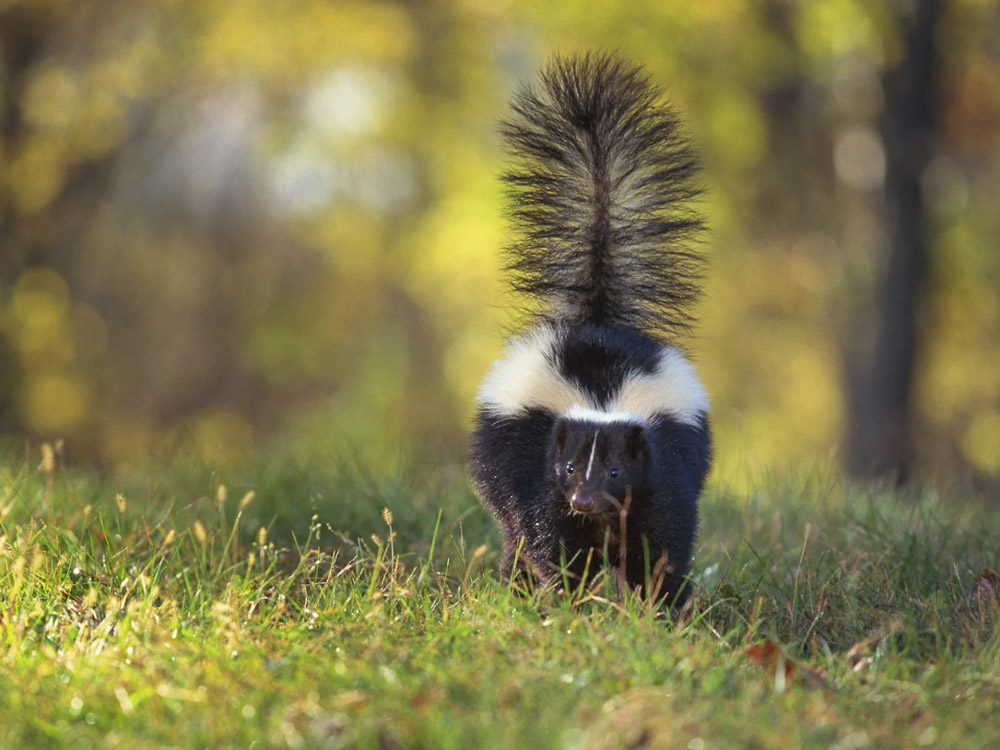






Skunk Superpowers

When that tail goes up, back away! Ability to ward off monster and demons!
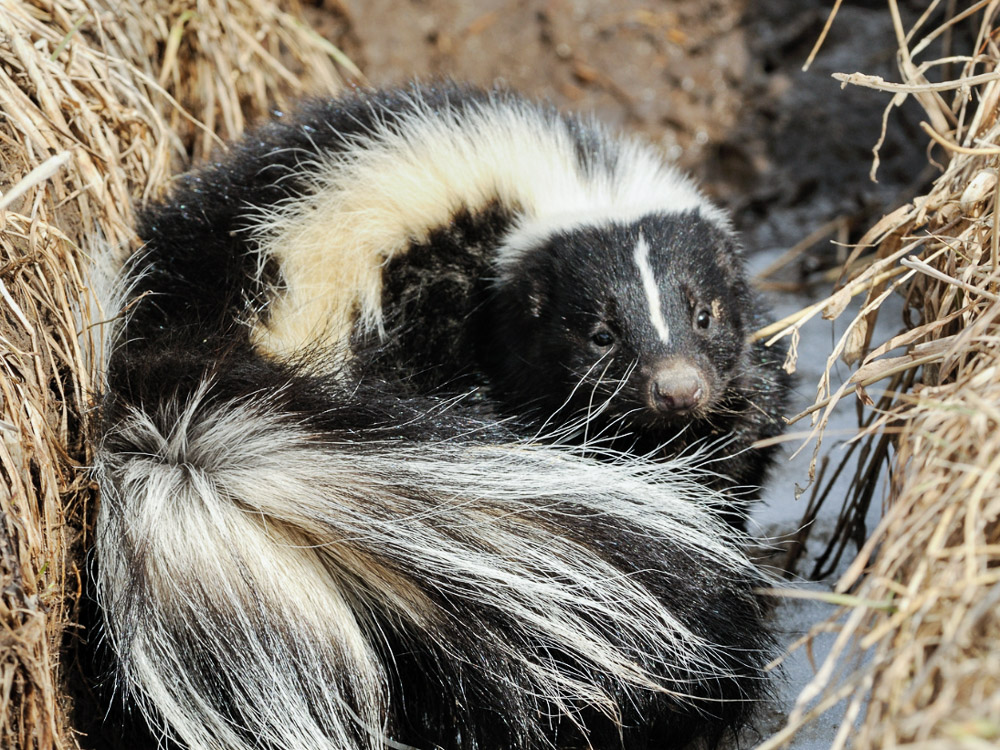
Fascinating Facts
  • Skunk spray, which comes from two glands near the base of the skunk’s tail, can hit a target 12 feet away.
  • If threatened, skunks stamp their front feet, lift their tail, and growl. Some species of skunk even spring into a handstand before spraying, which puts the skunk’s warning markings on full display.
  • They Often Aim for the Eyes. Their spray contains sulfur-based thiols that not only create an overwhelming stench but also cause significant eye irritation, potentially even causing temporary blindness for several minutes.
  • They can fire a concentrated stream to neutralize an approaching threat, for example, or release a mist to engulf a pursuing predator.
  • Since the substance is both time-consuming to make and potentially life-saving to have on hand, they often try to fend off minor threats in other ways before spraying.
  • Skunk spray is highly flammable.
  • Tomato Juice Won’t Get Rid of the Smell.
  • About 1 in 1,000 People Can’t Smell Skunks.
  • Skunks are most active at night.
  •  Skunks Eat Bees
  • Their favorite foods include fruit and plants, plus insects, bird eggs, small rodents, and birds.
  • Birds like the great horned owl prey on skunks. Scientists believe it’s because the birds don’t have a very good sense of smell, which makes the skunk’s spray useless in an attack.
  • Skunks spend most of their time alone but will get together for warmth in dens or breeding.
  • Skunks do not have great eyesight, struggling to see objects just 3 metres (10 feet) away. They make up for this with powerful hearing and a strong sense of smell.
  • Skunks get into garbage cans and compost bins. They eat pet food and will raid a vegetable garden.
  • You may think that skunks spray each other during confrontations, perhaps while competing for a mate. However, this behavior has not been observed in the wild yet.
  • Skunks are immune to snake venom. It would require ten times the venom that would kill a similarly sized creature for it to actually be fatal.
  •  Although striped skunks do not hibernate, they are less active in the winter.
Why They Are Important to the Planet
  • Striped skunks are an important source of insect control.
  • …the clinging quality of their musk has made it valuable as a perfume foundation.
  • Skunks also hunt a wide variety of other species, including snakes and rodents.
  • Since skunks are less likely to get rabies than other carnivores like raccoons, they pose a minimal threat to people and pets.
  • Skunks are also scavengers. They will seek out animal carcasses, which helps keep an ecosystem free of carrion.
  • True omnivores, skunks will also seek out fruits and berries in their environment and spread the seeds after digestion across an ecosystem.
  • When skunks dig for insects like grubs, they pull up soil and aerate it – a process many people pay for their lawns once a year. Their feces contributes back to the soil, and helps facilitate the nutrient cycle in ecosystems.
  • Just like Flower in Bambi, skunks may stick their snoots into flowers and other plants, or even brush up against them and help in the process of pollination and plant reproduction!
Why We Should Love These Animals

 “The occasional whiff of skunk spray reconnects us to the incredible importance of smell in the lives of other animals,” he says. “It reminds us that skunks are out there, even when we don’t see them, and that we all share the same world.” Ohio State University biologist Stan Gehrt

The skunk is a symbol of self-respect.The skunk is nonchalant; it struts around without a care in the world.

Skunk has asserted itself in the world, confident. The skunk has no need for violence and aggression. It can live a playful and carefree life because it is assertive and has self-respect.

The skunk is peaceful yet steps aside for no creature.

Videos and Resources
Gold Transparency 2023 Candid badge.

GuideStar is the world’s largest source of information on nonprofit organizations.


They gather and provide access to the most comprehensive, up-to-date, and accurate nonprofit information which is available to potential funders and donors.

Less than five percent of non-profits registered with GuideStar are recognized with a Gold Seal. A Gold Seal status is the leading symbol of non-profit transparency and accountability.

Start a Community Garden

A community garden is a wonderful way to bring people together while growing fresh, healthy food. Kids can ask their school, local library, or community center if there’s space to start a garden, then invite neighbors and classmates to help plant, water, and harvest vegetables or flowers. Some gardens even donate their extra produce to food banks or share it with neighbors who need it. It’s a hands-on way to learn about nature, teamwork, and taking care of your community’s shared spaces.

SAFE Worldwide Kid's Zone

Raise Funds for Local Wildlife Center

Wildlife centers take care of injured or orphaned animals, and they always need extra support to keep helping. Kids can host a bake sale, lemonade stand, or online fundraiser, or organize a “walk-a-thon” with friends and family to raise money for a wildlife rescue near them. You could also collect donated supplies the center needs, like towels, blankets, or pet food. Even a small donation can help feed, shelter, or heal an animal in need.

SAFE Worldwide Kid's Zone

Recycling Project

Recycling projects let kids turn everyday trash into something useful — or at least keep it out of landfills! You could start a recycling bin program at your school, organize a can and bottle drive to raise money for charity, or get creative and turn old materials into art, planters, or bird feeders. You might even research your town’s recycling rules and make a poster or flyer to help neighbors recycle correctly. Small habits, like rinsing containers or separating paper from plastic, add up to a big impact when a whole community joins in.

SAFE Worldwide Kid's Zone

Booth at Local Farmers Markets

Setting up a booth at your local farmers market is a great way to get your whole neighborhood excited about helping the planet. You could raise money for a cause you care about — like a wildlife shelter, a tree-planting group, or a beach cleanup fund — by selling homemade crafts, lemonade, or baked goods. You could also use your booth to teach people about recycling, showing them fun facts or simple tips for sorting their trash the right way. It’s a great way to practice public speaking, teamwork, and making a real difference in your community.

SAFE Worldwide Kid's Zone

Beach Clean-Ups

Every year on the third Saturday of September, people around the world celebrate International Coastal Cleanup Day, and you can sign up with local groups in your community to join thousands of other volunteers picking up trash along the shore. But you don’t have to wait for that one day — cleanups can happen any time! Grab some gloves, trash bags, and a few friends, and organize your own cleanup day at a nearby river, stream, lake, or beach. It’s a fun way to hang out with friends while protecting fish, turtles, and birds from plastic and litter. Nationalcleanupday.

SAFE Worldwide Kid's Zone

Tree Planting Events

Planting trees is one of the easiest ways kids can help fight climate change and give animals a home. You can join organizations like SAFE Worldwide, One Tree Planted, or the Arbor Day Foundation, which often have kid-friendly volunteer days and even let you sponsor a tree from home. Or, team up with your family, neighbors, or scout troop to start your own mini tree-planting project in a local park, schoolyard, or empty lot (just ask permission first!). Every tree you plant helps clean the air, cool the planet, and grow into a home for birds and squirrels for years to come.

SAFE Worldwide Kid's Zone